

Buying your first car feels utterly terrifying sometimes. Let’s be real here. Past money troubles make people super nervous. You constantly worry about finance approvals. Will the car even run reliably? Nobody wants a total breakdown on week one.
Roughly 20% of UK used cars have hidden issues. Oddly enough, used car sales hit 7.2 million recently. That is a massive number of motor vehicles.
Having your own motor transforms daily routines instantly. You get to work on time easily. No more waiting for late morning buses. You manage personal life on your own terms. Freedom feels pretty amazing, honestly.
Do not rush this whole buying process. Slow down and take a deep breath. Focusing on practical areas early saves tons of cash. You avoid silly costly mistakes that way. Then you move forward with real solid confidence.
- Perform MOT and HPI checks to spot hidden issues like outstanding finance or mileage discrepancies.
- Assess your finance options with soft credit checks to protect your credit score while establishing a budget.
- Compare Hire Purchase, PCP, and bank loans based on your preferred monthly payment and ownership goals.
- Purchase through approved dealers to secure legal protections under the Consumer Rights Act 2015.
- Avoid rushing the buying process to prevent costly mistakes and unexpected financial stress.
Vehicle History Checks
Check the car background before agreeing to anything. Do not sign papers blindly. Use the UK government’s MOT checker tool online. Review all past test results carefully. Check recorded mileage numbers for weird gaps. Look at past test failures and repair warnings.
Repeated advisories on brakes point to hidden trouble. Suspension warnings mean heavy future repair bills. Sellers often ignore these small warning signs. Around 30% of cars fail their MOT tests. That is nearly one in three vehicles!
Run an HPI check on the vehicle registration. Confirm there is zero outstanding debt on it. Make sure nobody wrote the car off previously. About 1 in 3 checked cars has hidden history. Ten minutes of checking saves hundreds of pounds. You avoid awful unexpected garage repair bills. Let’s look at common used car history risks. Data shows why background checks matter so much.
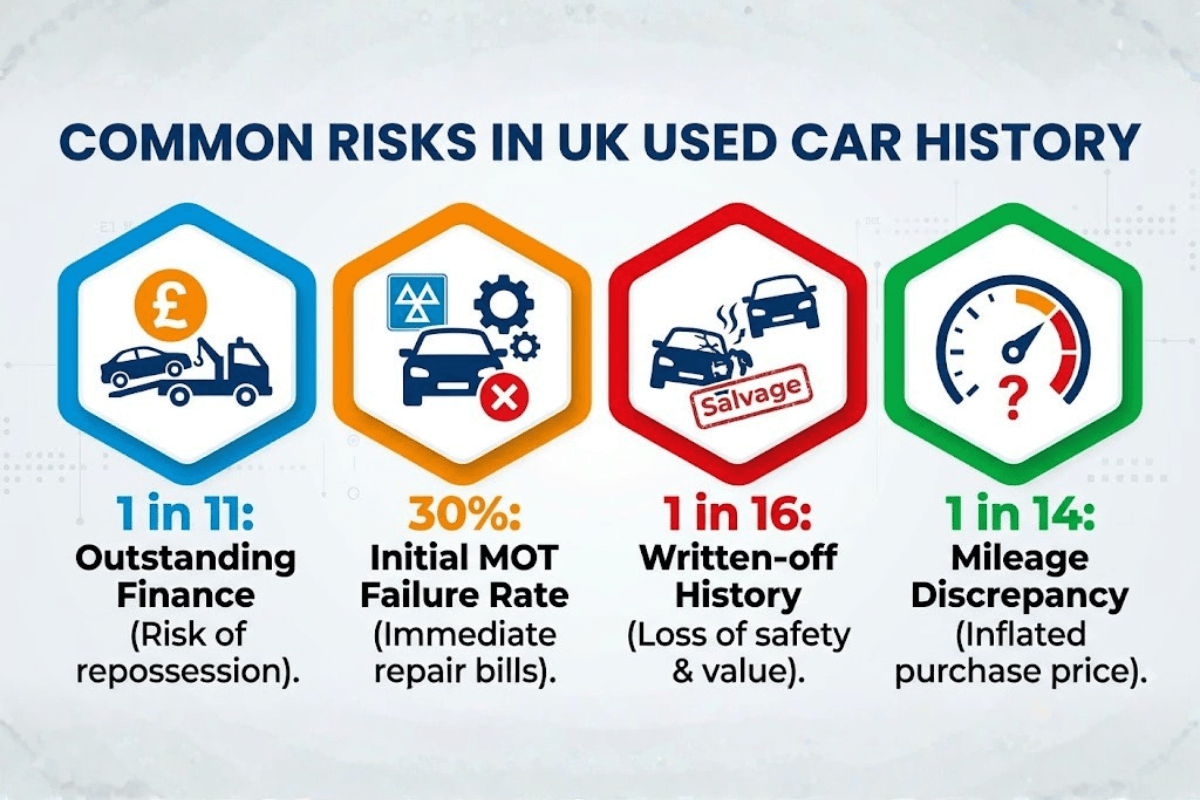
These stats reveal real danger spots for buyers. Never skip a full history check. It protects your wallet from massive hidden scams.
Whether You’re Eligible For Car Finance
Check what you can actually afford first. Do not browse shiny motors without a set budget. Lenders offer quick soft credit checks now. Soft checks reveal options without hurting your score. Hard searches leave marks on credit files. You avoid applying blindly and suffering rejections.
Over 80% of UK cars use finance deals. That is a huge portion of buyers. Average monthly payments sit around £250 to £350.
If you need bad credit car finance options, do not panic. Specialist lenders look at current steady income. They care less about old past money problems. You know, life happens to all of us.
You will choose between two main structures. Hire Purchase means you own the car eventually. You make final payments and take full ownership. Personal Contract Purchase offers smaller monthly payments. Later, you decide to keep or return it. An optional balloon payment applies at the end. Understanding finance structures helps set realistic budgets early.
| Finance Structure | Monthly Payment Level | Ownership Final Outcome |
|---|---|---|
| Hire Purchase (HP) | Moderate to High | Full ownership after final fee |
| Personal Contract Purchase (PCP) | Lower Monthly Cost | Optional balloon payment or return |
| Personal Bank Loan | Fixed Monthly Sums | Immediate car ownership from day one |
Table Source: Finance & Leasing Association (FLA) UK.
Picking the right deal keeps monthly stress low. Always read full contract terms carefully. Watch out for extra mileage fees on PCP.
ALSO READ: What Is Multi Car Insurance And How It Works? A Helpful Guide
Where You Buy The Car
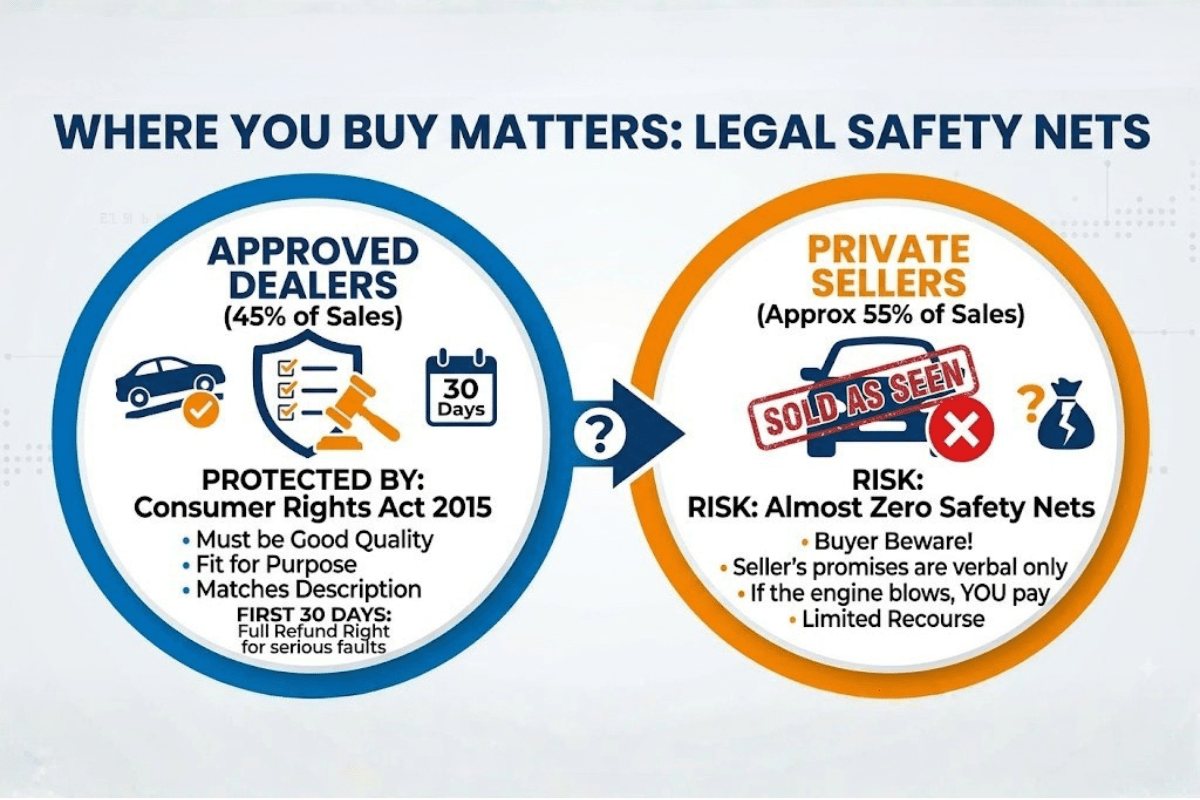
Where you buy matters as much as price. Dealerships charge a bit more overall. However, approved dealers offer strong legal safety nets. You get protection under the Consumer Rights Act 2015. This law mandates cars must be good quality. The vehicle must match description accurately. It must be fit for daily road purpose.
If serious faults appear fast, you get rights. You can request full repairs or refunds. In the first 30 days, full refund rights apply.
Private sellers usually charge less money up front. Yet, private deals offer almost zero safety nets. Sold as seen means exactly what it says. If the engine blows up, you pay everything. Roughly 45% of used cars sell through dealers.
Ask direct clear questions to any seller. Get all promises written down on paper. Verbal promises mean nothing when trouble hits.
Final Thoughts
Taking time to prepare reduces sudden expensive surprises. Preparation gives you real leverage during negotiations. You cannot erase every single road risk completely. Cars are mechanical objects that wear out eventually. However, smart planning puts you in full control. Buying your first car should boost daily routines. It ought to make life much easier overall. It should never add terrible financial pressure. Drive safe and enjoy your new freedom!
ALSO READ: Is Salary Sacrifice Car Worth It? The Real Answer
FAQs
Q1. What Does An HPI Check Actually Do?
It reveals hidden vehicle history like outstanding debt, mileage discrepancies, or whether the car was previously written off.
Q2. Does Checking My Car Finance Options Hurt My Credit Score?
Not if you use soft credit checks, which allow you to see your budget options without leaving a mark on your credit file.
Q3. What Is The Main Difference Between HP and PCP Finance?
Hire Purchase (HP) guarantees full ownership after your final payment, while PCP offers lower monthly costs but requires a large balloon payment if you want to keep the car.
Q4. Can I Get Car Finance If I Have Bad Credit?
Yes, specialist lenders will focus on your current steady income rather than worrying about your past money problems.
Q5. Is It Safer To Buy A Used Car From A Dealer Or A Private Seller?
Buying from an approved dealer is much safer because the Consumer Rights Act 2015 legally protects you, whereas private sales are “sold as seen” with zero safety nets.
Sources & References
- Finance & Leasing Association. (2026, May 12). Consumer car finance new business volumes grew by 8% in March 2026. Finance & Leasing Association Statistics.
- Department for Transport. (2026, July 15). Vehicle licensing statistics: January to March 2026. GOV.UK.
- Driver & Vehicle Standards Agency. (2026, May 18). The state of UK MOT 2026: pass rates, failure causes, advisory trends. MOT Checkup Research.
- Driver & Vehicle Standards Agency. (2025, October 30). MOT test results by class of vehicle, 2025–26 Q1. GOV.UK Statistical Dataset.
- Legislation.gov.uk. (2015). Consumer Rights Act 2015 (c. 15). UK Public General Acts.
- Wikipedia. (2026). Car finance.
Disclaimer: The information provided in this article is for general informational and educational purposes only and is not intended for commercial promotion or legal endorsement. Readers should independently verify all vehicle history data, financial regulations, and legal terms before entering into any purchasing or financing agreements. It is strongly recommended to seek independent advice from qualified financial advisors or automotive legal specialists prior to making decisions.