Modern bike helmet design has come a long way from those big, clunky shells that basically gave cycling headgear a bad name in the first place. These days, helmets actually try to look good and feel comfortable. And honestly, it’s about time. Manufacturers have finally caught on to a pretty obvious truth: the safest helmet is the one people will actually wear, without grumbling about it.
Bobbin Bikes leans into that idea hard. They make gear riders genuinely want to use. Not the kind of stuff that ends up sitting in a corner, collecting dust, while you feel mildly guilty every time you walk past it.
So yeah, the question isn’t really whether you should wear a bike helmet. It’s more like: what features make the difference between a helmet you actually grab on your way out the door, and one that lives in the garage forever?
Comfort Is King: Ventilation And Fit
If a bike helmet feels awful, you won’t wear it. Simple as that. And no, that’s not laziness or stupidity. It’s just… being human. If something makes you overheat, gives you headaches, or just feels annoying, you’ll find a reason to skip it. People always do. The good news, though, is that helmet comfort has improved massively.
Those adjustable dial-fit systems have pretty much replaced the old “one size fits all (and hurts everyone)” approach. Modern retention systems let you fine-tune the fit at the back of your head. Some even let you adjust the height too, which sounds minor until you actually try it. This stuff matters a lot. A wrong fit creates pressure points, and pressure points can turn into real headaches. Like proper, pounding ones. And sometimes it’s not even your fault. It’s just the wrong helmet shape for your head. Swap to one that fits properly, and suddenly the problem disappears.
The same rules apply to bicycle helmets. They need to sit low enough to protect your forehead. But not so low they mess with your vision. They should be snug enough that they don’t wobble around when you ride. But also not so tight you feel like your skull’s in a vice. That sweet spot exists. The Goldilocks zone, basically. But you only get there with proper adjustment systems, not with guesswork.
Ventilation is another huge deal. It’s often the difference between tolerating a bike helmet and genuinely forgetting you’re wearing one. More vents generally means better airflow. But, of course, designers have to balance cooling with structural strength, so it’s not as simple as just punching holes everywhere. Still, nearly half of people who don’t wear helmets say it’s because they’re “too hot.” And honestly? That’s not a ridiculous excuse in summer. It’s a real complaint.
The best bike helmets use internal channelling to push air through the helmet properly. Air speeds up through tighter sections, which helps pull heat away from your head. Kind of clever, actually. And it can still be done while keeping things aerodynamic. If you ride in hot climates, or you’re doing intense rides where you’re sweating buckets anyway, maximum helmet ventilation helps avoid that horrible greenhouse effect where sweat just pools under the shell.
Modern bicycle helmet for adults now come packed with these comfort features for one reason: protection only works when people actually wear the thing. A well-ventilated helmet, with fit adjustment that’s actually dialled in properly, becomes almost unnoticeable after the first few minutes of riding. Which is exactly what you want.
And yes, trying different models really matters. What works for someone with a narrow, longer head might feel completely wrong on someone with a wider, rounder shape. One rider even realised their headaches were coming from wearing helmets designed for round heads, when they actually had a long oval shape. Once they switched to a better-fitting model (Arai, in their case), the headaches vanished. Completely. So yeah, try before you buy if you can. And don’t compromise on comfort, even if you’re tempted. That one factor usually decides whether a bike helmet becomes part of your routine or ends up living permanently in the garage.
Style Meets Safety: The Aesthetic Appeal
Chris Boardman, the Olympic cycling champion, once admitted he’s “been battered by the cycling community for wearing normal clothes on a bike, not to mention the very contentious issue of not using a bike helmet.” And that kind of says it all. The cycling community can be weirdly intense about what “counts” as a cyclist. Normal clothes? Nope. Helmet debates? Constant. Lycra? Apparently mandatory in some people’s minds.
But the stigma goes both ways, which is the frustrating part. Plenty of potential everyday cyclists don’t want to adopt the sporty cycling aesthetic at all. And let’s be real, I get it. That “proper cyclist” look can feel confrontational. Like you’re announcing yourself as part of a club you never signed up for. It can feel othering, and kind of abnormal compared to just being someone who rides a bike to get around. In places with strong cycling culture like the Netherlands or Denmark, everyday cycling is normal. It’s just… what people do. The infrastructure supports it too, which makes a massive difference.
In the UK, though, cycling often feels less safe. So bike helmets are still a sensible precaution. The tricky part is figuring out how to wear one without feeling like you’re cosplaying the Tour de France on your way to the shops.
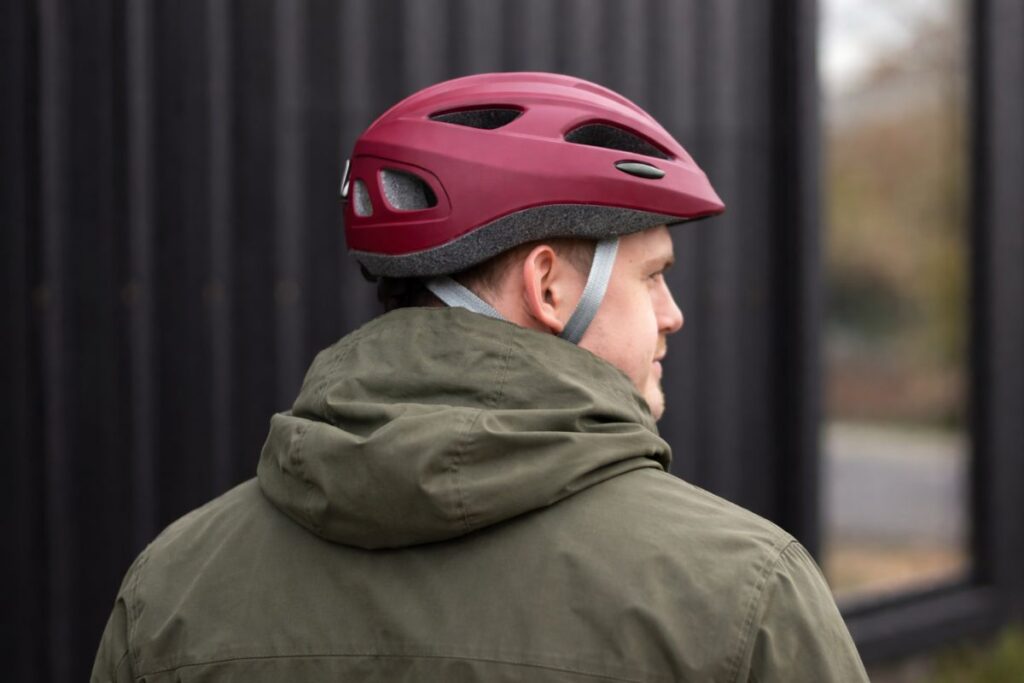
That’s where vintage-inspired bike helmet designs come in. They exist for a reason. Clean lines. Matte finishes. Retro silhouettes. All of it works better for urban cycling, without that aggressive, race-ready vibe. And importantly, these designs avoid the dreaded mushroom look. You know the one. The bulbous, oversized helmet shape that makes your head look weirdly huge and instantly makes you self-conscious.
Modern bike helmets manage sleeker profiles because construction has improved a lot. Dual-layer shells, smarter foam density, and more strategic design choices all help create helmets that sit closer to the head while still meeting safety standards. So the helmet looks intentional. Not like some awkward safety obligation you’re wearing grudgingly.
And oddly enough, colour coordination matters way more than people expect. If your bike helmet matches your bike, or fits in with your wardrobe, it stops feeling like “that thing I have to wear.” It starts feeling like part of your look. Bobbin Bikes clearly understands this. Picking a helmet that works with your personal style (or your bike) turns safety equipment into a proper aesthetic choice, instead of a clashing afterthought you tolerate.
One blogger who switched from hi-viz cycling gear to normal clothes even noticed driver behaviour improved. Like noticeably. Drivers seemed to see the cyclist as a “normal person trying to get about,” rather than “an obnoxious cyclist taking up road space.” And no, that’s not advice to ditch visibility. Not at all. But it is an acknowledgement that cycling stigma is real, and it affects how people react to cyclists, and even how they react to cycling safety equipment.
ALSO READ: Guy Willison: The British Bike Builder and Custom Motorcycle Expert
Practical Features For Everyday Use
Once you get past comfort and style, it’s the small practical details that decide whether a bike helmet feels genuinely convenient or just permanently irritating.
Lightweight construction makes a bigger difference than most people realise. A heavy helmet can cause neck strain on longer rides. It can also feel like a nuisance when you’re carrying it around after you park up. Modern materials have improved a lot here. Helmets can still hit safety certification while staying light. Some high-end models weigh barely 200 grams. And even mid-range helmets have gotten noticeably better, which is nice for your neck and your patience.
Easy-to-use chin straps also sound like a boring detail. Until you’re standing there, every single ride, fumbling with an awkward buckle that never quite works first time. Quality bike helmets usually have simple magnetic or click-closure systems. They fasten securely without pinching your skin or forcing you to try three times like you’re wearing gloves in winter. Strap dividers matter too. They keep the webbing sitting comfortably around your ears instead of rubbing and driving you mad.
Proper helmet sizing is what makes every other feature actually work. A bike helmet that’s too large shifts around while you ride. It can block your vision. And it basically defeats the whole protective purpose. A bike helmet that’s too small creates pressure points, and those can quickly turn into headaches. So if you’re wondering, “what size bike helmet should I get for myself,” the answer starts with measuring your head properly. Use a flexible tape measure. Place it about one inch above your eyebrows and ears. Measure twice, because people mess it up the first time more often than they’d like to admit. Then check the manufacturer sizing chart.
Most brands offer three to four sizes, usually from small through extra-large. Adult circumference ranges tend to span roughly 51–63cm. But don’t assume your measurement automatically carries over between brands. Helmet sizing varies more than you’d expect, and yes, it’s annoying.
There are also the extra practical bits people forget about. Accessory compatibility, for example. Some helmets have mounts for lights or cameras. Others sit better with glasses. These details seem tiny, but they add up fast. They either create a smooth, seamless routine, or they become a constant series of little irritations that make you dread putting the helmet on.
Conclusion
The bike helmets that actually get worn are the ones that combine everything. Comfort, so you stop noticing it once it’s on. Style, so you don’t feel awkward or self-conscious. Practical features, so it fits into your routine without drama. Safety equipment only works if people use it consistently. And helmet design, in the end, succeeds or fails based on human behaviour, not just engineering standards. The research is pretty clear. If you address convenience, comfort, and appearance, more adults will wear helmets. Ignore those factors, and bike helmets will stay hanging on hooks, no matter how many safety lectures people get.
Sources and References
- Cycling UK. (2025). Helmet comfort, ventilation, and fit explained. Cycling UK.
- Bobbin Bikes. (2025). Helmet design and cycling gear. Bobbin Bikes Official Website.
- Consumer Reports. (2024). How to choose the best bike helmet. Consumer Reports.
- National Highway Traffic Safety Administration (NHTSA). (2023). Bicycle helmet use and safety statistics. U.S. Department of Transportation.
- Boardman, C. (2016). Chris Boardman on cycling clothing and helmet debates. The Guardian.
Disclaimer: This article is provided for informational purposes only and is not intended as advertising, endorsement, or promotion of any brand, product, or service mentioned. While care has been taken to ensure accuracy, the information is general in nature and may not reflect the latest safety standards, product updates, or individual needs. Readers should always refer to manufacturer guidance and applicable safety regulations when selecting or using a bicycle helmet.