
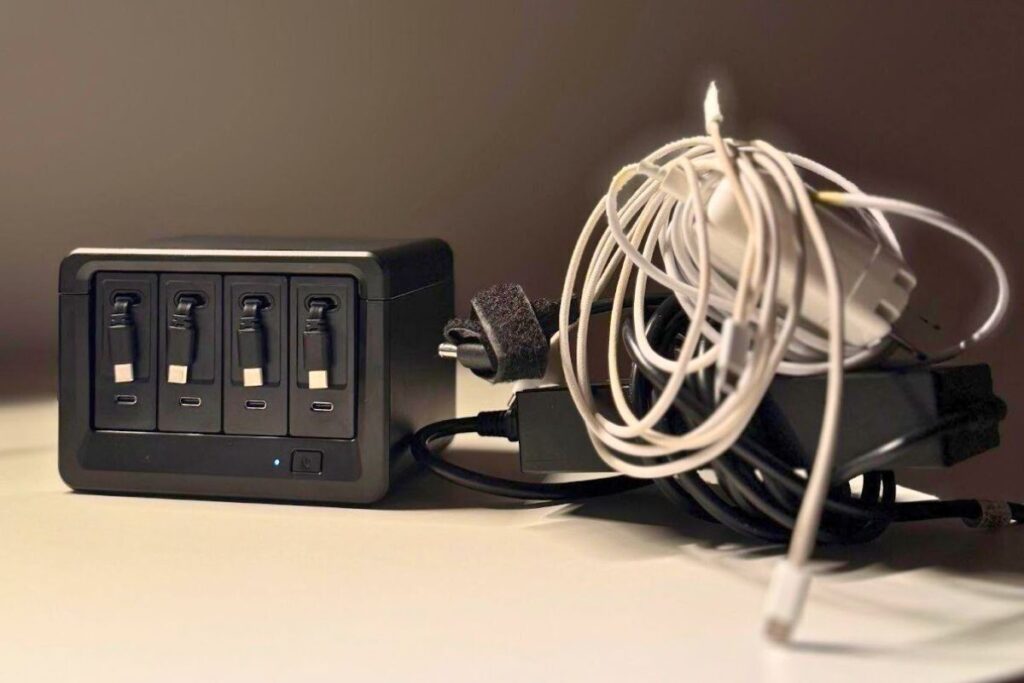
For a long time, power strips were the easiest fix for a growing pile of devices.
Back when desks were built around a desktop computer and maybe a couple of peripherals, all you really needed was a few extra outlets. Simple.
That whole setup doesn’t really exist anymore.
Today’s workspaces look totally different, and honestly, the way we use power has changed faster than the stuff meant to manage it.
How Desk Power Needs Have Changed
Modern desks aren’t centred around one main machine anymore.
A lot of people now work from:
- A laptop instead of a desktop
- Multiple USB-powered devices
- Phones, tablets, earbuds, and accessories that need daily charging
Power usage has basically shifted from “plug it in once and forget it” to constant, all-day charging across several devices at the same time.
And the problem isn’t really getting electricity anymore. It’s managing it. It’s how power gets distributed across everything without turning your desk into a mess.
The Limits Of Traditional Power Strips
Power strips still do what they were made to do. They give you extra outlets.
But once you’re dealing with a modern desk setup, the weak spots show up pretty fast:
- They’re built around AC plugs, not USB-heavy workflows
- Charging bricks and adapters start piling up quickly
- Cables end up spreading across the desk instead of staying contained
- Constant plugging and unplugging breaks your rhythm
Let’s be real: power strips weren’t designed for a world where USB charging is the main thing people need every day.
Power Is More Than Just Having Electricity
Here’s something people don’t talk about enough. There’s a difference between having electricity and having a power setup that actually works.
Electricity just means your devices can turn on. Power setup decides whether everything runs smoothly or feels like a daily hassle.
A desk can technically have enough outlets and still feel chaotic. That happens when power delivery is scattered across a bunch of adapters, tangled cords, and random chargers that never seem to stay where you put them.
In a modern workspace, power needs to be organised. Not just available.
What Modern Desks Actually Need
Today’s desks need a different approach to power management. The old “just add another strip” trick doesn’t really cut it anymore.
A modern power setup that actually feels good to use should:
- Support both AC-powered devices and USB charging
- Reduce the number of separate adapters you need
- Keep cables predictable and under control
- Let multiple devices stay connected all day without juggling plugs
So yeah, the goal isn’t really “more outlets.” It’s making power delivery simpler, cleaner, and way less annoying.
Centralised Power As A Modern Alternative
This shift is exactly why desk-focused power solutions have started showing up everywhere. They’re built specifically for multi-device workspaces, where charging is happening constantly.
Instead of relying on a traditional power strip plus a bunch of separate chargers, centralised desktop charging stations combine outlets and USB ports into one unit. That means fewer bricks. Less cable clutter. And power delivery stays in one spot, which is oddly satisfying once you get used to it.
For example, desktop power solutions from Gitryin are designed around this idea. The whole point is to consolidate power and charging into one organised system. It matches how people actually use modern desks now, not how we used them ten years ago.
And the biggest benefit isn’t “more power.” Its structure. It’s the feeling that your desk isn’t fighting you every time you need to charge something.
How To Tell If A Power Strip Is No Longer Enough
If you’re not sure whether your setup has outgrown a traditional power strip, here’s a quick reality check. Nothing complicated.
- You regularly charge three or more USB devices
- Multiple chargers are always competing for desk space
- You constantly unplug one device just to charge another
- Cables keep crossing over each other or getting tangled up
If a few of those hit a little too close to home, yeah… your workspace has probably outgrown the basic power strip life.
ALSO READ: Cory Hein: The Mining Engineer Driving New Innovative Work Ideas
Final Thoughts
Power strips still have their place. Especially for simple setups, temporary desks, or situations where you just need a quick fix.
But once desks get more device-heavy and more USB-centric, power strips stop being a complete solution on their own. Modern workspaces do better with power setups designed around organisation, consistency, and everyday usability. And honestly, once you experience a clean power setup, it’s hard to go back.
Upgrading how power is managed isn’t about replacing everything. It’s about adapting to how we actually work now. Because the way we work changed, even if our power strips didn’t.
Sources and References:
- Gitryin. (2025). Desktop power solutions for modern workspaces. Gitryin Official Website.
- Statista. (2024). Number of connected devices worldwide 2019–2025. Statista.
- Wired. (2023). Why power strips aren’t enough for modern desks. Wired.
- TechRadar. (2024). Best USB charging hubs for multi-device setups. TechRadar.
Disclaimer: This article is provided for informational purposes only. It is not intended as advertising, endorsement, or promotion of any specific brand, product, or service. Any product or company references are included solely for general context and do not constitute a recommendation.