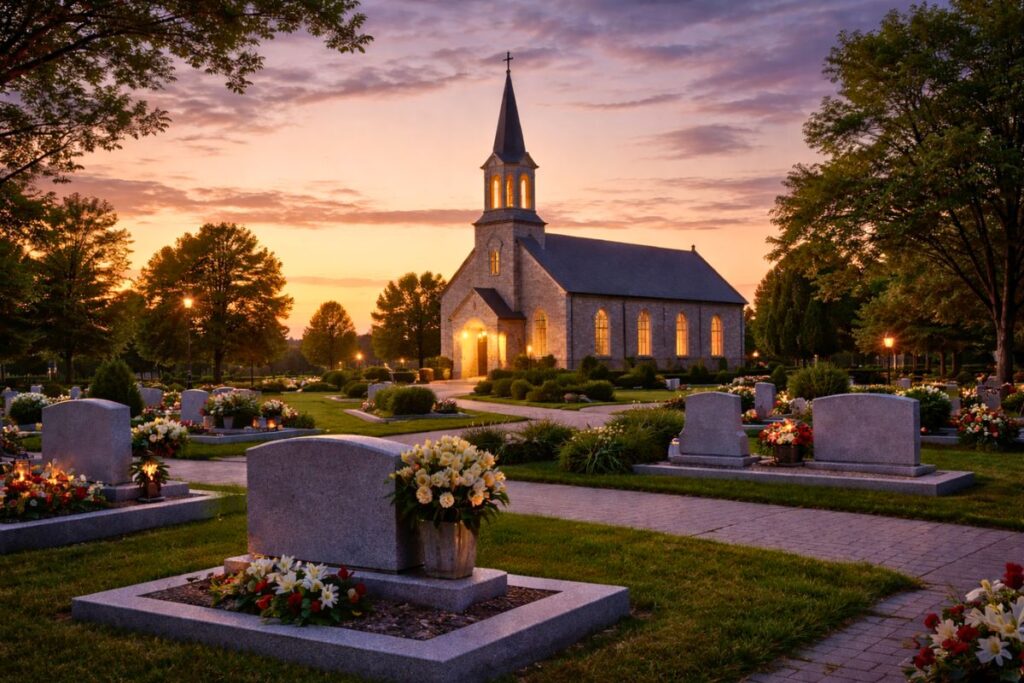
Picture yourself sitting in a cold church hall in mid-February. Outside, rain is lashing mediaeval stone walls that have endured for eight hundred years. The inside atmosphere is just as heavy. A group of people wearing dog collars and tweed jackets are debating the price of a patch of earth. It sounds grim, doesn’t it? But for anyone who’s had to bury a loved one recently, the controversy wasn’t something happening in the abstract. It was a battle over whether saying goodbye should incur a £1000 burial fee cap.
A huge row broke out in the Church of England in early 2026. The big bosses—the Archbishops’ Council—wanted to slap a one-off £1,000 increase on burial fees. The thinking was straightforward: maintaining a churchyard in neat and tidy fashion is exceedingly expensive. But the backlash was fierce. By the time all had settled at the General Synod in London, the proposal not only failed: it was obliterated.
We’re looking at a vote of 262 to 3. That’s not just a “no”. That’s a “don’t you ever bring this here again.” For families already struggling with the cost of living, this rejection of the £1,000 burial fee cap is a massive relief. Here is the story of how the church decided it would rather be broke than greedy.
The Massive Gap In The Churchyard Fence
To understand why anyone would even suggest such a hike, you have to look at the state of our rural villages. I’ve spoken to vicars in tiny parishes where the congregation is basically three elderly ladies and a very tired organist. These churches are sitting on burial grounds that are full of history but also full of crumbling walls and overgrown grass.
Maintenance isn’t cheap. It costs thousands of pounds every year to hire someone to mow the lawn, trim the yews, and ensure those heavy Victorian headstones don’t topple over on a passing toddler. Currently, the church charges a few hundred quid for a burial. Compare that to a council-run cemetery or one of those trendy woodland burial sites where you might pay £3,000 to £6,000 for a plot.
The Archbishops’ Council looked at those numbers and thought, “Hang on, we’re undercharging.” They argued that a £1,000 uplift would stay directly with the local parish. It was supposed to be a lifeline for the impact of the £1,000 burial fee cap on UK rural churches, helping them keep their gates open without begging for donations every Sunday.
Why The “Cost-of-Dying” Crisis Changed Everything
The thing is, 2026 hasn’t been kind to our wallets. Everything from eggs to electricity is still sky-high. When the average UK funeral already costs you more than £4,000, another grand just to use a churchyard feels like a kick in the teeth.
The mood was extremely tense during the debate. Clerics from across the nation rose up to warn that the church was losing its soul. Lichfield representative Amanda Robbie didn’t hold back. She described the proposed increase as “embarrassing and indefensible.” Honestly, she’s right. How do you sit in the living room of a grieving widow and explain that the price of a grave just increased by 350%?
There’s also the rise of “direct cremation.” It’s basically the budget option—no service, no fuss, just the remains returned in a box. It’s becoming the go-to for families who simply can’t afford the bells and whistles. The Synod realised that if they pushed the £1,000 burial fee cap, they’d basically be pricing themselves out of existence. People would stop coming to the church for funerals entirely.
ALSO READ: The Future of UK Roads: Why Electric Cars Lead the Way
The Pastoral Nightmare: When Ministry Becomes A Business
One of the most moving parts of the debate came from those who work on the front lines of grief. Robin Lunn from Worcester pointed out that this would plunge more bereaved families into serious debt. It’s bad enough losing a parent or a spouse without having to take out a high-interest loan just to put them in the ground.
The church is supposed to be a “pastoral presence.” That’s a fancy way of saying they should be there to hold your hand, not check your credit score. If the church starts acting like a business competitor, it loses the very thing that makes it special. As reported by the Church Times, the fear was that this hike would “decimate ministry” in the long run.
The £1,000 burial fee cap rejection means that, for now, fees will only go up by the rate of inflation (capped at 5%). It’s a win for the little guy, but it leaves those beautiful old churchyards in a bit of a pickle.
The Reality For Rural Churches In 2026
So, where does this leave your local village church? Well, they’re still in a bind. The impact of the £1,000 burial fee cap on UK rural churches being voted down means the “maintenance gap” is wider than ever.
Without that extra grand, many Parochial Church Councils (PCCs) are going to have to get creative. We’re likely to see:
- More Volunteer Saturdays: Expect to see the vicar and the local scouts out with strimmers more often.
- Community Fundraising: More bake sales and “Sponsor a Grave” schemes to fix those falling walls.
- Hard Conversations: Some churches might eventually have to close their graveyards to new burials if they truly can’t guarantee safety.
It’s a tough spot. We want our burial grounds to be peaceful, dignified places, but someone has to pay the bill. For a deeper look at the legalities of how these fees are set, Law & Religion UK provides a great breakdown of the 2026 Parochial Fees Order.
£1000 Burial Fee Cap: What You’ll Actually Pay In 2026
Since the “big hike” was kicked into the long grass, the fees for 2026 are much more manageable. If you’re planning a service, here’s a rough idea of what you’re looking at compared to what could have been.
| Service Type | 2026 Current Fee (Approx.) | What They Wanted To Charge |
|---|---|---|
| Burial After A Church Service | £390 | £1,390 |
| Burial On A Separate Occasion | £425 | £1,425 |
| Burial Of Cremated Remains | £171 | £1,171 |
The difference is staggering. For a family burying ashes, we’re talking about a jump from less than £200 to over a thousand. You can see why ThinkMoney has been highlighting funeral poverty as a major issue this year. The church deciding not to join the chains overcharging families is a massive moral victory.
Looking Ahead: The Search For A Middle Ground
The debate isn’t quite done, however. The Synod has requested more data in the coming years. They hope to find a way to aid those struggling rural parishes without “pricing out” people in poverty. It’s a delicate balancing act. How do you put a price on something that is basically priceless?
The £1,000 burial fee cap may be dead in the water but the issue of crumbling churchyards isn’t going away. As a society, we need to find an approach to valuing these spaces—perhaps with government grants or more local council support—rather than shovelling the bill onto grieving families.
In the end, the church chose people over pennies. In a world that seems so corporate-orientated in many ways, there’s something beautiful about that. Sure, the grass might get a little longer this summer, and the walls might need some more patches, but at least the gates are open to everyone, regardless of their bank balance.
FAQs
Q1. Why Did The Church Want To Increase The Burial Fee By £1,000?
The primary factor was the cost of maintenance. Country churches have to maintain enormous graveyards—cutting grass, restoring walls, and making them safe with little income. They wanted the fees to be in line with what local councils and private woodland sites would charge so that the money stayed in the local parish.
Q2. Is The £1,000 Burial Fee Cap In Place Now?
No. The General Synod overwhelmingly rejected the proposal in February 2026. Thus, burial fees will increase solely in line with general inflation (limited to 5%). This plan keeps church burials far more affordable than private alternatives.
Q3. What Is The Impact Of The £1,000 Burial Fee Cap On UK Rural Churches?
Now that the hike has been rejected, many small churches are still struggling to pay for upkeep of their burial grounds. They’ll lean more than ever on local volunteers and donations to keep the sites safe and tidy.
Q4. Are Church Burials Cheaper Than Council Cemeteries?
Generally, yes. Church fees are about £400 for a burial at the moment, but many local authorities’ cemeteries will charge you between £1,500 and £3,000. The rejected increase was a proposed way to bridge that gap.
Q5. How Much Does A Church Funeral Cost In Total In 2026?
The service itself and burial have a statutory fee of roughly £700–£800 (not including funeral director fees, coffin, and transport). That’s much reduced from the £1,700–£1,800 it would’ve been had the £1,000 increase passed.
ALSO READ: What Are The UK Tax Brackets For 2025/26: How Much Income Tax Will You Pay?
Key Takeaways For Families
- Affordability Wins: Church burials remain the most cost-effective way to have a traditional funeral in the UK.
- No Hidden Hikes: The 2026 fees are set and will not see a massive jump this year.
- Support Your Local Parish: Since they are not getting that extra fee income, your local churchyard probably needs a bit of volunteer help or a small donation for its wall appeal.
Anyway, it’s a bit of a result for common sense, isn’t it? If we can’t be decent to people when they’re at their lowest, when can we?
Sources And References
- Church Times. (2026, February 20). Synod overwhelmingly rejects £1,000 rise in burial fees.
- Law & Religion UK. (2026, February 18). Significant opposition to proposed burial fee increase.
- Church of England. (2026, February). Archbishops’ Council report on parochial fees 2026.
- ThinkMoney. (2026). Funeral costs and the growing debt crisis for families.
- Funeral Guide. (n.d.). Comparing churchyard vs. local authority cemetery costs.
Disclaimer: This article is provided for informational purposes only and is not intended as legal, financial, or professional advice. The content does not constitute endorsement or promotion of any organisation, service, or publication mentioned. Readers should seek appropriate professional guidance for advice specific to their individual circumstances.