
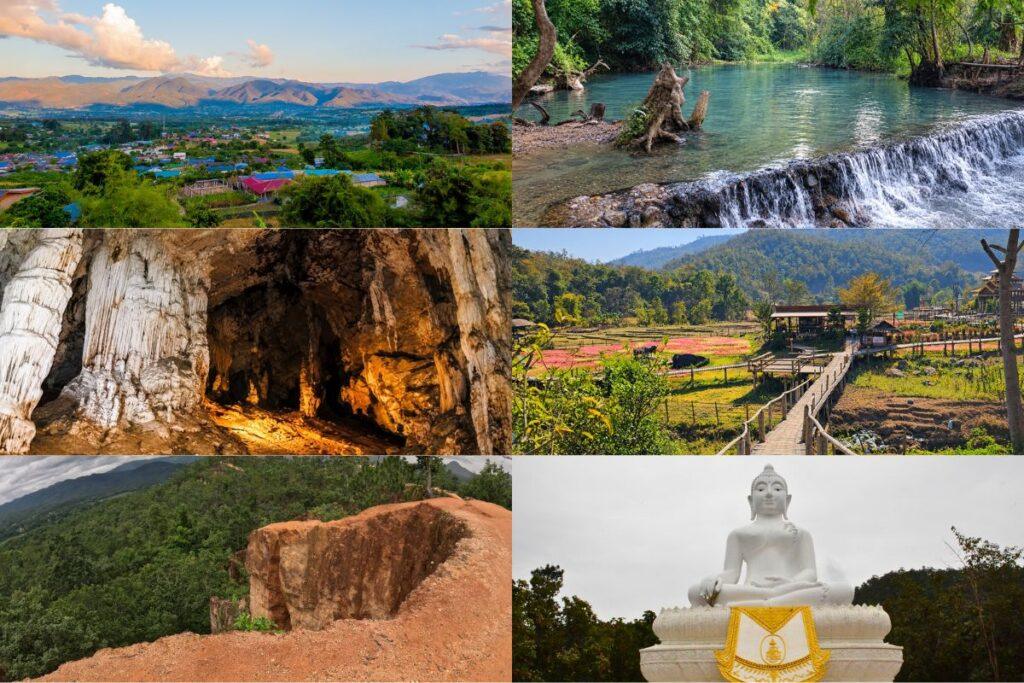
The best things to do in Pai, Thailand, are watching the sunset at Pai Canyon, the Bamboo Bridge, Tham Lod Cave, the White Buddha, Mo Paeng Waterfall, the hot springs, and the Walking Street night market. In three to four nights, you can cover all of it.
Pai is located in Mae Hong Son province, about 146 km northwest of Chiang Mai, on the Pai River. Wikipedia records a population of just 2,284 in 2006. The town now runs on tourism.
- Pai Canyon, the Walking Street and Mo Paeng Waterfall are free to see.
- Scooter hire is 100–200 baht a day, and you will want one.
- Book minivan seats two to three days ahead in high season.
- November to February brings the best weather and greenest fields.
- Tham Lod Cave costs 600 baht per group of three.
Getting There: The Road Of 762 Curves
Pai’s airport lost its commercial flights in 2017, so Chiang Mai is the gateway. Minivans leave Arcade Bus Station for 150–250 baht and take about three and a half hours. Aya Service collects you from your hotel; Prempracha runs from the station. The Lost Passport warns that this minivan is notorious for making people sick. Take a tablet and do not travel with a hangover.
Confident riders tackle Route 1095 themselves, which takes five to six hours of mountain bends. It is one of the region’s deadliest roads, so beginners should not attempt it.
Things To Do In Pai, Thailand: Start In Town
The Walking Street closes to cars from about 6 pm to 10 pm. Stalls sell gyoza, sushi, pad Thai, and papaya salad. Portions are small, so order several. Mango with sticky rice is around 50 baht.
Khao soi is the north’s creamy, spicy noodle soup. A bowl costs about 80 baht. Add chilli and onion yourself.
Cafés are half the appeal. Fat Cat sits in a treehouse, and OM Garden Café fills up early. Jazz House has live music and lets you bring market food in. Two Huts is the sunset spot. You can also train Muay Thai or tube down the river for roughly 300 baht. Tubing runs only in the dry season.
ALSO READ: The Perfect Types Of Holidays For Active Families – A Simple Guide
Pai Canyon (Kong Lan)
Kong Lan is free and ten minutes south of town. Sandstone ridges rise above the jungle with drops of around 30 metres.
Wear proper shoes; the sand is slippery, and flip-flops are dangerous. Arrive by 4:30 pm on a clear day for sunset. Foot Loose Dev reckons mornings bring better light and fewer crowds.
Bamboo Bridge, Santichon, And Yun Lai
The Bamboo Bridge runs about 800 metres over the rice paddies and costs 30 baht. Villagers rebuild it each dry season, so it usually opens from November to April. Go before 9 am for soft light and space. Jaey’s Café at the far end serves shakes and curries in hammocks. Taverna Travels calls this corner its favourite part of Pai.
Santichon Village nearby has a small Chinese wall and a swing. Carry on to Yun Lai Viewpoint, where 20 baht buys you the view, green tea, and a banana.
ALSO READ: The Ultimate 5-Day New York Itinerary For Families
Waterfalls Worth The Ride
Mo Paeng, 12 km northwest, is the easiest to reach and free. A rock acts as a natural slide into a cold pool but you go sitting upright. Pam Bok, 8 km out, has a three-metre jumping ledge, though many now find it underwhelming.
Mae Yen is the real adventure. The jungle trail starts near Valhalla guesthouse and crosses the stream dozens of times. Allow five hours and bring shoes that can get soaked.
Caves, Hot Springs, And Odd Little Stops
Tham Lod Cave lies an hour and a quarter north. Entry is 600 baht per group of three, and a guide is required. The hour-long visit covers three chambers and includes a bamboo raft ride. JoinsTravelling rates it as the most interesting sight near Pai.
Tha Pai Hot Spring is 8km south and charges 200 baht. Sai Ngam, 15 km north, costs 400 baht but stays quieter, with one big pool near a comfortable 34°C. Both are 2026 rates.
Ong’s farm became The Land Split after a 2008 earthquake tore a crack two metres wide and eleven metres deep through it. He turned it into an attraction, handed out free juice and fruit, and asked only for a donation.
The WWII Memorial Bridge sits 9 km out on the Chiang Mai road. Japanese forces improved this route in 1943 to supply their Myanmar campaign, though the bridge itself went up after the war.
The White Buddha
Wat Phra That Mae Yen is located two kilometres east of the town. There are 353 steps and no entry fee. Cover your shoulders and knees, and remove your shoes at the top. Sunrise and sunset are best.
Pai Attractions Quick Planner: Distance, Fees & Ideal Visit Times
| Attraction | Distance from Town Center | Entry Fee (THB) | Best Time of Day | Key Visitor Tip |
|---|---|---|---|---|
| Pai Canyon (Kong Lan) | 8 km (South) | Free | 4:30 PM – Sunset | Wear grippy trainers; narrow ridges can be slippery. |
| Wat Phra That Mae Yen (White Buddha) | 2 km (East) | Free | Sunrise or Sunset | Requires climbing 353 steps; shoulders and knees must be covered. |
| Bamboo Bridge (Boon Ko Ku So) | 11 km (Southwest) | 30 THB | Before 9:00 AM | Open Nov–Apr during the dry season; quietest in the early morning. |
| Mo Paeng Waterfall | 12 km (Northwest) | Free | 11:00 AM – 2:00 PM | Features a smooth natural rock slide into a refreshing pool. |
| Sai Ngam Hot Spring | 15 km (North) | 400 THB | 8:00 AM – 10:00 AM | Clear 34°C thermal waters; less crowded than Tha Pai Hot Spring. |
| Tham Lod Cave | 50 km (North) | 600 THB (per group up to 3) | 10:00 AM – 3:00 PM | Requires a local guide; includes a bamboo raft ride through 3 cavern chambers. |
Table Source: Tourism Authority of Thailand (TAT) & Mae Hong Son Provincial Travel Information Center.
When To Go And What To Budget
November to March is high season: cooler, drier, and busy. March to May brings burning season and poor air quality. June to October is wet and quiet, with fewer tourists. Pai sits higher than Chiang Mai, so pack a jumper for December and January.
Budget travellers can manage on about £11.31 a day. £40 buys better rooms and food. Carry cash, as many stalls take nothing else.
ALSO READ: Top 10 Experiences in Jordan You Won’t Find Anywhere Else
FAQs
Q1. How Many Days Do You Need In Pai?
Three nights is the minimum, and four is better. That covers the canyon, the cave, a waterfall hike, and a lazy café afternoon.
Q2. Is Pai Worth Visiting?
Yes, if you want mountains, cheap food, and a slower pace. Skip it if you dislike winding roads or need city nightlife.
Q3. Do I Need A Scooter In Pai?
Most sights sit outside town, and there is no Grab or Bolt. Hire a scooter if you can ride, or book a day tour.
Q4. What Is The Best Free Thing To Do In Pai?
Pai Canyon at sunset costs nothing and gives the best views around. The White Buddha and Mo Paeng Waterfall are free too.
Q5. Is The Road From Chiang Mai Really That Bad?
It has 762 curves and takes about three hours by minivan. Take motion sickness tablets, sit near the front, and eat lightly first.
Q6. When Should I Book Transport To Pai?
Book two to three days ahead between November and February, as seats sell out. Agencies in town and online both work.
Sources & References
- JOINSTRAVELLING; Best things to do in Pai, Thailand.
- The Lost Passport; Pai, Thailand guide: Everything you need to know before visiting.
- Foot Loose Dev; Top experiences in Pai, Thailand.
- Taverna Travels; Pai, Thailand: Complete travel guide and highlights.
Disclaimer: The information provided in this travel article is strictly for general educational and informational purposes only and is not intended for promotional purposes or endorsement of any destination or service. Travel itineraries, prices, entry rules, and safety conditions can change frequently over time; readers should independently verify all facts and seek professional advice or consult official sources before making travel decisions.