Kellogg’s first put cornflakes on British shelves in 1922. That’s more than a hundred years ago now. And somehow, they’re still hanging around. But the real question is – “Are cornflakes healthy for you or not?” That’s the question many people want to know about. Honestly, in the world of breakfast fads, that’s pretty impressive. Trends come and go fast. One minute it’s granola. Then protein oats. Then green smoothies nobody enjoys drinking.
Cornflakes just stayed put.
Around sixty million boxes still sell every year in the UK. That’s a lot of bowls. Nearly a quarter of the country still starts mornings with them too. Say what you want about the nutrition side of things, but that kind of staying power means something. At least a little.
But here’s what people rarely ask. Are cornflakes actually healthy?
The truth sits somewhere in the middle. Not terrible. Not magical either.
What’s In That Bowl Of Cornflakes?
A standard 30g serving of cornflakes usually contains:
- Calories: 113 kcal
- Carbohydrates: 26g
- Protein: 2g
- Fat: 0.3g
- Sugars: 2.4g
- Fibre: 0.3g
That same 30g bowl also comes fortified with vitamins. You get B1, B2, B3, B6, B9 and B12. There’s vitamin D too, plus iron. And honestly, the vitamin D part matters more than people think.
One bowl gives about half your recommended daily intake. In Britain, where grey skies feel permanent sometimes, that’s genuinely useful. A lot of people don’t get enough vitamin D anyway. So yes, credit where it’s due.
The calorie count stays pretty low too. A serving has only 113 calories. Fat barely registers at 0.3g. Breakfast doesn’t get much lighter than that, really.
Nutritionist Nichola Ludlam-Raine sums it up simply. Cornflakes are “generally low in fat and calories.” She also points out the added vitamins and minerals. Iron and B vitamins especially. That part’s a real positive.
Now compare that with granola for a second. Granola spends a lot of time pretending to be healthier than it is. Fancy packaging helps. Words like “natural” and “wholesome” get thrown around everywhere. Meanwhile, some granolas pack huge calorie counts before breakfast even finishes.
Cornflakes don’t really pretend to be anything fancy. What you see is what you get. Oddly enough, that honesty feels refreshing.
The fortification process does add proper nutritional value too. Iron helps your body make red blood cells. B vitamins support energy release from food. Vitamin D helps maintain healthy bones. Plenty of UK adults fall short in those areas. So the added nutrients aren’t pointless at all.
And let’s be real. Convenience matters.
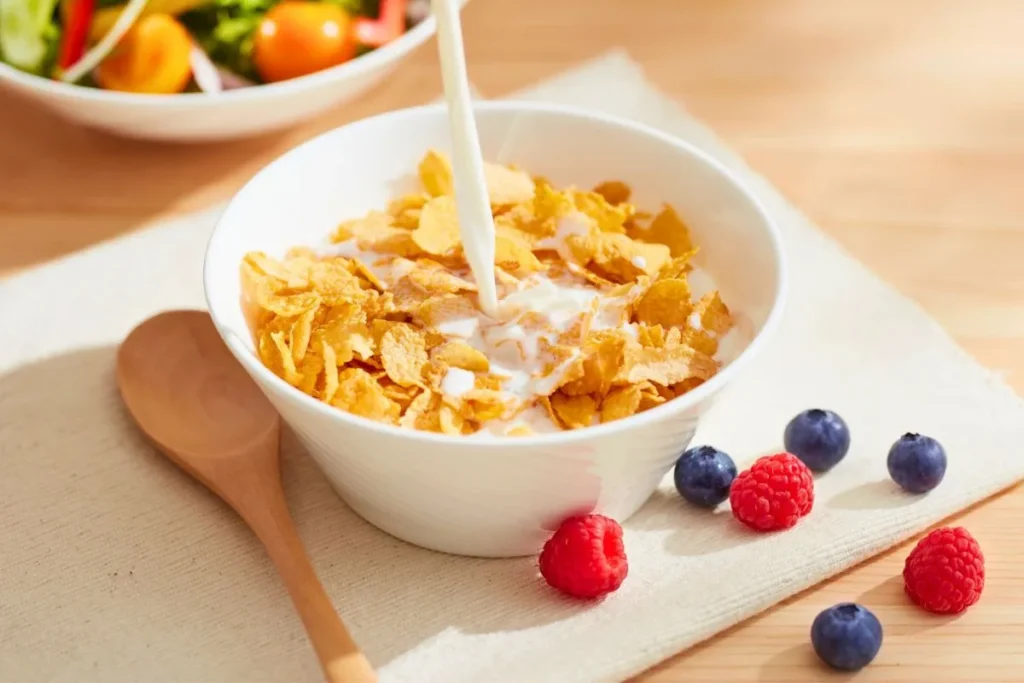
For busy families, cornflakes are easy. No cooking. No prep. Just pour and eat. Add semi-skimmed milk and the meal becomes more balanced. You get protein, calcium and some fat too. That combination helps keep hunger away a bit longer.
ALSO READ: Dandelion Tea: A Natural Root Detox For Better Digestion Aid
The Drawbacks: Where Cornflakes Fall Short
Here’s where things get less impressive.
The British Heart Foundation says cornflakes can fit into a healthy breakfast. Fair enough. But they also point out the fibre problem, and honestly, it’s hard to ignore.
Adults should eat around 30g of fibre daily. A 30g serving of cornflakes gives less than 1g. That’s tiny. You’d need a ridiculous amount of cereal to get close to your target. Probably the whole box, which sounds fun briefly, then awful.
Fibre isn’t exciting. Nobody talks about it at dinner parties. Still, it quietly does loads of important work. It supports digestion. It helps you stay full longer. It also lowers risks linked to heart disease and type 2 diabetes.
Cornflakes don’t contribute much there. Not really.
Then there’s the protein issue.
Two grams per serving. That’s it.
Honestly, that barely counts as breakfast for many adults. A plain bowl might keep you going briefly. Then suddenly it’s 11am and you’re staring into the biscuit tin wondering what happened.
Ludlam-Raine points this out too. Most adults need more than a standard 30g portion. Otherwise, they may not feel full for long. The low fibre and protein content doesn’t help much.
Sugar and salt levels also vary between brands. That catches people out sometimes.
Plain cornflakes contain around 2.4g of sugar per 30g serving. Some gluten-free versions climb slightly higher. Frosted cereals like Frosties jump massively though. Those can contain roughly 11g per serving. Nearly five times more sugar.
So yeah, checking the traffic-light labels matters. Even if it feels boring.
ALSO READ: Biotin Rich Food: Ultimate Guide To Top Sources for Healthy Hair and Nails
Here’s The Inconvenient Bit – Are Cornflakes Healthy For You Or Not?
Cornflakes also have a high glycaemic index. Usually somewhere between 79 and 81.
For context, University Hospitals Sussex NHS Trust places them beside Coco Pops. Yes, really. The chocolate cereal with the cartoon monkey. Same category. Bit surprising, honestly.
And this matters because high-GI foods hit fast.
You eat a bowl. Everything feels fine. Then maybe forty-five minutes later, hunger creeps back in. You feel cranky too, though you can’t fully explain why. That’s usually the blood sugar spike talking.
Quick energy arrives fast. Then disappears just as quickly.
For most people, it’s mostly annoying. For people with type 2 diabetes or insulin resistance, it matters much more. That’s something worth discussing with a doctor, not TikTok comments.
People often say milk fixes the issue completely. That’s not quite true.
Milk does help slow digestion a little. The protein and fat make a difference. But a slower blood sugar spike still remains a spike. Those are not the same thing, despite what cereal adverts might imply.
ALSO READ: A Closer Look At The Benefits Of Cherries For Skin And Real Results
How To Make Healthier Cornflakes
Cornflakes don’t need to stay nutritionally weak. Small changes help more than you’d think.
- Add protein: Try Greek yoghurt, kefir or a handful of nuts and seeds. Those keep you fuller longer.
- Add fibre: Fresh berries work well. Banana slices help too. Ground flax adds fibre without changing taste much.
- Select the right milk: Semi-skimmed and whole milk add protein and fat. Fortified oat or soya milk also works for plant-based diets.
- Watch your serving: Most people pour far more than 30g. It happens without noticing. Keeping portions sensible helps manage carbohydrate intake.
Cornflakes are not a superfood. But calling them junk food feels unfair, too.
The British Heart Foundation says they “can be part of a healthy breakfast.” That word “part” matters a lot, though. Cornflakes alone lack enough fibre and protein for lasting energy. They simply do. Still, with the right additions, they become a decent breakfast option. Cheap too. Convenient. And honestly, some mornings, convenience wins.
If you want a stronger nutritional choice, the BHF recommends porridge, no-added-sugar muesli and Weetabix ahead of cornflakes. Those options support heart health better overall.
Still, for a quick weekday breakfast with semi-skimmed milk and fruit on the side? Most adults in the UK seem perfectly happy sticking with cornflakes. And after a century on shelves, they’re probably not disappearing anytime soon.
Sources & References
- Health Nutrition Insights; Paul, J. (2026, January 14). Are cornflakes healthy: Complete insights into nutrition.
- The Telegraph; Craig, E. (2025, June 21). The healthiest cornflakes and the ones to avoid.
- AlongWalker Health. (2025, June 21). The healthiest cornflakes – and the boxes full of sugar.
- British Heart Foundation. (2025). Healthy breakfast choices: Porridge, muesli, and Weetabix compared to cornflakes.
- NHS Sussex Publications; University Hospitals Sussex NHS Trust. (2025). Glycaemic index of common breakfast cereals.
Disclaimer: This article is intended solely for informational and educational purposes. It does not constitute medical, nutritional, or professional advice, nor is it intended to promote any product, brand, or service. Readers should consult qualified healthcare or nutrition professionals before making dietary or health-related decisions. The information provided is based on publicly available sources and general opinions at the time of writing.