Trusted provenance matters when choosing festive food gifts because traceable origins build consumer trust, guarantee authentic regional quality, and elevate simple treats into meaningful stories. Knowing a product’s precise background provides personal context, creating a genuine connection between recipient and producer.
This shift is increasingly clear in consumer behaviour: 81% of UK consumers buy food and drink as gifts, with 84% viewing them as meaningful options in a global food gifting market reaching $36.74 billion in 2026. Ultimately, recognisable ingredients and honest details carry far more weight than a collection of anonymous treats.
- Modern shoppers value traceable ingredient origins and detailed sourcing over simple festive packaging.
- Hampers featuring authentic regional produce create a meaningful connection to place for the recipient.
- Consumers prefer smaller, thoughtfully curated food bundles over large hampers filled with anonymous items.
- Eco-friendly claims and reusable or recyclable packaging must be transparent and backed by facts.
- Adding a genuine message about the gift’s origin and background makes the present far more memorable.
Food is closely tied to place. Shortbread, preserves, cheese and confectionery can express a region without becoming a souvenir. When a festive gift brings those products together well, it gives the recipient something enjoyable and a reason to look more closely at what they are eating.
What Food Provenance Adds To A Christmas Present
Provenance is the traceable origin and journey of a product. For a shopper, that may include where ingredients were grown, where the food was made and the identity of the producer. Industry data highlights the commercial value of this transparency: 73% of consumers consider ingredient sourcing details important, and products making verified ESG and origin claims achieved 28% cumulative sales growth over five years, outperforming non-claiming products at 20%. Not every detail will appear on the front of a packet, but specific information is far more impactful than broad claims about quality or tradition.
A sense of place helps a gift feel deliberate. A Scottish food selection, for example, may be appropriate for somebody who grew up in Scotland, enjoyed a recent visit or works with a Scottish company. The connection gives the sender something real to mention in the card. It also turns the contents into a set that makes sense, rather than unrelated products chosen to fill a box.
Look For Christmas Hampers With A Clear Regional Identity
Shoppers comparing Christmas hampers can look for named foods, recognisable makers and a mix that reflects the recipient’s tastes. Demand for curated holiday bundles is substantial—over 50% of annual global food gifting sales occur during the festive season, with 72% of consumers gifting food hampers to express gratitude. Highland Fayre, based in Perthshire, offers festive gifts that pair authentic Scottish produce alongside broader Christmas favourites. Product contents and availability can change, so read the live description for the specific hamper before buying.
Regional identity should support the food, not overwhelm it. The recipient still needs products they will enjoy. A selection of shortbread, preserves, biscuits and savoury treats may suit a broad range of households, while whisky, wine or strongly flavoured cheese calls for more knowledge of the person. The best choice connects place with preference.
Avoid assuming that tartan packaging or a place name proves where every product was made. Check labels and descriptions when origin is central to the gift. A retailer that provides specific details makes it easier to distinguish genuine provenance from a visual theme.
Key Provenance & Label Signals Influencing UK Food Gift Buyers
| Provenance / Quality Signal | Shopper Preference (%) | Primary Buying Impact |
|---|---|---|
| Specific Regional / Local Origin | 76% | Establishes a genuine connection to place rather than generic branding |
| Official GI / PDO Certification | 64% | Guarantees authentic, protected regional recipes and heritage |
| Named Artisan Producer Story | 58% | Elevates mass-produced treats into personal, craft-focused gifts |
| Third-Party Quality Awards (e.g., Great Taste) | 52% | Provides independent validation of premium flavour and quality |
| Fully Recyclable / Reusable Packaging | 47% | Prevents unwanted clutter and aligns with eco-conscious values |
Table Source: Synthesised from UK Food Standards Agency (FSA) Consumer Insights and Mintel UK Food & Drink Gifting Benchmark Data.
Choose Fewer Products With A Reason To Be There
Large item counts can look appealing online, but numbers say little about coherence. Market research confirms that sheer volume and low price are top priorities for only 31% of food gift buyers, with only 14% citing price as their most critical factor. Instead, consumers value quality and curation.
A smaller hamper is often more satisfying when each product has a clear purpose: crackers, cheese, and chutney form one balanced group; tea, shortbread, and preserves suit relaxed afternoons; while chocolate, coffee, and a festive cake cover several evenings.
This way of choosing also makes the gift easier to explain. Instead of saying that the hamper contained the most items within budget, the sender can say they chose Scottish treats because the recipient enjoyed a particular holiday or misses familiar flavours. That sentence gives the present context.
Pack sizes deserve attention. A tiny jar may count as one item but provide little value to a household. Conversely, an enormous cake may be impractical for someone living alone. Check weights, note how products must be stored and review use-by dates where these are supplied. Thoughtful consumption starts with buying an amount that is likely to be eaten.
Treat Sustainability Claims With Care
Many gifts are described using words such as sustainable, responsible or eco-friendly. Those terms must be supported by verifiable data—under the UK Competition and Markets Authority’s (CMA) Green Claims Code and the Digital Markets, Competition and Consumers Act 2024, companies face regulatory penalties of up to 10% of global turnover for unsubstantiated claims. Consumers are equally vigilant: 54% actively select sustainable packaging and 39% have switched brands over eco-packaging concerns, making factual explanations about materials and sourcing essential.
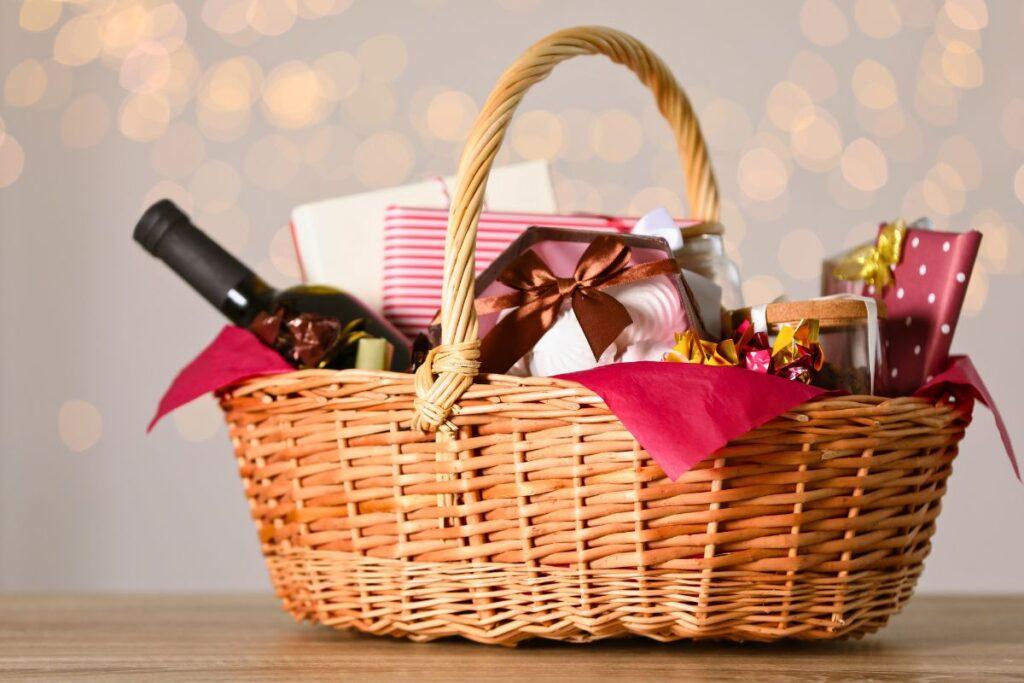
The container is an obvious place to start. Wicker baskets, wooden boxes and sturdy gift cartons can all have a second use, but reusability depends on the recipient. A large basket may become picnic storage in one home and unwanted clutter in another. Recyclable packaging may be more appropriate for somebody with little space. Neither choice is automatically superior in every situation.
Check what happens to protective filling, sleeves and outer delivery packaging. Clear disposal instructions are helpful. Avoid treating one positive feature as proof that the entire present has no environmental impact. Food production, transport, packaging and waste all matter, and honest choices are better than sweeping promises.
Use The Gift Message To Tell The Real Story
If provenance influenced the selection, mention it briefly. A note might refer to a memorable Scottish trip, family roots or the pleasure of trying foods made in a particular area. The explanation should be personal and accurate, not a miniature advertisement.
For corporate gifts, the message can connect the choice to the business. In a global corporate gifting market valued at $956.93 billion in 2026, 56% of corporate buyers now prioritise eco-friendly and ethically sourced gifts to align with corporate social responsibility goals. A Scottish company might select regional food gifts—a category representing 24% of corporate gifts—to share its heritage with clients elsewhere in the UK. Keep the wording modest and authentic unless every provenance claim has been verified.
The recipient may also enjoy discovering the products independently. Leave original labels intact and include any producer information supplied with the hamper. Food stories are most credible when the maker and place can be identified.
A Better Standard For Meaningful Christmas Gifting
Choosing by provenance does not require rejecting familiar festive treats. With UK consumers spending over £24.6 billion on Christmas presents and celebrations annually, classic items like Christmas pudding, chocolate, and biscuits remain holiday staples. The difference is that a provenance-led selection gives these items a distinct identity, ensuring gifts stand out in a season where retail spend surges 40% to 60% above normal weekly averages.
Begin with the person, decide whether a regional connection would mean something to them, then examine the actual contents. Look for useful quantities, specific origin information and packaging that suits their home. This approach can produce a present that is enjoyable on the day and easier to remember afterwards, because the food arrived with a genuine connection to place.
ALSO READ: What Is The Most Popular Food In The World In 2026? Let’s Find Out
FAQs
Q1. What Is Food Provenance In Christmas Gifting?
Food provenance refers to the traceable origin and journey of ingredients, producers, and the specific region where a gift’s food was made.
Q2. Why Are Regional Food Hampers Popular For Christmas?
Regional hampers offer authentic local flavours and provide a genuine, personal connection to a place that matters to the recipient.
Q3. How Do You Check If A Food Hamper Is Sustainably Packaged?
Look for specific descriptions detailing reusable containers alongside clear recycling and disposal instructions rather than vague eco-friendly labels.
Q4. Why Choose A Smaller Curated Hamper Over A Larger One?
A smaller curated hamper prioritises high quality and thoughtful food combinations over an excessive number of anonymous fillers.
Q5. How Can Businesses Choose Meaningful Corporate Christmas Gifts?
Businesses can select ethically sourced regional food hampers that reflect local heritage whilst supporting corporate social responsibility goals.
Sources & References
Competition and Markets Authority (CMA). (2026, March). Green Claims Code: Guidance for businesses on environmental claims. GOV.UK Regulatory Guidance.
- Statista. (2026, February). Global food gifting market size forecast to 2026. Statista Market Data Report.
- Wikipedia. (2026). Food provenance.
- Mintel. (2025, December). UK consumer attitudes towards food and drink gifting. Mintel Consumer Research.
University of Edinburgh – Business School. (2025, October). Provenance and consumer trust in food gifting markets. UoE Research Paper.
Disclaimer: The information provided in this article is for general informational and educational purposes only and does not constitute commercial promotion or endorsement. Readers should independently verify all product details, claims, and facts, and consult with qualified professionals before making purchasing decisions.