
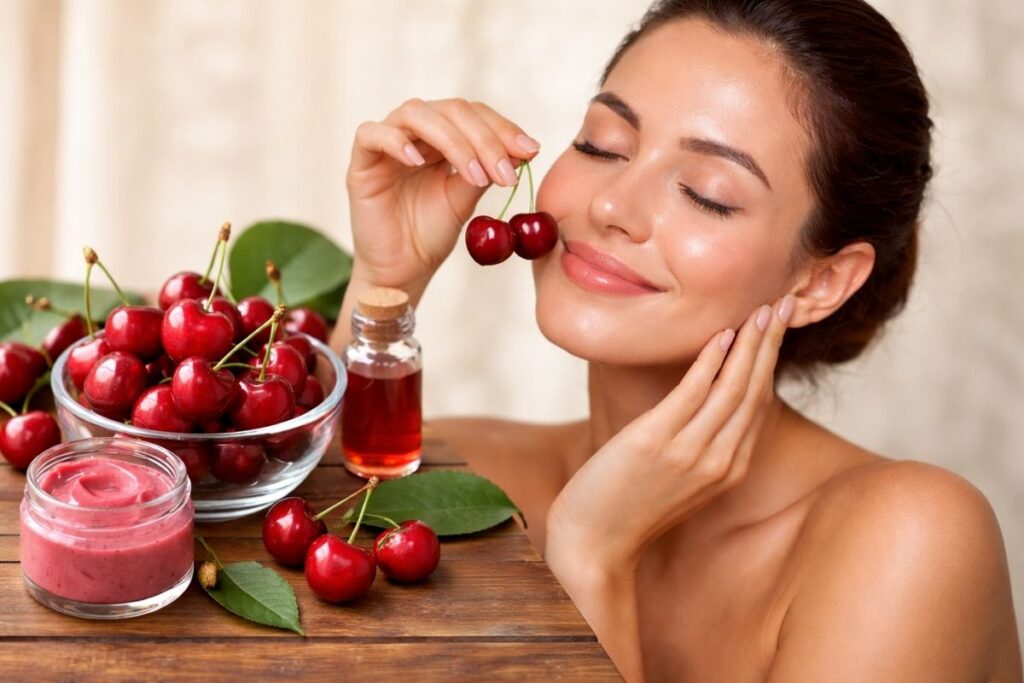
Typically, when a fruit gains popularity in the beauty world, it is often perceived as a temporary trend. We’ve had the watermelon phase, the pineapple obsession and that weird year when everyone smeared kale on their faces. Usually, it’s a marketing ploy — a pleasant fragrance and an attractive pink label. But something is actually changing in the UK beauty scene right now. Walk into any Boots or check out the high-end launches in W Magazine, and cherries are everywhere. But the thing is, it isn’t that fake, sugary smell from the 90s. We’re speaking of potent, lab-grade extracts from the pits, skins and even stalks.
The real reason the benefits of cherries for skin are topping the charts in April 2026 isn’t just because they look good on an Instagram grid. It’s because these fruits are really small biological survival kits. Think about it. Cherries grow in extreme conditions, subject to wild temperature fluctuations and punishing UV. To survive, they cram themselves full of protective antioxidants.
What happens when we put that on our skin? Well, it turns out it’s just what you need to combat the grey, dulling vibe of a British winter or actual grime from the London Underground.
The “Natural Botox” Myth? Let’s Get Technical
Look, people are always wary of anything called “Natural Botox.” Nothing in a bottle is going to freeze your forehead like a needle. Let’s be real. However, there’s a massive grain of truth here. Cherries are loaded with Anthocyanins and Quercetin. These aren’t just fancy words to put on a box; they are absolute beasts at fighting oxidative stress.
In our neck of the woods, pollution is the main enemy. Particulate matter from traffic eats your collagen for breakfast. It literally triggers enzymes that break down the “scaffolding” of your face.
By neutralising these free radicals, cherry extract acts like a security guard. A ResearchGate study from late 2025 proved that upcycled cherry pits could actually protect human skin cells from this specific kind of environmental damage. It keeps the “snap” in your skin. Simple as that.
ALSO READ: Is Your Stomach Pain IBS or a More Serious Illness? Here’s How to Tell
Brightening Up Without The Burn
If you’ve ever used a high-strength, synthetic Vitamin C serum and ended up with a face as red as a postbox, you’ll appreciate this. Acerola cherries are one of the most concentrated sources of vitamin C on the planet. But it’s different from the stuff made in a vat. It’s naturally “buffered” by the other nutrients in the fruit.
The benefits of cherries for skin include an incredible ability to fade ‘post-inflammatory hyperpigmentation’—that’s the annoying dark spots left behind by spots or sun damage. It works by gently slowing down the tyrosinase enzyme, which is the “switch” that tells your skin to produce excess pigment. Brands like Clinikally have been shouting about this for a while now. It’s the “glow” factor without the “ouch” factor.
Fixing The Barrier (Because British Weather Is Rubbish)
Let’s be honest: our weather is a nightmare for skin. One minute you’re standing out in the bitter wind on a train platform, and the next you’re going into an office with the heating set to thirty. It disrupts the lipid barrier of your skin. When that barrier cracks, moisture seeps out, and you appear haggard, sallow and five years older than your actual age.
And this is where Cherry Seed Oil comes in. It’s rich in Eleostearic acid—a rare fatty acid that forms a thin, breathable film on the skin. (Something that doesn’t just sit on top like a cheap moisturiser, but rather sinks in and “plugs” the leaks in your skin cells.) This is why you’re seeing it in so many “barrier repair” serums in 2026. It makes your face feel plump and damp, even when the humidity is all over the place.
ALSO READ: How Root Of Burdock Helps With Skin, Gut, And Daily Health
Calming The Chaos: Acne And Redness
Inflammation is basically the root of all evil when it comes to skin. Be it rosacea or a hormonal breakout, the cherries help soothe things down. They’re naturally anti-inflammatory.
The Face Facts Cherry Bliss collection is a perfect example of the “new wave” of fruit skincare. They’ve used cherry extracts with gentle acids. The result? You get the exfoliation you need to clear your pores, but the antioxidants hold the redness at bay. It is a much more intelligent, “human” way to address problem skin than to simply vaporise it with the most severe chemicals and pray for the best.
The “Upcycled” Secret: Why 2026 Is Different
The unique thing about skincare news right now is the focus on sustainability. In 2026, we don’t just want results; we want to know where the stuff comes from.
A lot of the best cherry extracts now come from “upcycled” sources. They take the pits and skins left over from the food industry and cold-press them. This doesn’t just save waste; it actually produces a higher concentration of nutrients. The pit is where the “life force” of the fruit is stored. By using these leftovers, skincare companies are getting a more potent product that’s better for the planet. It’s a win-win, really.
ALSO READ: How the Rise of the Biohacking Spa is Redefining British Wellness in 2026
The 2026 Cherry Cheat Sheet
| Ingredient | What It Actually Does | Who Needs It? |
|---|---|---|
| Anthocyanins | Protects collagen from car fumes | City dwellers |
| Acerola Vit C | Brightens dark spots and scars | Anyone with sun damage |
| Eleostearic Acid | Stops “leaky” skin moisture | Dry/Sensitive types |
| Quercetin | Stops the “stinging” feeling | Rosacea sufferers |
The Final Word
Skincare trends come and go, but the 2026 obsession with cherries feels like it’s got actual legs. We’re finally moving toward ingredients that are sustainable, scientifically backed, and actually feel good to use. Whether you’re trying to look less like a zombie after a long week or just want to protect your face from the city air, it’s worth a look.
Anyway, it’s better than smelling like a chemistry set, isn’t it? Grab a punnet for the kitchen and maybe a serum for the bathroom cabinet. Your face will probably thank you for it by the time the next bank holiday rolls around.
ALSO READ: What Are Good Skin Care Products For Sensitive Skin? A Proper Guide That Actually Helps
FAQs
Q1. Can I Just Smash Up Some Cherries From Tesco?
Please don’t. I’ve tried the DIY route, and it’s a sticky disaster. Plus, the sugar in raw fruit can actually feed the bacteria on your skin. Stick to the lab-formulated stuff where the “good bits” have been extracted and the “sticky bits” have been removed.
Q2. Which Cherry Should I Look For?
If you want to brighten, look for acerola. If you want to soothe redness and stop ageing, look for tart cherry or black cherry.
Q3. Is It Okay For Oily Skin?
Yeah, surprisingly. Cherry seed oil is what we call “non-comedogenic”. It’s a thin oil that doesn’t clog pores. In fact, it can help balance your own oil production.
Q4. When Will I See A Difference?
With the brightening, give it about four weeks (the time it takes for your skin to “cycle”). For the hydration and calming, you’ll usually feel that within about twenty minutes.
Disclaimer: This article is intended for informational purposes only and does not constitute professional skincare or medical advice. The content is not meant to promote any specific product or brand. Individual results may vary based on skin type and usage. Always consult a qualified professional before trying new skincare treatments.