

I was in the middle of the frozen aisle at a packed Tesco in South London last Tuesday, staring as a young dad tried to get his kid interested in a pack of fish fingers by telling her they were “dinosaur treats”. This is a scene repeated a thousand times each day in the UK. But as I looked at that familiar blue MSC label on the box, I couldn’t help but think about how much the world of the fish inside—the Alaskan Seiti—has shifted in just the last few months.
If you’ve never heard the name “Seiti,” you’ve almost certainly eaten it. It’s the Finnish name for Alaska Pollock (Gadus chalcogrammus), the unsung hero of the British dinner table. It’s the crisp, white flake inside your McDonald’s Fillet-O-Fish and the backbone of every Birds Eye classic.
But as of February 2026, this humble Alaskan Seiti whitefish is no longer just a budget-friendly staple; it’s at the centre of a massive global debate involving tribal rights, corporate takeovers, and a “swicy” food revolution.
The 2026 Sustainability Standoff: Gold Standard Or Greenwashing?
Look, here’s the thing. For years, Alaska Pollock a.k.a Alaskan Seiti has been called the “Gold Standard” of sustainable fishing. For now, however, that crown is slipping. In January 2026, the Marine Stewardship Council (MSC) re-certified Alaska Pollock trawl fisheries. On paper, everything looks great. The fish stocks are in excellent shape, and the maths says we’re not depleting them by overfishing.
However, if you speak to the local indigenous fishers who live along Alaska’s coast and actually fish, you will hear a different story. There’s a growing “trust recession” happening. Groups like the Kuskokwim River Inter-Tribal Fish Commission are making a lot of noise about “bycatch.” That’s the industry term for when big industrial trawlers accidentally scoop up Chinook salmon and crab while looking for Pollock.
The latest reports from Alaska Fish News indicate that while we’re enjoying our affordable fish suppers in the UK, some communities in Alaska haven’t been allowed to fish for their own salmon for years because the numbers are so low. They feel the MSC process is a bit of a “pay-to-play” system that ignores the local reality. It’s a classic case of global certification vs. local impact, and it’s making a lot of us in the industry think twice about what “sustainable” really means.
ALSO READ: Biotin Rich Food: Ultimate Guide To Top Sources for Healthy Hair and Nails
The “Swicy” Revolution: How We’re Eating Alaskan Seiti In 2026
But enough of the serious matters. Let’s focus instead on what is actually on your plate. If you’ve been out partying in London or Manchester recently, chances are you’ll have noticed that Alaskan Seiti is having a bit of a moment. We’re moving past the “hidden” ingredient phase.
- The Surimi Surge: Alaskan Seiti is the main ingredient in surimi (those crab sticks we all secretly love). But in 2026, the trend is “Swicy”—sweet and spicy. Imagine surimi chunks coated in gochujang or harissa. It’s the new snack of choice for the “Gourmet Convenience” crowd.
- Premium Ready Meals: The UK trend #1 in 2026 is Gourmet Convenience. Meals that have Alaska Pollock, a low-fat and protein-rich alternative to traditional cod, are making an appearance.
- The Fast Food Secret: It remains the unquestioned king of the drive-thru. McDonald’s still uses it for its pristine, mild flavour that doesn’t overwhelm the tartar sauce.
Prepare It Like A Pro: The “Swicy” Pan-Seared Alaskan Seiti
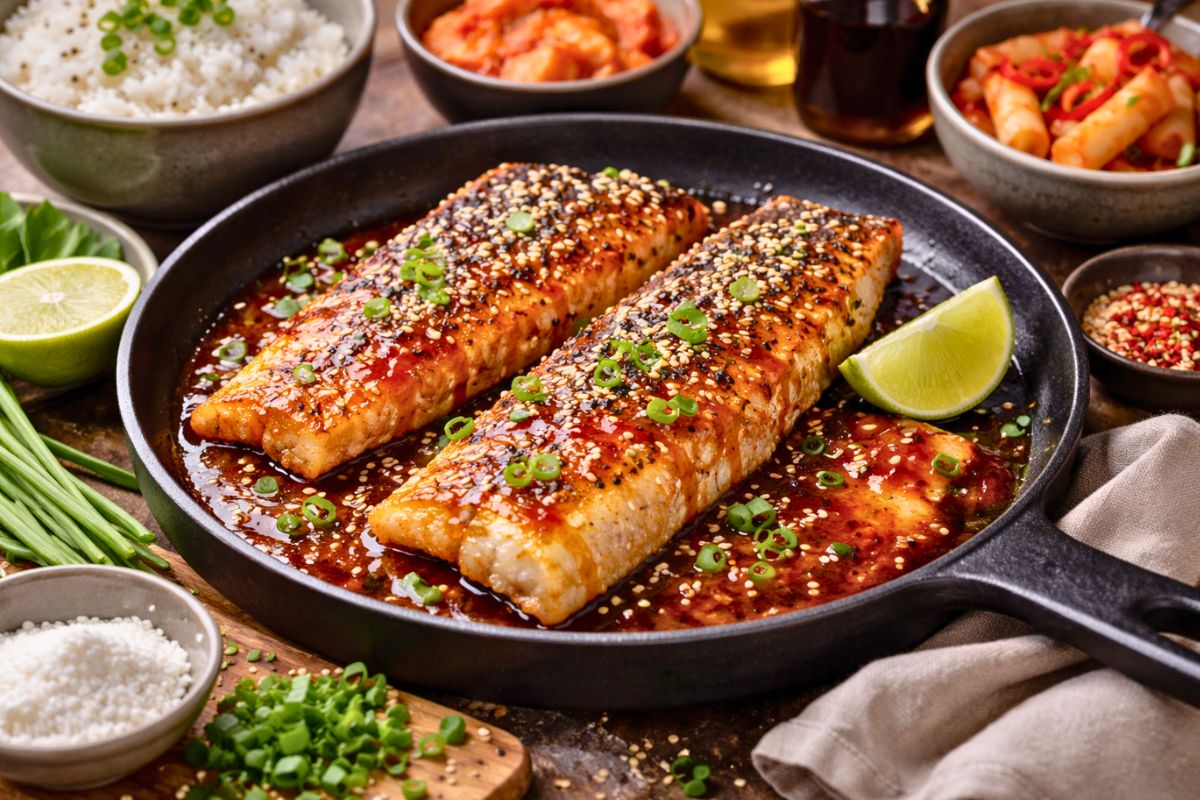
Listen, the mistake most people make with frozen fish is thinking it’s somehow “second best”. If you do it right, it’s restaurant quality. Here’s the way I’ve been making Alaskan Seiti lately for a perfect, crispy-skin finish with none of the fish falling apart.
What You’ll Need:
- 2 Alaskan Seiti Fillets (frozen is good, but defrost them the right way in the fridge for a whole night).
- Cornflour/cornflour: (the secret ingredient for that “glass-like” crunch).
- The ‘Swicy’ Glaze: 1 tablespoon of Gochujang with a teaspoon of honey, a splash of soy sauce and some lime juice.
- Oil: Something with a high smoke point (Canola or Rapeseed). Just steer clear of butter at the outset — it’ll scorch!
The Method:
- The Great Pat-Down: This one is not optional. Pat your thawed Alaskan Seiti fillets bone-dry with kitchen paper. If they are wet, rather than searing, they will steam. You need the fillets to be as dry as a desert.
- The Dusting: Season with salt and pepper, then lightly dust with cornstarch. Shake off the excess. You want a whisper of a coating, not a heavy batter.
- The Hot Pan Trick: Preheat your heavy skillet (the sturdier the better; cast iron if you have one) until you see little specks of smoke. Add the oil.
- The Sizzle: Lay the fish in. Don’t touch it. Allow it to make a crust for 2-3 min. If it “releases” easily from the pan, it’s ready to turn.
- The Glaze: Reduce the heat. Brush on your “swicy” mixture in the last 60 seconds of cooking. Let it bubble and caramelise.
ALSO READ: Are Cornflakes Healthy For You Or Not? Nutritionists Reveal The Truth
The Nutritional Lowdown: Is It Actually Good For You?
Honestly? Yes. It’s one of the cleanest proteins you can get. As reported by the Alaska Seafood Marketing Institute, calories from wild Alaska pollock are 97% from protein—which is a much higher ratio than chicken breast or lean beef.
In a standard 100g of Alaskan Seiti nutritional serving, you receive:
- 17-19g Protein: With all nine essential amino acids.
- Vitamin B12: About 130 percent of your daily value. It’s a brain-health powerhouse.
- Omega-3s: Approximately 285mg to support heart health and inflammation.
- Selenium & Potassium: Both of these are important minerals that most of us don’t get enough of.
The Verdict: A Fish At The Crossroads
So, where does that leave us? Alaskan Seiti belongs to a strange middle ground. On the one hand, it’s the most successful commercial fish in history, a high-protein “liferaft” for families on a budget. On the other hand, it’s having a mid-life crisis as the world calls for more transparency and greater protection of local ecosystems.
The next time you’re sitting down to a fish burger or snacking on a “swicy” seafood salad, take a moment to think about the route that piece of fish navigated. From the fiercely contested waters of the Bering Sea, all the way to a high-tech processing plant and ultimately to your fork, it’s about much more than just a “cheap alternative”. It’s a tale of how we feed the world in 2026—and what it costs us in terms of convenience.
Anyway, I’m off to see if I can find some of that harissa surimi for tea. Catch you later!
ALSO READ: Who Is The Richest Chef In The World? A Hawaiian Chef Beat Everyone In Top 5
FAQs About Alaskan Seiti
Q1. Is Alaskan Seiti The Same As British Pollock?
Not quite. While they’re cousins, Alaskan Seiti is caught in the icy North Pacific. It tends to have a more consistent, snowy-white flesh compared to the slightly darker Atlantic Pollock we find closer to home.
Q2. Why Is It Called “Seiti”?
That’s the Finnish name. Here, we tend to just refer to Alaskan Seiti as Alaska Pollock. But because Finland is a major market for this fish, the name has taken on some measure of cult status among seafood geeks and people inside the industry.
Q3. Can I Cook It From Frozen?
You can, but I wouldn’t suggest it for a pan-sear. If you’re in a hurry, you could also use their “Cook It Frozen!” method (from NOAA Fisheries): remove the glaze of ice, brush with oil, and bake at 200°C for approx. 10-12 minutes. It won’t be crunchy, but it will be safe and flaky.
Q4. Is The 2026 “Bycatch” Controversy Going To Make It More Expensive?
Possibly. The NOAA Fisheries 2025–2026 Harvest Specifications have set strict Total Allowable Catch (TAC) limits. If supply drops to protect salmon and crab, you might see a slight bump in price at the checkout.
Sources & References
- NOAA Fisheries: 2025–2026 Alaska Groundfish Harvest Specifications
- Alaska Seafood Marketing Institute: Wild Alaska Pollock Species Profile & Nutrition
- SeafoodSource (Jan 2026): Coalition Criticizes MSC Recertification of Amendment 80 Fleet
- Kuskokwim River Inter-Tribal Fish Commission: Speak Up For Salmon: February 2026 Action
- Alaska Fish News: 2025 Yukon River Preliminary Summer Season Summary (Jan 2026)
Disclaimer: This article is provided for informational and educational purposes only. It is not intended as advertising, endorsement, or promotion of any company, service, or food product mentioned. While care has been taken to ensure the information is accurate at the time of writing, no guarantees are made regarding completeness or ongoing accuracy. Readers should seek independent professional advice before making any decisions based on the content of this article.