
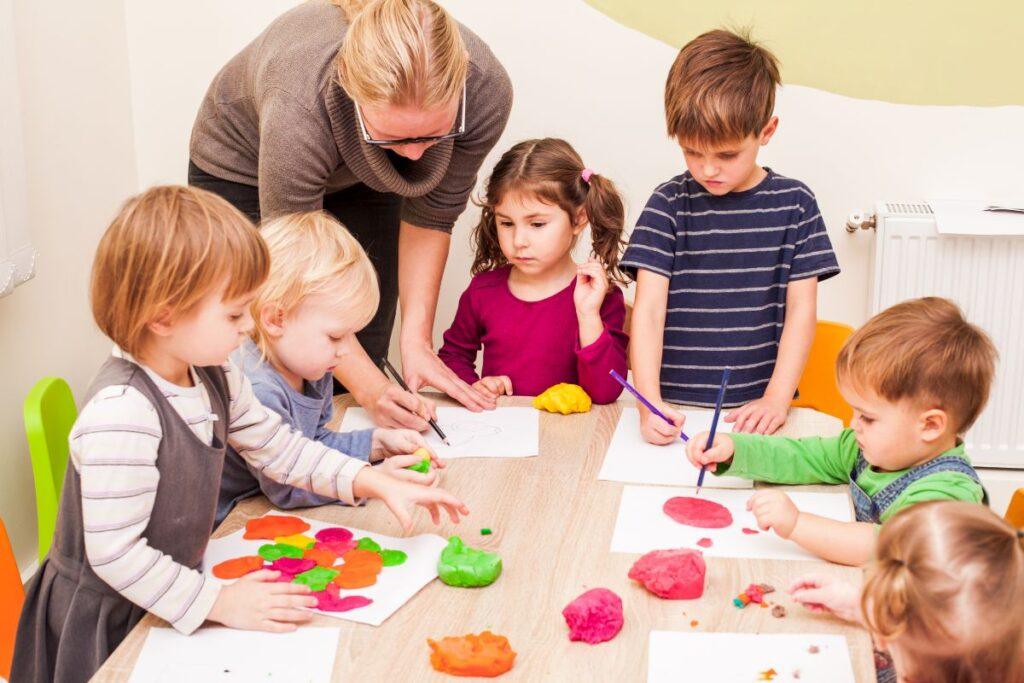
Kids learn in all sorts of ways. Some love books and puzzles. Others figure things out by moving, building, tinkering or making a mess. Kids art gives children one more way to explore the world, try new skills and say what’s on their minds.
- Art classes help children develop creative thinking and imagination.
- Structured projects strengthen children’s concentration and patience.
- Drawing and painting activities support fine motor skills and coordination.
- Creating art builds self-confidence and aids in emotional expression.
- Group art sessions encourage independent problem-solving and social learning.
Families in Vaughan and Thornhill have plenty of ways to fill a child’s week. Art classes are one option worth a look. Drawing, painting and mixed-media projects ask children to notice details, make choices and work through small problems. That’s a lot packed into an hour.
These classes can sit nicely beside school learning. They also give kids something fun to do and let their personalities show.
Developing Creative Thinking And Imagination
Creativity isn’t just about making a pretty picture. It’s about coming up with ideas. It’s about trying a different angle when the first one doesn’t work. People have been turning ideas into images for thousands of years, and ancient art shows just how old that urge really is.
During an art project, a child might decide how to show a subject. They might pick materials or work out which colours go together. A studio like Dream Art Studio can guide those choices without taking them over. Each decision nudges the child to think about possibilities and test a few solutions.
Picture a child drawing an imaginary city. They might design odd-shaped buildings, invent a new way to travel and paint a bright sky over the lot. An idea in their head becomes something they can point at. Pretty cool, when you think about it.
Good classes teach new techniques but leave room for choice. Over time, kids get more comfortable sharing ideas. They stop expecting every attempt to be perfect. Let’s be real, nobody’s first try is perfect, and that’s fine.
ALSO READ: How to Help Children Process Traumatic Events in Age-Appropriate Ways
Strengthening Concentration And Patience
Many art projects have several steps. Children need to listen to instructions, look closely and finish what they start. That’s real practice in focus and patience.
A detailed drawing might mean studying shapes, adjusting proportions and adding small details bit by bit. That kind of close looking is also why older kids often get hooked on the science behind optical illusion art, where small changes in line and shading trick the eye. A painting might need the background done first. Then the main subject goes on top. Skip a step, and it shows.
With repeated practice, kids get used to working toward a goal. They also learn that good results can take time. Rushing rarely helps, and children notice that on their own.
Instructors can break projects into small stages and offer encouragement along the way. Celebrating progress matters. It shows children that steady effort is part of learning, even when the result isn’t flashy.
Supporting Fine Motor Skills And Coordination
Drawing, painting and crafting all need controlled hand movements. Kids hold pencils, guide brushes, shape clay and place tiny pieces. Each of these builds fine motor coordination.
Children also start to notice how their hands move. They see that different tools give different results. Repeated drawing practice helps them make lines, curves and shapes with more control.
Painting adds new challenges. A child has to adjust brush pressure and stay inside certain areas. Collage work is another one. Kids arrange materials and think about placement and spacing. With the festive season coming up, easy DIY Christmas decorations make a fun home project for extra cutting, glueing, and threading practice.
The US Centers for Disease Control and Prevention (CDC) lists drawing skills in its developmental milestones. Here’s a quick look at what that guidance says for the early years.
| Age | CDC drawing milestone | How art class can help |
|---|---|---|
| 3 years | Draws a circle after seeing someone show how | Simple shape tracing and scribble games |
| 4 years | Draws a person with three or more body parts | Guided character drawing |
| 5 years | Draws a person with at least six body parts | Adding detail to drawings and paintings |
Every child develops at their own pace, so these are guideposts, not deadlines. Art just gives kids a fun place to practise these movements. It’s part of a bigger learning picture.
Explore Children Art Classes Vaughan
Parents who want structured creative learning can look at Children Art Classes Vaughan at Dream Art Studio. The program serves children aged four to six. It introduces art techniques through guided projects and hands-on play.
Young kids get to try drawing, painting, colour, texture and mixed-media materials. These experiences show them there’s more than one way to make something. They also learn how to put an idea on paper.
An age-appropriate class brings in simple instructions and routines, with plenty of room left for imagination. Children may learn to set up materials and follow a sequence of steps. Bit by bit, they finish projects with less help.
Before deciding, parents can read through the program details. These cover the activities, class setup and enrolment options. It’s worth checking whether the lessons suit your child’s personality.
Building Confidence And Emotional Expression
Kids don’t always find the words for their feelings. That’s normal. Art gives them another route. They can use images, colours and shapes to say what’s hard to say out loud.
A child might draw a favourite memory. They might paint a scene from nature or create a character from a made-up story. Talking about the finished piece can get them sharing in a relaxed way. No pressure, no big interview.
Art also builds confidence. When a project is done, children see what their effort produced. They recognise what they’ve learned, and oddly enough, that feeling sticks around. Small wins like these add up to some of the mental health benefits that come from feeling capable and valued.
Supportive feedback makes a difference. Adults don’t have to expect every artwork to look a certain way. They can ask the child to explain their choices and say what they enjoyed. That tells kids that both self-expression and improvement matter.
Encouraging Problem-Solving And Independent Thinking
Creative projects rarely go to plan. A colour might look different once it dries. A drawing might need a few fixes. It happens to everyone, including adults.
These moments push children to look at what went wrong and think of a fix. They might mix another colour or move things around. Or they might try a whole new technique.
That’s flexible thinking in action. Instead of quitting when something goes sideways, kids learn to treat surprises as a reason to experiment. It’s a small-scale version of learning to turn setbacks into success, something plenty of adults are still working on. It’s a handy habit for maths homework and life in general.
Good art classes offer the right level of challenge. They also let children make decisions on their own. Teachers can guide without fixing every problem for the child. That balance isn’t easy, but it’s worth aiming for.
Creating Opportunities For Social Learning
Group classes help with communication and teamwork too. Children share supplies, talk about their projects and watch how others work. They also learn to respect each other’s ideas.
Seeing a classmate tackle the same subject differently can stretch a child’s view of creativity. People have different tastes, and they can all make meaningful work. That’s a useful lesson at any age.
Group settings also encourage kids to ask questions and speak up about what they need. A welcoming room lets each student join in at their own comfort level. They learn from what everyone else is doing.
Parents should look for programs that promote respectful behaviour and recognise individual differences. Constant comparison between students doesn’t help anyone. A good class avoids it.
Conclusion
Art classes can support a child’s growth in many ways. They offer practice in concentration, coordination, creative thinking, problem-solving and self-expression. They also sit well alongside other learning, and kids get to follow their interests in a fun setting.
For parents in Vaughan and Thornhill, an age-appropriate program with supportive teaching can build skills and confidence over time. The finished painting or drawing isn’t really the point. What counts is the curiosity, persistence and willingness to learn that children carry into other parts of life.
ALSO READ: Most Famous Art Museum in London- A Guide
FAQs
Q1: How Do Kids Art Classes Benefit A Child’s Overall Development?
Art classes boost creativity, fine motor skills, concentration, emotional expression and problem-solving. They give children a hands-on way to practise all five.
Q2: What Age Groups Can Enrol In Art Classes In Vaughan?
Programs such as the one at Dream Art Studio are designed for young children aged four to six years old.
Q3: How Do Art Activities Help Strengthen Fine Motor Skills?
Handling brushes, pencils and craft materials builds hand-eye coordination. Over time, children gain more control over small hand movements.
Q4: Can Kids Art Classes Improve A Child’s Performance In School?
They can help. Art teaches patience, focus and problem-solving, and those skills carry over to schoolwork and classroom routines.
Q5: What Should Parents Look For When Choosing A Child’s Art Program?
Look for supportive, age-appropriate programs. Pick ones that encourage individual expression instead of strict comparison between children.
Sources & References
- UNESCO – “UNESCO Framework for Culture and Arts Education: Implementation Guidance.”
- National Endowment for the Arts – “Educating Ourselves About Childhood Arts Experiences and Why They Matter.”
- Harvard Project Zero – “Art|Play: Connecting Contemporary Art and Children’s Play.”
- Harvard Graduate School of Education / ArtLab – “Creativity and Art Making in Early Childhood Education.”
- Centers for Disease Control and Prevention (CDC) – “CDC’s Developmental Milestones.”
- Americans for the Arts – “Arts Education.”
Disclaimer: The content provided in this article is intended strictly for informational and educational purposes and does not constitute an endorsement, promotion, or commercial recommendation for any art program or studio. While effort has been made to ensure accuracy, developmental guidance and availability may vary over time. Readers are encouraged to independently verify all facts, research local programs, and consult with qualified education or child development professionals before making enrolment decisions.