If you’re wondering, is Prague a good place to vacation? The answer is: YES. You get a UNESCO old town, the biggest ancient castle on earth, pints under £2, and a two-hour hop from most UK airports. Go in August, and you’ll spend half the trip shuffling behind selfie sticks. Nearly 500,000 Brits stayed overnight in 2025, out of 8.3 million guests.
- The historic centre is UNESCO-listed since 1992
- Prague Castle is the world’s largest ancient castle, roughly 70,000 square metres
- A beer is about 55 Kč (£2), a Czech dinner 220 Kč (£8)
- The currency is the Czech koruna, not the euro
- June and September are the sweet spot; January is cheap and empty
Honest Verdict On A Prague Vacation
Two things are true. Prague has architecture, beer and value better than nearly anywhere in Europe. It also gets rammed in a handful of spots.
Rick Steves’ Europe calls it “equal parts historic and fun” and flags the thing that explains everything: Prague is the only Central European capital to escape the large-scale bombing of the last century’s wars. None of it is a rebuild.
Plenty of people don’t click with it the first time. The writer behind That Travel missed the hype on visit one: she’d rushed it and arrived knackered after a late night in Berlin, and a bored local told her there was nothing beyond Charles Bridge. A week-long return trip made her a convert. Prague punishes a sprint.
ALSO READ: Europe in September: 10 Destinations for Every Type of Traveller
What Makes Prague Special
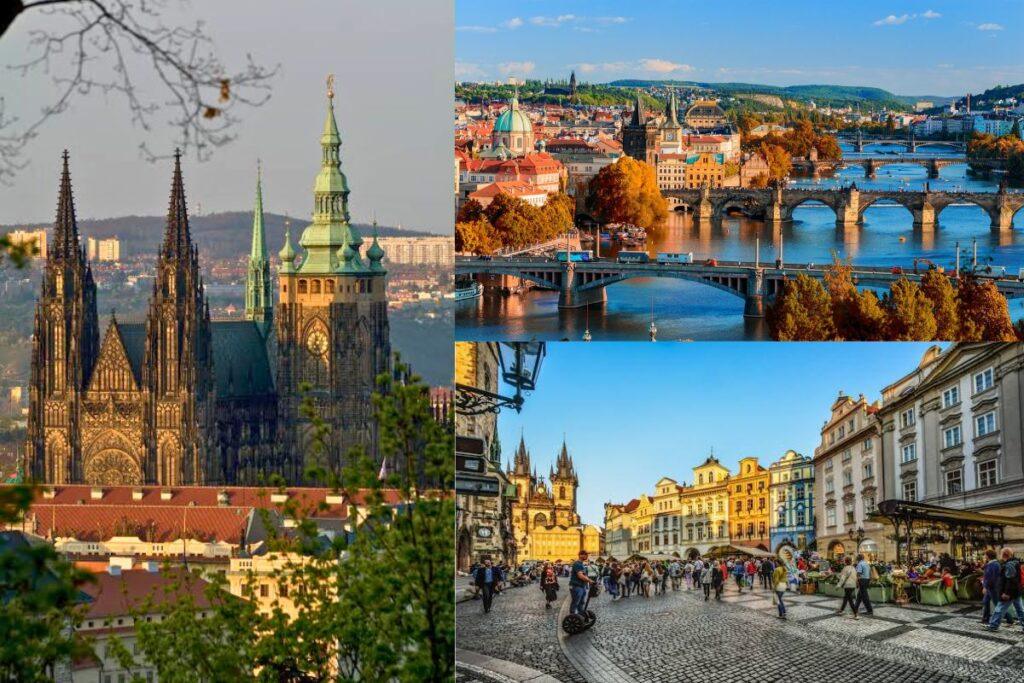
They call it the “City of a Hundred Spires”, after a count by 19th-century mathematician Bernard Bolzano. The Prague Information Service now reckons closer to 500. Walk ten minutes along the Vltava and you’ll pass Romanesque, Gothic, Renaissance, Baroque, Art Nouveau and Cubist facades.
Most of it traces back to Charles IV. He founded Charles University in 1347, the oldest in Central Europe, and ordered Charles Bridge in 1357 after a flood wrecked the old one. Finished 1402, thirty statues, and legend says egg yolks went into the mortar. Touch St John of Nepomuk for luck.
Then the Astronomical Clock has been in the Old Town Hall since 1410 — the third-oldest in the world and still working. Every hour, roughly 9am to 11pm, twelve apostles trundle past, a skeleton rings a bell and a golden cockerel crows.
Prague Castle And The Sights Worth Your Time
The castle was the city’s most visited spot in 2025, pulling 2.7 million people. Building started in the late 9th century, so give it three or four hours. Inside, St Vitus Cathedral’s main tower hits around 103 metres and hides the Bohemian Crown Jewels behind a door with seven locks.
The Main Circuit ticket covers the Old Royal Palace, St George’s Basilica, Golden Lane, and cathedral, which is about 450 Kč (£16). Book online, don’t stand in the queue.
Josefov, the Jewish Quarter, deserves its own half-day and some respect. The Jewish Town ticket is 600 Kč (£21) for six synagogues plus the Old Jewish Cemetery. As Insight Cities notes, the Old-New Synagogue dates to 1270 and is still in use today.
For views, pick a tower. Old Town Hall offers rooftop views; the Clementinum adds a Baroque library with over 20,000 volumes, including Kepler’s, up 172 steps. Never Ending Footsteps rates the 63.5-metre Petřín Lookout Tower, the mini Eiffel on the hill, as the best, though its funicular went in for renovation in 2025.
Parts That Are Overhyped
Prague has gone viral, but some of the hype is nonsense. It’s a big reason more travellers are turning to detourism, swapping viral hotspots for quieter alternatives. There’s a queue round the block for the Pater Noster lifts. They’re just normal lifts here. The narrowest street has a traffic light and a silly queue of its own.
The Lennon Wall sounds like street art from Berlin when viewed online; it’s a small wall of graffiti and stickers. And trdelník, that chimney cake on every corner, isn’t Czech. It came from Hungary. Get kolache or Czech strudel.
Beer, Food, And Pleasant Surprises
Monks were brewing at Břevnov Monastery back in 993. Tank Pilsner Urquell is the benchmark, about 55 Kč for 500 ml, or around 43 Kč at U Glaubiců in Malá Strana. Žižkov has the most bars per capita of any district and the cheapest pints going.
Food-wise, forget delicate. Svíčková (beef in cream sauce with bread dumplings), guláš, roast pork with sauerkraut, bramboráky (potato pancakes), česnečka (garlic soup), and kulajda with its poached egg. Vegan options have exploded, the Vietnamese community means brilliant pho, and the caramel-topped větrník is worth the calories. There’s even a beer spa.
What A Prague Vacation Costs
Cheap, not dirt cheap any more. Reckon £15–22 a head for a central dinner with a drink, £10–13 further out. Hostel dorms are from £13, mid-range hotels are £85–130, and January brings real hotel discounts. Value like this is one reason UK holiday habits are changing towards shorter, cheaper city breaks.
Transport is the real bargain. A 30-minute ticket is 30 Kč, and three days is 330 Kč (£11.50). Buy from kiosks, tram readers or the PID Lítačka app, and validate it or you’ll be fined. Three metro lines, 61 stations.
From the airport, the Airport Express bus costs 100 Kč, or bus 119 plus Metro Line A takes 40 minutes. Don’t grab a random “official” taxi at arrivals. Uber is the airport’s actual partner. Landing late at night? These travel hacks for late arrivals are worth reading before you fly.
Crowds, Timing, And Avoiding The Worst Of It
The crush lives in four places: Old Town Square, Charles Bridge, Wenceslas Square, and the castle after mid-morning. Elsewhere is fine.
June and September are the best times. Late November works too, as the markets are up and the madness has not yet started. July peaks near 27°C; January can hit -8°C but is the quietest month of the year.
Christmas markets run from early December to 6 January, and rooms sell out by September. Sleep in Vinohrady (named one of the world’s coolest neighbourhoods by Time Out in 2024), Letná or Karlín and commute in.
Practical Points For UK Travellers
No visa for short stays. Pay in koruna or by card. Euros get a rubbish rate, and “zero commission” exchange desks are a trap. If you’re stuck with under €1,000, you have three hours to cancel.
Violent crime is low, but pickpockets work the squares and trams. If safety is your top priority, compare it with Iceland, the safest country in the world. Tap water’s fine. Tip 10% and say the total before they tap your card — you can’t add it after.
- Emergencies: 112 for English, 155 for ambulance, 158 for police, 150 for fire. Learn “Dobrý den” and “Děkuji”; Czechs aren’t unfriendly, just reserved. Wear flat shoes, the cobbles are brutal.
- Day trips are easy: Kutná Hora’s bone church is 50 minutes by train, Plzeň’s Pilsner Urquell brewery is 90, Karlovy Vary is two hours, and Český Krumlov is two and a half.
Whichever you pick, a stress-free adventure will help keep a long day out of the city easy.
Final Verdict
Give Prague more than a weekend, start early, sleep outside the old town, and skip the Instagram traps. Do that and it’s one of Europe’s best short breaks. Tick-list it in two days in peak summer and you’ll wonder what the fuss is about.
ALSO READ: Smiles, Sunshine, and Simple Joy – Happiest Cities for Living and Travel
FAQs
Q1. Is Prague A Good Place To Vacation, Just For A Weekend?
Yes, but pace yourself. Two or three days cover the Old Town, Charles Bridge and the castle. Four nights adds a day trip.
Q2. Is Prague Expensive For UK Tourists?
No, it still undercuts most Western European capitals. A pint is about £2, a Czech main around £8, though big attractions have crept up.
Q3. What’s The Best Time To Visit Prague?
June and September, as they are warm and have fewer crowds. January is the cheapest and emptiest, but it’s grey and dark by 4pm.
Q4. Is Prague Safe For Tourists?
Very. The Czech Republic ranks among Europe’s safest countries. Just watch your bag in crowds and on trams.
Q5. Do They Use The Euro In Prague?
No, it’s the Czech koruna. Some places take euros at terrible rates, so use a card.
Q6. How Many Days Do You Need In Prague?
Three full days will cover the main sights. Add a fourth for Kutná Hora, Český Krumlov or Karlovy Vary.
Disclaimer: The information provided in this article is for general informational and educational purposes only and is not intended for promotional purposes. While we strive to present accurate and up-to-date travel advice, details such as prices, regulations, and attraction availability may change over time. Readers are strongly advised to independently verify facts, official travel requirements, and seek professional advice or consult official tourist resources before making travel plans.