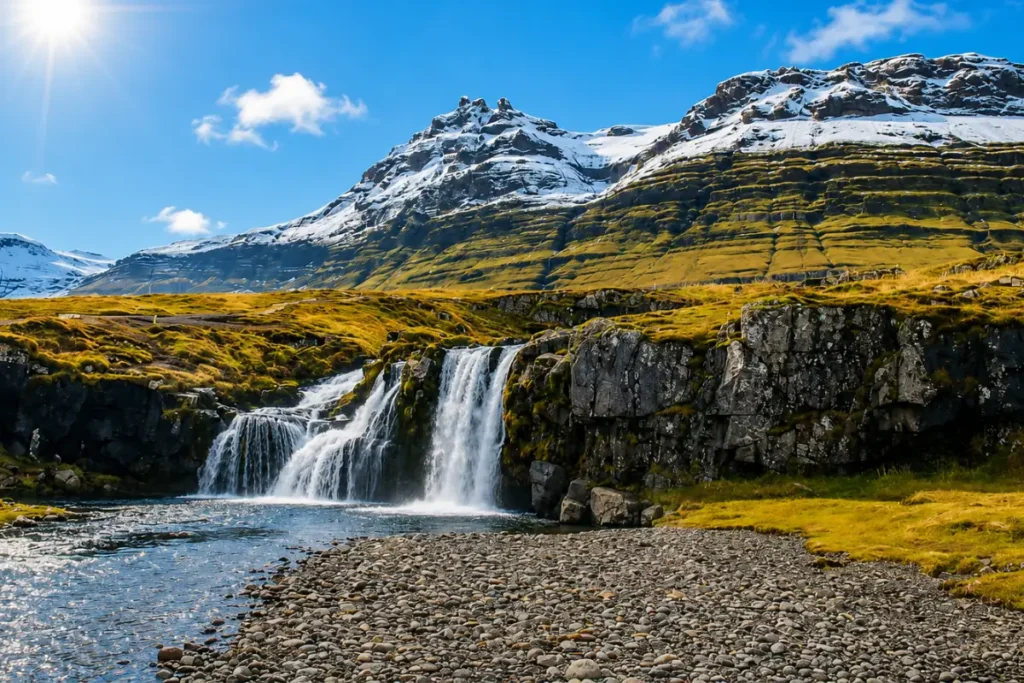
Iceland, a land of volcanoes, glaciers, and winds that will try to steal your car door, is the safest country in the world. The Global Peace Index 2026 scores it at 1.161. The Global Terrorism Index puts it at a barely-there 0.059.
World Population Review clocks its Safest Countries Index at 95 with a low risk level. It has held the number one spot on the Global Peace Index every single year since 2008, and June 2026 made it official yet again.
- Global Peace Index number one every year since 2008.
- No standing army; everyday police carry no firearms.
- Murder rate between 0 and 1.5 intentional homicides per 100,000 inhabitants per year.
- Top of the gender equality table for 16 years running.
- Zero dangerous wild animals. Not one bear. Not one snake.
- Emergency number is 112; the 112 Iceland app is genuinely brilliant.
Why Iceland Is Considered The Safest Country In The World
Iceland does not feel safe because it is boring. It feels safe because it is sane. The whole place operates on a kind of quiet, unspoken agreement that everyone just… behaves themselves.
No army needed. No armed police patrolling the streets. Even the president knocked back the offer of a bullet-proof car. Genuinely. He said no. Because there was absolutely no point.
Regular police in Iceland do not carry guns. The SWAT team does, but they are barely called upon. Most issues get resolved through calm, direct conversation, which, if you have ever met an Icelander, sounds exactly right. They are not unfriendly. They are just wonderfully unbothered.
With a national population of around 394,324 as per 2026 census — roughly 35% of whom live in Reykjavík — Iceland feels more like a large town than a country does.
Every neighbourhood in the capital has its own sports team, its own school, its own swimming pool, and its own playground. It is less metropolitan capital and more a collection of villages that happen to share a postcode.
ALSO READ: Harrogate – Safest City in the UK That Feels Like Home
1. The Crime Rate Is Low
In a good way. As per Iceland Travel, the crime rate sits between 0 and 1.5 per year. For the entire country. There is a well-worn joke that if you steal a car in Iceland, you are probably related to the person you just nicked it from. Or at least your mums went to school together.
Petty theft can happen near busier tourist spots, as it can anywhere. But serious crime? Rare enough that each incident makes national news and gets discussed for months.
The most telling detail of all: Icelandic parents leave babies napping outside in prams. Outside. Unattended. While they sit inside having a coffee. It is a longstanding tradition — cool, fresh air is thought to build stronger immune systems and help babies sleep for up to three hours.
No one worries. No child has ever been taken. That one fact should tell you everything you need to know about the social fabric of this country.
Almost everyone speaks excellent English. Children begin formally learning around age 12, but thanks to subtitled television and video games, most are practically fluent before that. Asking for help as a visitor is genuinely straightforward.
2. Equality Is The Law
Iceland does not mess about with equality. The WEF Global Gender Gap Report 2025 ranked it first for the sixteenth year in a row. No other country on Earth has closed more than 90% of its gender gap.
Equal pay between men and women is not policy guidance, it is actual law. Women travel across Iceland independently, day or night, with very little worry.
ALSO READ: Longyearbyen, Norway – The World’s Northernmost City In The Arctic Region
Same-sex marriage has been legal since 2010. Same-sex adoption is fully permitted. Reykjavík Pride has never been protested — not once. In a world where that is still apparently rare, Iceland makes it look easy. The 2024 World Happiness Report places it firmly in the global top five for happiness. This is shocking to precisely nobody who has visited.
Global Safety & Social Stability Benchmarks: Iceland vs. Top Peaceful Nations
| Country | Global Peace Index Rank | Gender Gap Closed (%) | Incarceration Rate (per 100k) | Homicide Rate (per 100k) | Standing Military Force |
|---|---|---|---|---|---|
| Iceland | #1 (Score: 1.095) | 92.6% (#1 Globally) | 35 per 100k | 0.5 per 100k | 0 (No Standing Army) |
| Ireland | #2 (Score: 1.260) | 80.1% | 91 per 100k | 0.9 per 100k | ~7,500 personnel |
| New Zealand | #3 (Score: 1.282) | 82.7% | 181 per 100k | 0.9 per 100k | ~9,000 personnel |
| Switzerland | #5 (Score: 1.294) | 79.3% | 75 per 100k | 0.5 per 100k | ~21,000 active personnel |
| Denmark | #8 (Score: 1.393) | 82.1% | 70 per 100k | 0.8 per 100k | ~15,000 personnel |
| EU / Global Benchmark | Global Avg: ~2.229 | Global Avg: 68.8% | EU Avg: ~113 per 100k | Global Avg: ~5.2 per 100k | Varies by nation |
Table Source: Institute for Economics & Peace (Global Peace Index), WEF Global Gender Gap Report, Eurostat, World Prison Brief, and UNODC.
3. No Dangerous Animals
This country has no bears, no snakes, no poisonous spiders, no ticks, and blissfully no mosquitoes. You can hike the highlands, pick wild berries, camp in open meadows, and not once think about what might be lurking in the undergrowth. Because nothing is.
According to Arctic Adventures, the Arctic fox is the only wild animal you are realistically likely to encounter, and it is far more interested in scrounging a snack than bothering you.
IQAir data consistently places Iceland among the cleanest air countries in the world, comfortably meeting WHO guidelines for fine-particle pollution.
Tap water is glacial, pure, and entirely safe to drink straight from the source. The Healthcare Access and Quality Index 2024 ranks Iceland in the global top five for healthcare, which is solid reassurance if anything does go sideways.
4. The Risks Are All Natural & Mostly Manageable
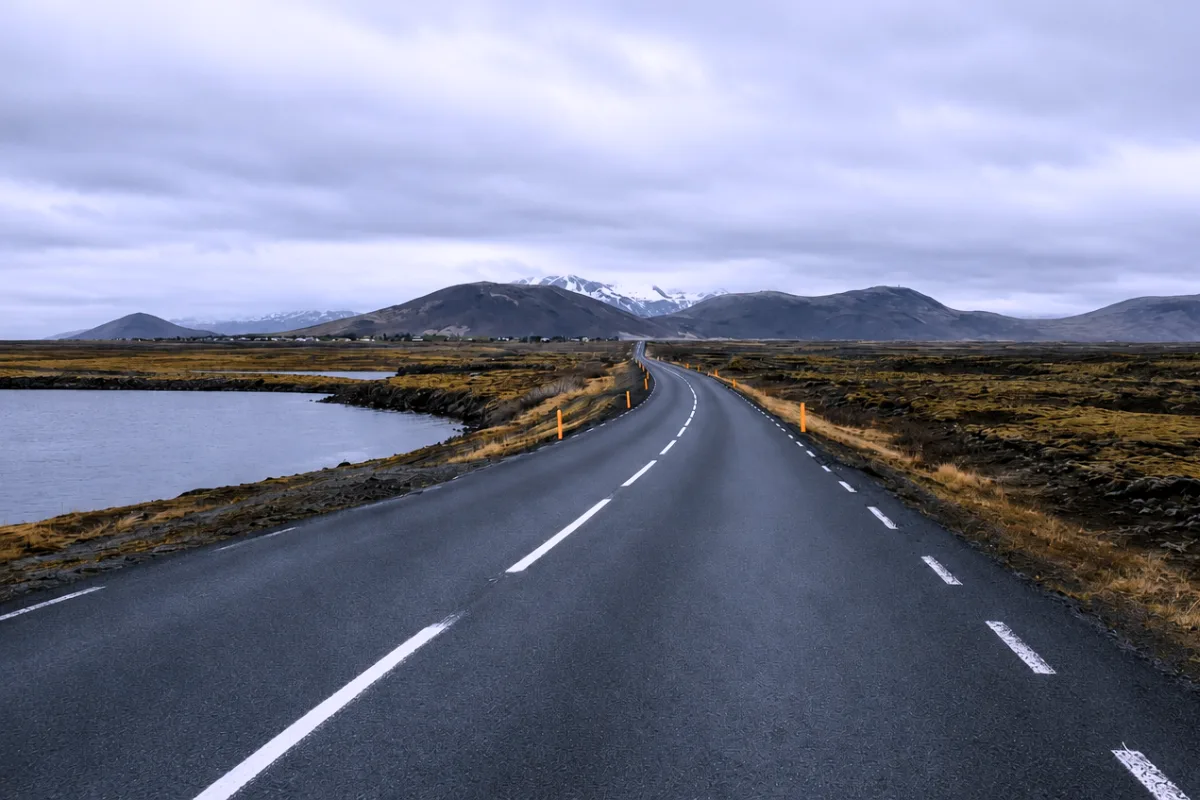
Let us be clear: It is not a soft destination. The risks just happen to come from the landscape rather than other people. The weather turns brutally fast. Wind will remind you it is in charge. Check conditions on Umferdin before every drive and keep the Icelandic Met Office bookmarked throughout your trip.
Iceland Tours states that speed limits top out at 90 km/h – the nation has no motorways – and fines for breaking them are eye-watering. F-roads in the Highlands demand a proper four-wheel drive and stay closed for much of the year. Take a standard rental down one of these roads and your insurance becomes worthless immediately.
Reynisfjara black sand beach is staggeringly beautiful. It is also genuinely dangerous. Sneaker waves can hit without warning, so never stand near the waterline. Geothermal areas bring boiling springs and fragile ground that looks solid but is not. Stick to the marked paths.
On volcanoes: the Reykjanes Peninsula saw nine eruptions between December 2023 and August 2025. These are effusive fissure eruptions – lava flows from a crack, dramatic to watch but very different from the explosive 2010 Eyjafjallajökull blast that paralysed European air travel. Keflavík Airport stayed open throughout every single one.
5. Emergency Services Worth Trusting
Save 112 on your phone before you land. It covers police, ambulance, and fire. Download the 112 Iceland app too—register your location, and rescue teams can pinpoint you even in areas with no road, no address, and no signal.
Behind that number is ICE-SAR, the Icelandic Association for Search and Rescue, a volunteer organisation of thousands of trained locals who turn out at any hour, in any conditions, without hesitation. Travel insurance is still sensible — especially once you venture beyond the main towns.
Where You Stay Matters
If you are coming to Iceland for the calm, your base should match it. The Panorama Glass Lodge offers premium glass lodges across South and West Iceland, each with a private hot tub and patio.
There is an on-site sauna, and larger family options are available in the west for groups needing more than two beds and a hopeful attitude. Watch the weather roll in from inside. Step out when you fancy it. Sleep properly for once.
This place is a rare thing, genuinely wild, genuinely safe, and genuinely worth every penny.
ALSO READ: Why Everyone Is Suddenly Talking About Detourism In The UK
FAQs
Q1. Is Iceland The Safest Country In The World?
Ans: Yes, and it has been since 2008. The Global Peace Index confirmed it again in June 2026. Low crime, no army, unarmed police, and a society built on mutual trust all keep it firmly at the top.
Q2. Which Is The Safest Country In The World Right Now?
Ans: Iceland, according to the Global Peace Index 2026. It scores 1.161 on the peace index, topping the list and just 0.059 on the Global Terrorism Index, ranking at 97th position, the strongest combination of any country on Earth right now.
Q3. Is Iceland Safe For Solo Female Travellers?
Ans: Very much so. Strong gender equality laws, a consistently low crime rate, and a respectful local culture mean most women travel around Iceland – cities, countryside, and remote spots on their own terms.
Q4. What Are The Biggest Safety Risks In Iceland?
Ans: Nature. Rapidly changing weather, icy roads, sneaker waves at coastal beaches, and geothermal ground hazards are the main concerns. None of them are unmanageable with decent preparation and common sense.
Q5. Is Reykjavík Safe At Night?
Ans: Yes. It is calm, well-lit, and trouble-free for the vast majority of visitors, including those out alone. Keep the usual eye on your belongings, but serious incidents after dark are genuinely rare here.
Q6. Does Iceland Have Dangerous Animals?
Ans: Not a single one. No bears, snakes, poisonous spiders, ticks, or mosquitoes exist here. The Arctic fox is the only wild animal most visitors will encounter, and it is entirely harmless.
Sources & References
- Wikipedia. (2026). Global Peace Index.
- Wikipedia. (2026). Global Terrorism Index.
- Panorama Glass Lodge Blog. (2026). Why Iceland is considered the safest country in the world.
- Iceland Travel Blog. (2026). Iceland: Safest country in the world.
- Arctic Adventures Blog. (2026). Iceland: One of the safest countries.
- Iceland Tours Blog. (2026). Iceland: Safest country in the world.
Disclaimer: This article is provided solely for informational and educational purposes. It is not intended to promote, endorse, or advertise any travel destination, service, business, or organisation mentioned herein. Readers should independently verify information from official sources before making travel or related decisions. Publicly available information, statistics, rankings, and other data referenced in this article may change over time and may not always reflect the latest updates. The publisher and author are not responsible for any actions taken based on the information provided in this article.