
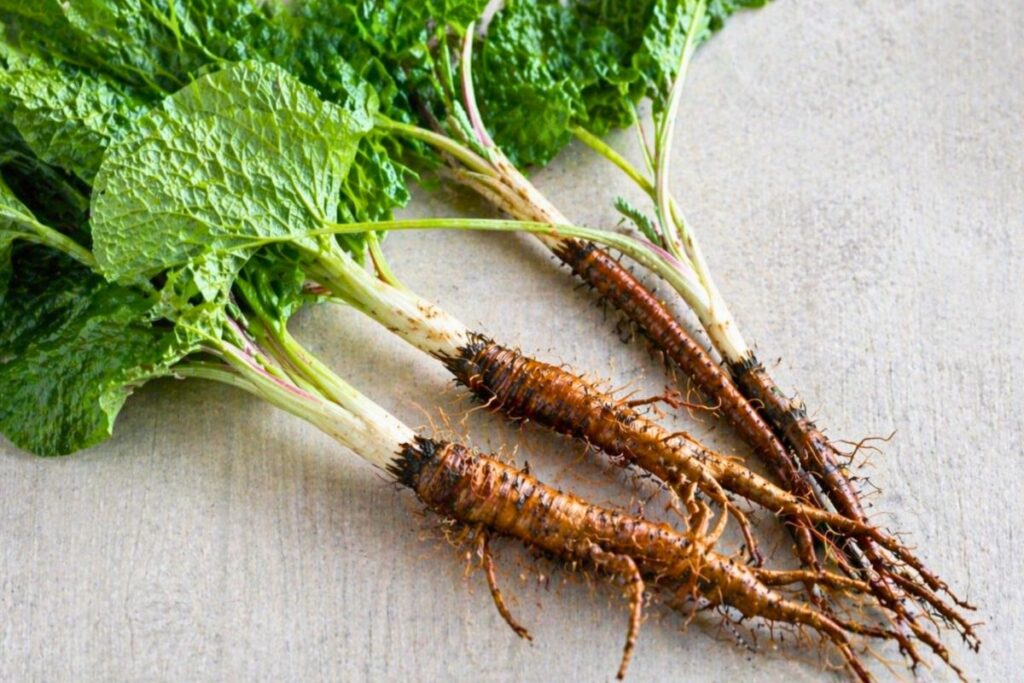
Burdock is, to the average Joe, that annoying weed that sticks to your dog’s ears when you take a stroll in the woods. We have all done it, plucking those sticky little burrs off a fleece while cursing under our breath. However, the true story lies underground. And if you have ever actually tried to dig up an entire root of burdock, you know it’s no less than a war. These things go deep. They’re stubborn. And honestly? That’s actually the reason they are so good for you.
Fast forward to April 2026; the UK wellness scene has finally moved on from those glossy, neon ‘superfood’ powders that were shipped in from everywhere in the world. Once again people are looking at their back gardens. Burdock is not some kind of new exploration; it’s a return. It is earthy, slightly tedious to prepare, and tastes like a parsnip had a baby with an artichoke. But for anyone dealing with stubborn skin or a sluggish gut, it’s a bit of a miracle worker.
The Fast Facts: Digestion, Skin, And The “Blood Purifier” Myth
- The Gut Story: Full of inulin, a prebiotic fibre that nourishes your good gut bacteria.
- The Skin Connection: Commonly used for aiding the all-natural removal of waste from your body, it is also most commonly known as an acne or eczema remedy.
- The “Detox” Reality: “Blood purifier” is an old-fashioned term, but modern science regards its antioxidants (for example, quercetin or luteolin) as beneficial.
- The Flavour: A cross between an artichoke and a parsnip, with a nutty, woody finish.
- The Action: It is a mild diuretic and also aids the liver in the breakdown of fats.
ALSO READ: A Closer Look At The Benefits Of Cherries For Skin And Real Results
The “Snotty” Science: Why Inulin Matters
Let’s be real for a second. The reality is this: pretty much all the “detox” talk is total bogus. Your kidneys and liver do a lot of the hard work for you. But they need the right fuel. Burdock is abundant in a prebiotic fibre known as inulin.
Why should you care? Because inulin is not just sitting there. It fuels the beneficial bacteria in your gut that literally stops your immune system from going crazy. The MDPI (2024) study on antimicrobial peptides to expose root-based compounds as a real alternative to conventional antibiotics for skin problems. This is no longer merely a myth. Lab results are catching up with the folklore.
What Are Burdock Root Benefits?
If you ask an old-school herbalist in a place like the Cotswolds or the Highlands, they’ll tell you it’s a “blood purifier.” Modern doctors might roll their eyes at that phrase, but the results are hard to argue with.
1. The “Inside-Out” Skin Strategy
If you have ever been in a Holland & Barrett and had a glance at their skin-clearing formulas, then you will most likely spot ‘burdock’ written on the label. The rationale behind this hypothesis is that if your liver and kidneys are slow, your skin does the heavy lifting, which can lead to breakouts and a lacklustre complexion.
Burdock performs the role of a mild diuretic and is also supportive to hepatic activity in getting rid of the backlog. It’s particularly popular for stubborn adult acne and those annoying dry patches of eczema.
2. Taming The Blood Sugar Rollercoaster
Recent 2026 studies have looked closely at how the inulin in burdock affects insulin sensitivity. It doesn’t “cure” diabetes, but it can help blunt those nasty blood sugar spikes after a heavy meal.
A 2024 study on burdock extracts found that specific RNA molecules in the plant might even help improve insulin resistance. Small, yes, but for someone controlling their metabolic health, it is an instrument in the toolbox.
3. The Lymphatic “Deep Clean”
Herbalists sometimes call it a “blood purifier”; doctors today prefer to talk about “metabolic support”. It encourages lymphatic drainage. The lymphatic system is the waste disposal department of your body.
If the lymphatic system gets blocked, it leaves you feeling fatigued and puffy. That is where burdock comes in: it helps keep that fluid moving, which is why it’s a staple in those “spring cleanse” teas alongside dandelion and nettle.
ALSO READ: Is Your Stomach Pain IBS or a More Serious Illness? Here’s How to Tell
Putting Burdock To Work In Your Kitchen
It’s not as if you are simply taking a pill to get the root of burdock in your system. In Japan, it is known as ‘gobo’ and served as a standard vegetable. Honestly, it’s delicious if you treat it right.
The Evening Ritual (Tea)
This is the most straightforward entry point you will have. If using dried root, simmer it in about one or two teaspoons for ten to fifteen minutes. Do not steep it like a regular tea leaf; give it a gentle simmer to break down the tough fibres. It has a very grounded, woody flavour. Many people find that swapping their 9 p.m. biscuit for a cup of burdock tea stops the mindless snacking and helps them feel “lighter” the next morning.
The Stir-Fry Method
If you manage to track down young root in an Asian supermarket or posh health shop, give it a wash. You don’t even need to peel it; the skin is where a lot of the sweetness lives. Cut it into thin matchsticks and sauté it with carrots, ginger, and a splash of soy sauce. It stays crunchy and adds a deep, nutty flavour to any meal.
Is It Safe? The “Common Sense” Check
Nothing is perfect; even the most “natural” herb requires some caution with use.
- The Daisy Connection: Be careful if you are allergic to ragweed, daisies, or chrysanthemums. We are talking about the same plant family here, so a rash is a very real threat.
- The Diuretic Effect: It will keep you running to the loo. That’s the point; just don’t drink three cups before a long car journey.
- Diabetes Meds: It can also lower blood sugar, so watch your levels if you are on blood sugar medications. Which means you don’t want your sugar too low.
- Pregnancy: Data on this topic is just too scant. If you’re pregnant or breastfeeding, it’s best to avoid the root of burdock.
Why This Isn’t Just Another “Wellness” Trend
The reason burdock is still around in 2026 while other “superfoods” have vanished is because it actually does something. It’s a workhorse. Recent UK news, like the reports in Gloucestershire Live, highlights that even local experts are pushing it as a top-tier anti-inflammatory you can practically grow at home.
Common Questions (The FAQ)
Q1. Can I Dig The Root Of Burdock Myself?
Of course, you can if you know what you’re doing. But just not from the side of a busy A-road. Roots absorb everything—including exhaust fumes. Get it from a reliable source such as Botanical Teas.
Q2. Does It Taste Bad?
Not really. It’s “earthy.” And if you hate it, blend it with peppermint or ginger! This usually solves the problem.
Q3. Is It The Same As Dandelion And Burdock Pop?
No. The carbonated beverage mainly consists of sugar and “flavouring”. A bottle of pop from the corner shop isn’t going to clear your skin.
Q4. How Long Until I See A Difference?
Give it three weeks. Skin and gut health don’t change overnight. It’s a marathon, not a sprint.
Q5. Can I Give It To My Dog?
Some people do for skin issues, but check with your vet first. Don’t just wing it with pets.
ALSO READ: What Are Good Skin Care Products For Sensitive Skin? A Proper Guide That Actually Helps
Final Thoughts
So, there you go. The humble burdock. There is nothing ostentatious about it, and it is certainly not “Instagrammable” in its raw state. This British classic provides excellent support for your skin and digestion.
Well, it’s definitely worth a shot, huh? Just start slowly and see how you feel. Your gut, perhaps, will thank you for it. At the very least, you may have a newfound realisation about those sticky burrs next time you’re out for a walk.
Sources & References
PMC. (2026). Unveiling the antihyperglycemic potential of burdock root. National Center for Biotechnology Information.
Ubie Health. (2026). Why burdock root works for skin issues: A doctor’s perspective.
Medical News Today. (2025). Burdock root: Benefits, side effects, and uses.
Disclaimer: This content is provided for informational purposes only and is not intended as medical or professional advice. It should not be considered a substitute for consultation with a qualified healthcare provider. The information does not promote any product or treatment. Always seek professional guidance before making health-related decisions.