London households have filled up with eco sprays for cleaning, refillable dispensers and letterbox laundry strips. The brands are visible. The manufacturers behind them are not
The Quiet Revolution Under The Kitchen Sink
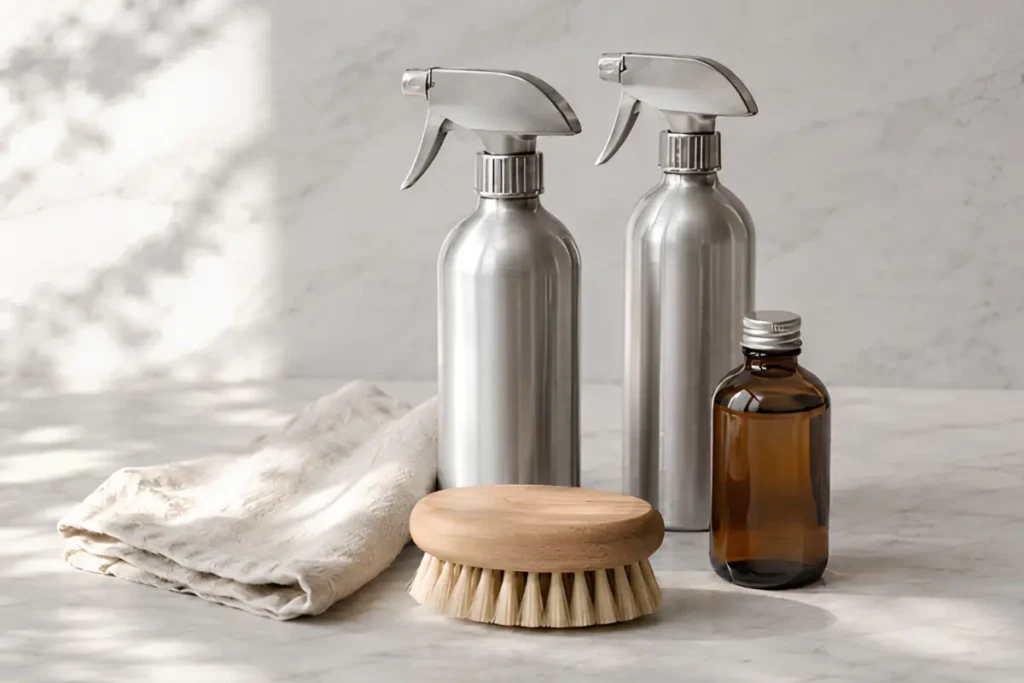
Look under the average London kitchen sink right now, and something has changed. There is a spray bottle with a name that never appeared on a supermarket shelf five years ago. A concentrate that arrived in the post. A refillable dispenser in a font that belongs on a skincare counter.
London’s relationship with cleaning products has shifted decisively in favour of independent, design-led, sustainability-focused UK brands, many of them barely a decade old. What most consumers never see is what makes the whole boom possible: a network of UK contract manufacturers quietly producing the formulations behind the labels.
ALSO READ: How To Clean A Washing Machine: Smart And Easy Cleaning Methods
A Market That Moved Faster Than Most
The UK eco-cleaning category has grown sharply over the past decade, a trend tracked consistently in Mintel UK Household Cleaning Reports and Kantar FMCG data. Mrs Hinch’s collaboration with Procter & Gamble brought cleaning culture firmly into the social media mainstream, and a wave of independent influencer-led ranges followed. Sustainable packaging, biodegradable formulations and refillable systems moved from specialist stores to the main supermarket aisle in roughly the same period.
Post-Brexit and post-COVID supply chain shocks accelerated something already building: a preference among UK brands for domestic manufacturing partners. UK REACH and CLP regulations, governed by the HSE, create a compliance framework that UK-produced goods navigate more cleanly than imported equivalents. For anyone curious about how the supply side actually works, the UK has a broad network of independent operators offering bespoke cleaning product development and contract manufacturing services, covering custom formulas, private label, regulatory support and sustainable production.
Who Is Actually Driving It
The growth is coming from several directions at once. DTC subscription brands, including Smol, Splosh, Bower Collective, Ocean Saver, and Bio-D, have built loyal audiences through convenience, sustainability credentials and strong visual identity. Influencer-led ranges, from Mrs Hinch’s Procter & Gamble line to a growing wave of independent celebrity collaborations, have added a further layer of consumer demand.
Major London hospitality groups, including Soho House, citizenM, The Hoxton, Premier Inn and Mollie’s, are developing branded cleaning and amenity programmes, many manufactured by UK contract partners. Retailers including Waitrose, M&S, Sainsbury’s, Tesco, Aldi and Lidl are expanding their own-brand cleaning lines. Facilities management companies, gym chains and restaurant operators are increasingly running their own branded cleaning programmes. And at the smallest end, London creators are launching micro-brands via Instagram, TikTok and Shopify using contract manufacturers for small-batch, compliant production.
Why UK Manufacturing Is Having Its Moment
Supply chain security changed priorities sharply after 2020. UK brands across beauty, food and personal care became more cautious about overseas production, and cleaning was no different. UK-manufactured products typically carry cleaner regulatory documentation than imported equivalents, which matters considerably when listing with major retailers.
Sustainability credentials are easier to defend with a shorter supply chain: lower transport emissions, traceable ingredients, and domestically verified production. Speed to market is faster. Small-batch flexibility has opened access to manufacturing for brands that would never meet overseas minimum order quantities. ISO 9001 and BSI certifications, standard among established UK manufacturers, simplify retail listing and regulatory conversations considerably.
What This Means For London Consumers
The practical result, for anyone in a supermarket aisle or browsing a DTC site, is more genuine choice than at any previous point. Plastic-free, refillable and concentrated formats are mainstream rather than specialist. Modern eco-formulations have also closed much of the historical performance gap with conventional products, so the old trade-off between sustainability and effectiveness is considerably less acute.
Ingredient labels have improved, driven by UK REACH requirements and consumer pressure for transparency. Independent brands that could not have reached London consumers a decade ago now do so routinely through DTC channels, social media and selective retail listings.
The Story Is Not Finished
Mintel and Kantar data indicate that the UK eco-cleaning category will continue to outperform the wider cleaning market through 2026 and into 2027. London’s hospitality sector is still investing in branded cleaning programmes. Retailers are expanding their own-brand sustainable lines. The flow of independent brands launching via DTC routes shows no sign of slowing.
Ongoing UK and EU regulatory changes affecting cleaning chemical ingredients, plastic packaging and sustainability claims will continue to reshape the category. ONS data also records a sustained consumer preference for UK-manufactured goods across multiple categories over the past three years, a shift rooted in supply chain awareness and a broader reconsideration of provenance.
What It Looks Like Behind The Scenes
Most of the brands driving this boom are not manufacturers. They are brand and customer businesses handling design, marketing and distribution, with the chemistry and production managed by specialist UK contract partners. That relationship typically covers custom formula development, compliance testing against UK REACH and CLP standards, packaging design support and a step-by-step process that gets a product from concept to retail-ready without an in-house chemistry team.
Small-batch capacity has been particularly important, allowing emerging brands to launch at limited volumes before scaling, which would be impossible with overseas minimum order quantities. The manufacturing infrastructure, in short, is considerably more sophisticated than the labels it produces.
ALSO READ: How to Clean Sofa Couch Without Making a Mess of It – A DIY Guide
A Story About More Than Cleaning
The UK’s independent cleaning brand boom is not really a story about cleaning products. The sprays, strips and refillable dispensers are the visible surface of a broader shift in how UK consumers think about supply chains, sustainability and where everyday products actually come from.
Behind every London household’s growing collection of independent, eco-led, design-aware cleaning brands sits a UK manufacturing network most consumers never see, and probably never needed to see until now. The UK’s cleaning brand boom is, in the end, a story about how London’s consumer culture has shifted decisively towards what gets made closer to home.
Sources & References
- Mintel. (2026, May). UK kitchen cleaning habits consumer report. Mintel Market Intelligence.
- Mintel. (2026, March 5). How are cleaning brands encouraging consumers to go green?. Mintel Spotlight.
- Mintel. (2026). The future of household cleaners. Mintel Global Household Care Report.
- Kantar. (2026). UK FMCG household cleaning data: Eco‑brands outperforming conventional products. Kantar FMCG Insights.
- ReAgent Chemical Services. (2026). Cleaning chemical manufacturing UK: Bespoke formulations and contract services. ReAgent.
- Office for National Statistics (ONS). (2025). Consumer preference for UK‑manufactured goods: Household categories. ONS Data Release.
Disclaimer: This article is provided solely for informational and educational purposes. Any brands, companies, products, or services mentioned are referenced only in the context of industry discussion and analysis and should not be considered endorsements, advertisements, or promotional content. Readers should conduct their own research and seek professional advice where appropriate before making business or purchasing decisions.