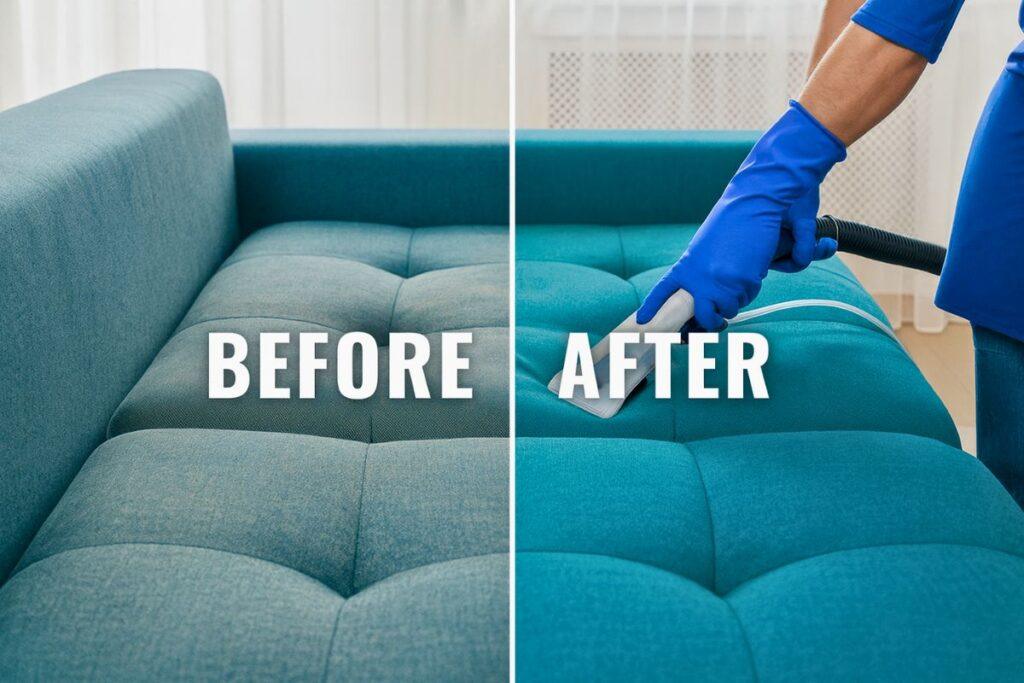
My couch looked pretty proper minging last month. Coffee rings, mystery blobs of grime, that peculiar smell you can’t quite identify. I had just been dreading cleaning it for all that time, thinking I’d have to buy special equipment or an expensive cleaner. Turns out I was wrong. And most of what you need is already in your kitchen cupboard.
Here’s how to clean sofa couch properly without spending a fortune or ruining your furniture.
Check That Little Tag First
This sounds boring but it’s dead important. Your sofa has a tag somewhere, usually under the cushions or on the bottom. It’ll have a letter on it that tells you what you can and can’t use.
W means you can use water. S means you need a special solvent cleaner; no water allowed. ‘WS’ means either is fine. X means vacuum only; don’t use any liquids at all.
I once used water on an S-coded sofa. The water left bigger stains than the original mess. Learn from my mistakes and check that tag.
Get Your Stuff Together
You don’t need much. a vacuum with an upholstery attachment, a few microfibre cloths, and maybe some baking soda. That’s the basics sorted.
For cleaning solution, warm water and a tiny bit of dish soap work for most fabric sofas. White vinegar is fantastic for odour. If you have a leather couch, you will want something more gentle, perhaps just distilled water or an actual leather cleaner.
Vacuum First, Always
And that’s where most people make a mistake. They always go straight to scrubbing but all you’re doing is rubbing the dirt further into the fabric that way.
Take all the cushions off. Vacuum everything. The cushions, beneath the cushions, in the crevices, on the arms and back. And then get in there with a crevice tool and suck up all the crumbs, dust and whatever else is hiding under the cushions.
I found three quid in coins and a Lego brick last time I did this properly. So that’s a bonus.
How To Clean Sofa Couch With Baking Soda
Yeah, this is fantastic for getting rid of odours and then just light stains. Dust baking soda over your sofa Pour a generous amount of baking soda all over your sofa and let it sit for 20 minutes. We are not talking about a light dusting; you want to be liberal with it. Let stand at least 20 minutes. Half an hour is preferable if you can spare the time.
The baking soda absorbs odours, and dirt is loosened. Once it’s had a chance to sit, vacuum it all up. At least your sofa will smell a whole lot better.
For particularly pungent odours, leave the baking soda overnight. My mate did this when her dog had an accident on the sofa and it worked a treat.
Dealing With Stains
New stains are easier than older ones, of course. If anything spreads, blot it up ASAP with a clean cloth or kitchen roll. Don’t rub it in; that only pushes it around and pushes it deeper.
For how to clean sofa couch stains that have been there a while, you need a good cleaning solution. Add a tablespoon of dish soap to 2 cups of warm water. If you want to up the cleaning power, add a tablespoon of white vinegar.
Dampen a microfibre cloth with your solution. Wring it out so that it’s not soaking wet. Gently blot the stain. Work from the outside in so you don’t make it bigger.
Keep using clean bits of the cloth. When it gets dirty, rinse it out and go again. This takes patience but it works.
The Saucepan Lid Trick
There’s a cleaning hack making the rounds on TikTok that actually does work. Combine a litre of warm water, a tbsp of baking soda and 1-2 tbsp of dish soap. Dampen a cloth and wring it out well; fasten it around the lid of a saucepan.
Use it to scrub your sofa in circles. The lid gives you something hard to push against, and the cloth picks up loads of dirt. You’ll be gobsmacked at how dirty the cloth gets.
Rinse and replace the cloth if it gets too dirty. It’s a great technique for giving your space a fast refresh when you can’t do an in-depth clean.
How To Clean Sofa Couch By Hand
If you are doing this without any fancy equipment, perseverance is key. After you have vacuumed and sprinkled on some baking soda, mix your cleaning solution in a bowl or spray bottle.
Work in small sections. Wet your cloth, give it a good twist of the wrist, wipe the section and rinse out the soap with a clean damp cloth. Dry it with a towel. Move to the next section.
This takes ages if you’re doing the whole sofa, but the results are worth it. Put the telly on or some music and just crack on with it.
Never soak your sofa. Too much water can damage the padding inside, cause mould, or leave water marks. Less is more when it comes to moisture.
How To Clean Sofa Couch At Home Without Calling Professionals
You don’t need to pay someone hundreds of quid to clean your sofa. Most regular cleaning can be done yourself with stuff you already have, and can also save money.
For really tough jobs, you might want to hire a steam cleaner. Lots of supermarkets and hardware shops rent them out. They’re quite good for deep cleaning fabric sofas, but make sure your sofa’s care tag says it can handle water first.
Steam Cleaning is basically using hot water and suction to clean deep into the fabric. Follow the machine’s instructions. Go slow and don’t oversaturate the fabric. Point a fan at the sofa afterwards to help it dry faster.
Different Fabrics Need Different Treatment
Microfibre sofas are quite forgiving. You can also use rubbing alcohol on them, which is dead handy. You spray it on, scrub with a light-coloured sponge and believe me, poof, the stains are literally gone.
Velvet is high maintenance. Give it a weekly vacuuming with the soft brush attachment. For stains, blot with a tiny amount of dish soap and some water. Do not rub or you will ruin the pile. A clothes steamer on low heat can help with wrinkles and creases.
Sofa couches made of leather and faux leather need a softer touch. Just use a damp cloth to wipe them down. Use a proper leather cleaner for stains. Keep leather away from direct sunlight or it’ll fade and crack.
Linen is delicate too. Vacuum it gently. Use minimal water when cleaning. Some linen covers can come off and go in the washing machine, which is much easier.
Getting Rid Of Proper Nasty Smells
Baking soda handles most smells but sometimes you need more firepower. White vinegar in a spray bottle works wonders. Mix equal parts vinegar and water, spray lightly on the fabric, and let it dry. The vinegar smell disappears as it dries and takes other smells with it.
For pet smells, you need an enzyme cleaner. These break down the proteins in urine and other organic messes. Nature’s Miracle is a popular brand. Follow the instructions on the bottle.
If you’ve bought a second-hand sofa for your house, give it a really thorough clean before you start using it. You don’t know what’s been on it. Vacuum thoroughly, use baking soda everywhere, and consider getting it steam cleaned.
Coffee, Wine, And Other Disasters
Coffee stains need quick action. Blot up as much as you can. Mix dish soap with white vinegar and warm water. Dab it on the stain. Keep blotting with clean cloths until the stain lifts.
Red wine is everyone’s nightmare but it’s not hopeless. Blot it immediately. Cover the stain with salt or baking soda to absorb the liquid. Leave it for a bit then vacuum. Clean what’s left with your usual cleaning solution.
Grease and oil need something to break them down. Sprinkle cornstarch or baking soda on the stain and leave it for 15 minutes to absorb the oil. Vacuum it up then clean with soapy water.
Ink is tricky. Rubbing alcohol on a cotton bud can lift it but test it somewhere hidden first. Dab gently; don’t rub.
Keep It Clean Longer
Once you’ve got your room‘s sofa clean, you want to keep it that way. Vacuum it weekly if you can, even just a quick go-over. It stops dirt building up.
Rotate your cushions every few weeks so they wear evenly. Fluff them up after sitting on them.
If you eat on the sofa (let’s be honest, we all do), put a throw blanket down. Much easier to chuck that in the wash than clean the whole sofa again.
Keep pets off if possible. If that’s not happening, put a blanket down where they sit. Their fur and oils can make fabric grubby fast.
When To Call In The Experts
Sometimes you just need professional help. If you’ve got massive stains that won’t shift, really bad smells that keep coming back, or you’ve soaked the sofa by accident and it’s not drying properly, call someone who knows what they’re doing.
Professional cleaners have industrial-strength equipment and proper training. They can handle things that home cleaning can’t fix. It’s not cheap but it’s cheaper than buying a new sofa.
If your sofa is antique or really expensive, don’t mess about with DIY cleaning. Get professionals in who specialise in that type of furniture.
The Bottom Line
It’s not so difficult to clean your sofa. Mostly, a good vacuuming, baking soda and soapy water will take care of everything. The trick is to do this on a regular basis so that there isn’t time for dirt to build up.
Check that care tag. Clean your fabric the right way. Don’t use too much water. Take your time with stains. And for the love of god, vacuum ahead of time.
And my sofa’s had a dramatic change in appearance now that I clean it properly every couple of weeks. It’s not scary when you know what you’re doing. Get the basics right and you’ll save yourself a small fortune in getting it professionally cleaned or replacing furniture.
Well, I’m going to have to go and vacuum my sofa. Probably should have done that before writing this.
Disclaimer: This article is provided for informational purposes only. While reasonable efforts have been made to ensure the accuracy and reliability of the information presented, no guarantee is made regarding its completeness, accuracy, or timeliness. The content does not constitute any specialised advice and should not be relied upon as such. Readers are encouraged to conduct their own research and consult qualified professionals before making any decisions based on the information contained in this article.