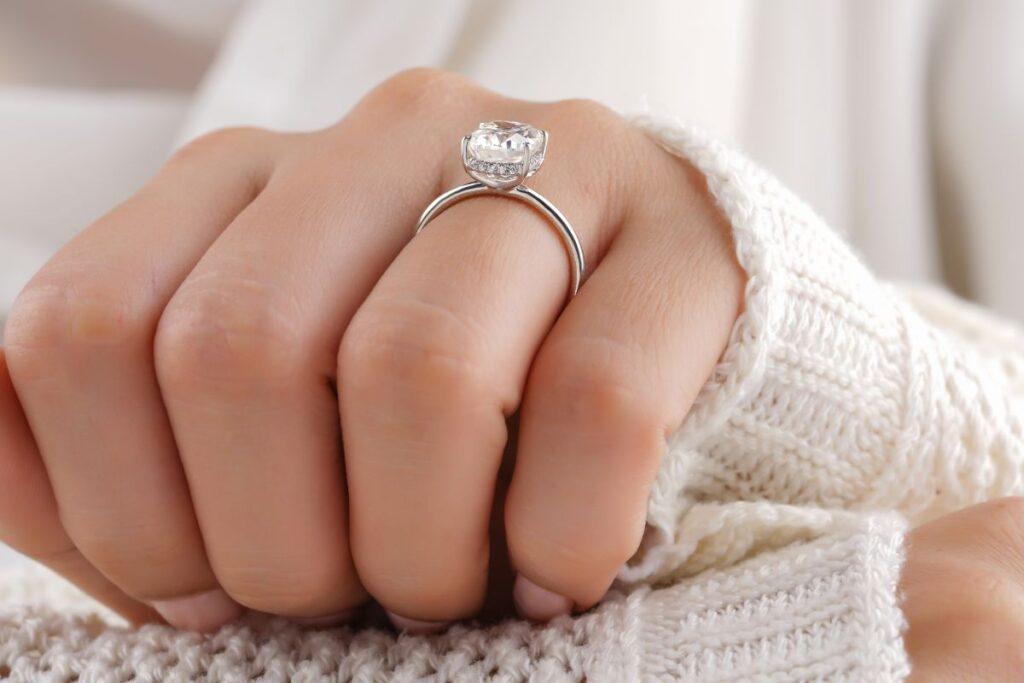
A diamond can throw out rainbow flashes at the jewellery counter, then look quieter a few steps away. The brightest showroom impression does not tell you how the ring will look throughout the day.
- Compare engagement rings under both everyday lighting and showroom spotlights before making a decision.
- Ask the jeweller in advance whether you can view specific shortlisted diamonds and compare them in varied light.
- Understand that diamonds with the same lab report grades can still look different in person due to variations in proportions and facet angles.
- Evaluate shortlisted stones side by side in the exact same clean conditions and lighting environments.
- Document your observations with short videos and written notes to help remember how each diamond looked during the appointment.
For a London engagement-ring appointment, plan to compare your favourites in conditions closer to everyday wear, as well as under display lights.
Ask About The Viewing Before You Book
Send the jeweller a small shortlist and say what you hope to compare. There is a difference between trying a setting to judge its shape and looking at the particular diamond you might buy. Ask whether the appointment can cover both, and which samples or selected stones will be available. Also confirm the stone material in any display sample before using it to judge diamond sparkle.
In Marylebone Square, Lily Arkwright offers private consultations where couples can discuss diamond solitaire styles. Ask which of your shortlisted designs can be shown and what lighting comparisons are possible. Confirming that beforehand gives the visit a clearer purpose than simply arriving with a folder of attractive photographs.
An after-work London appointment in winter may leave little daylight. If you want to see a natural-light comparison, ask about a daytime slot and the showroom’s viewing arrangements. If you’re also finalising outfits for the proposal itself, it helps to plan those choices alongside the ring appointment.
ALSO READ: The Ultimate Destination Wedding Guest Style Guide
Know What The Different Lights Reveal
The word sparkle covers several effects. White light returning from a diamond contributes to brightness; rainbow flashes are called fire. The changing flashes and pattern of light and dark as the stone moves are known as scintillation. A diamond’s facet angles, proportions and arrangement affect how it handles light, which helps explain why two stones can respond differently in the same surroundings.
GIA’s advice on diamond sparkle explains why the viewing environment matters: very bright, numerous spotlights can create enough glare to make differences between diamonds harder to see. It recommends looking in diffused light, mixed lighting and daylight as well as under spotlights.
Ask the consultant to show you those changes. Under softer, more evenly spread light, pay attention to the overall brightness and pattern. Under small, concentrated light sources, watch for coloured flashes. Slowly tilt the ring rather than holding it still at the one angle that gives the most dramatic result. This same interplay of light and movement is part of why vintage jewellery continues to appeal to collectors and buyers alike.
Compare The Same Stones In The Same Conditions
Ask the consultant to check that both stones are clean before comparing them. Move both shortlisted stones through each lighting environment together. Comparing one under a strong spotlight with another beside a window makes it difficult to separate the diamonds’ differences from the lighting. Try them at a similar angle and viewing distance, with the consultant handling any loose stones.
A laboratory report is useful evidence, but it does not describe every aspect of what you will enjoy seeing. GIA notes that diamonds with the same grades can still look different because grades cover ranges. Keep the report alongside your observations rather than expecting matching grades to produce identical appearances.
Lily Arkwright’s ring collection includes lab grown diamonds in halo and plain solitaire settings. When comparing those styles, look at each centre stone separately before judging the complete design. You may prefer the extra sparkle around a halo, but that is a different observation from preferring its centre diamond.
Make Photographs Useful Reminders
With permission, take a short clip of each option in the same position and light. Record the design name and stone reference, and note whether you filmed the proposed diamond or a display sample. Those details make the images useful when several similar rings start to blur together.
Add a few words about what you noticed in person: smaller flashes across the surface, a pattern you kept returning to, or an outline you preferred. The same side-by-side comparison approach works well when choosing between different bridal dress styles too. A phone recording is a reminder of that viewing, not a substitute for it. If the final stone has yet to be selected, agree how you will assess it before committing.
Choose For The Places You Will Wear It
Think about the lighting you spend time in, whether that is an office, a bright kitchen or evening restaurants. GIA advises considering those everyday surroundings when viewing a diamond. It’s worth remembering that choosing a ring is usually just one part of wider wedding and marriage planning. Ask what the jeweller can reasonably recreate, rather than expecting the showroom to reproduce every room you use.
Leave the appointment knowing which ring and stone you preferred, under which conditions, and what still needs checking. The aim is not a diamond that looks identical everywhere. It is one whose changing appearance you enjoy beyond the moment it first catches your eye.
ALSO READ: Goddess-Inspired: Trendy Roman Dresses for Modern Brides
FAQs
Q1: Why Does A Diamond Look Different In Various Showroom Lights?
Spotlights enhance fire and coloured flashes, whereas natural or diffused light highlights the stone’s overall brightness and facet pattern.
Q2: How Can I Properly Compare Two Diamond Engagement Rings During An Appointment?
Ensure both stones are clean and view them side by side at similar angles under identical lighting conditions rather than separate light sources.
Q3: Can I See How A Diamond Ring Looks In Natural Daylight In Winter?
Winter evening slots rely on showroom lights, so you should book a daytime appointment to view the diamond in natural daylight.
Q4: Will Two Diamonds With The Same GIA Grade Look Exactly The Same?
Not necessarily, because diamond grading certificates cover ranges, meaning stones with identical grades can still show subtle visual differences.
Q5: Should I Photograph Or Video The Rings To Help Me Decide Later?
Yes, capturing short videos in identical lighting alongside notes on design names and stone details helps prevent similar options from blurring together.
Sources & References
- Gemological Institute of America (GIA) – “Used to support statements about evaluating diamonds under everyday lighting conditions, daylight viewing, and how lighting affects appearance.”
- Wikipedia – “Used for supplementary background information on diamond optical properties and terminology.”
Disclaimer: This article is provided for informational and educational purposes only and does not constitute endorsement, promotion, or commercial recommendation of any jewellery brands or retailers. Diamond purchasing involves significant financial consideration, and variations in stone quality, certification, and light response can occur. Readers are advised to verify all specifications independently and seek advice from qualified gemmological experts before making purchases.