
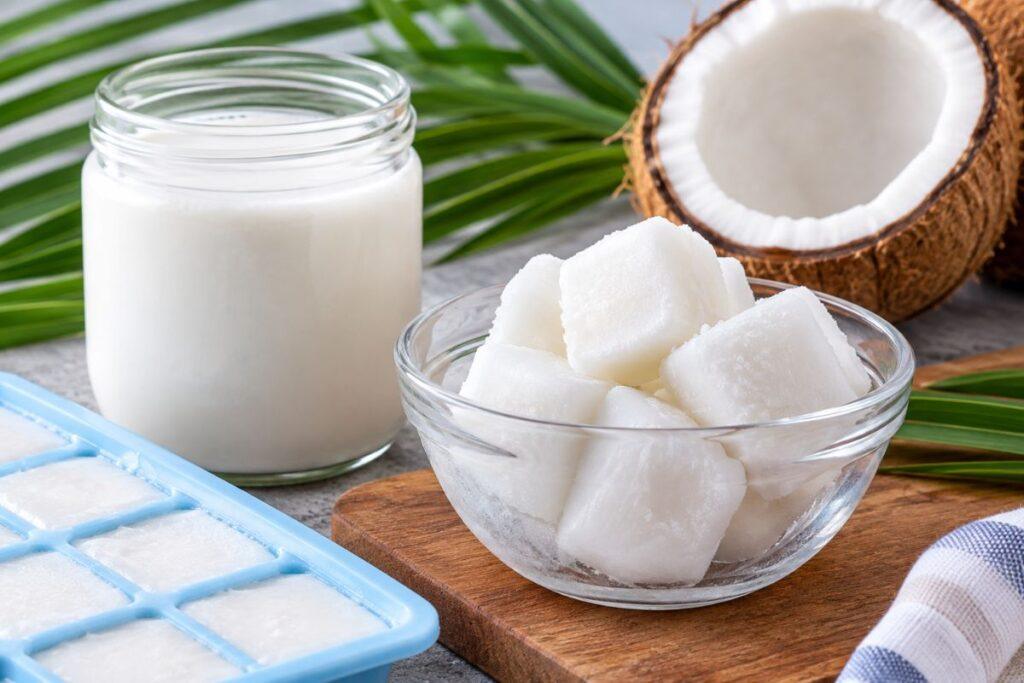
Yes. You can freeze coconut milk for about three months. It thaws out split and lumpy, which is where everyone panics and bins it. However, it is normal. To bring it back, just heat it or blitz it.
Tuesday curry, half a tin of coconut milk left, and that smug little voice saying, “I’ll use it tomorrow.” You won’t. So can you freeze coconut milk instead of throwing it on Friday? You can, and it takes three minutes.
- The tin never goes in the freezer. Decant it.
- One ice cube is 1 to 2 tablespoons.
- Three months tops. Month one is the best.
- Split, grainy, and curdled-looking coconut milk is normal.
- Thirty seconds with a stick blender and it’s creamy.
- Opened, fridged, you’ve got 4 to 5 days.
Why Freezing Is Better Than Pouring It Away
Hello Fresh points out the stuff comes in cans of 400ml, and your tikka masala wants half. Every curry has leftovers. Forever.
Then the guilt part. As Moral Fibres says, if the food that we waste globally every year were a country, it would scarily be the third-highest emitter of greenhouse gases after the US and China.
ALSO READ: 10 Smart Sustainable Kitchen Swaps for Under £10 That Actually Save Money
Can You Freeze Coconut Milk From A Can?
Yes, and tinned coconut milk is the best of the lot because it has the highest fat content. Nine to fifteen percent fat, barely an additive in sight, so the cold barely touches it.
Not in the can, though. Metal tins aren’t freezer-friendly. They swell, rupture, and make a mess. Opened cartons too: bung one in and you get freezer burn and a brick you can’t portion.
The Life Hacker writer binned leftovers for years, convinced that freezing wrecked them. Her method now: stand the bag in a measuring jug so it holds itself open, squeeze the air out, then lay it flat on a metal baking sheet. Flat freezes faster, snaps into pieces, and stacks neatly.
Two Easy Ways To Freeze It
- Cubes: Pour, freeze overnight, then pop them out, bag, and label. Give the tray five minutes on the worktop, or they come out sulking. Coconuts & Kettlebells did the measuring: a standard tray holds about an ounce per well, so two tablespoons per cube. Measure yours once and never guess again. Silicone trays with lids help.
- Tubs, jars, & pouches: Marcin Skrzypiec has the rule I follow: One tub, one recipe. Leave headroom, because liquid swells and glass doesn’t forgive. Silicone pouches stack flat and go in the dishwasher. Zip bags get four or five uses.
Date it, as mystery white blocks always get binned.
Milk, Cream, Carton, Or Powder
Same family, different builds. Both are grated coconut flesh and water; cream just gets more coconut, so it’s thicker and richer, while milk pours like the dairy stuff. Both are everywhere in South and Southeast Asian cooking, and both freeze identically: three months, airtight.
Carton milk is watered down with extras to keep it pourable, so it thaws grainiest. Cubes for that. Powder keeps for years dry, then acts like fresh once mixed: 4 to 7 days. Homemade wins on flavour, loses on everything else: 3 to 4 days chilled, 5 to 8 hours out, less in a warm kitchen.
Coconut soup is fine too. It splits a bit; you stir, and nobody notices.
Coconut Milk Varieties: Storage Lifespan & Freezing Performance
| Coconut Milk Type | Average Fat Content | Fridge Life (Opened) | Freezer Lifespan | Post-Thaw Texture | Best Uses After Freezing |
|---|---|---|---|---|---|
| Full-Fat Tinned Milk | 15% – 18% | 4 – 5 days | 3 months | Splits into clumps and liquid; easily restored with heat or blending | Curries, soups, stews, pilafs |
| Tinned Coconut Cream | 20% – 25% | 4 – 7 days | 3 months | Heavy fat separation; requires energetic whisking or warm bath | Rich curries, vegan baking, dessert sauces |
| Carton Milk (Dairy Alternative) | 1% – 2% | 7 – 10 days | 2 – 3 months | Separates heavily; turns watery and grainy (difficult to recombine) | Smoothies, iced coffee, baking (freeze as cubes) |
| Reconstituted Powdered Milk | 10% – 15% | 3 – 4 days | 3 months | Slight graininess; re-emulsifies quickly with a quick stir | Sauces, hot chocolate, single-serving curries |
Table Source: Food Standards Agency (FSA), USDA FoodData Central, and Culinary Storage Benchmarks.
How To Thaw Frozen Coconut Milk
- Fridge, overnight: The Coconut Mama clocks it at 8 to 12 hours; big tubs another four to six.
- Cold water: Sealed bag in a bowl, 10 to 30 minutes, swapping the water when it goes icy.
- Microwave: Cubes, a minute. A block, up to ten, in short bursts with a stir in between.
- Straight in the pan: Bend the frozen plank until it cracks, drop the chunks into a simmering curry, and cook a minute or two longer.
The counter works too: one to two hours for chunks and fifteen for cubes. The USDA says don’t, because bacteria love room temperature.
Why It Splits And The 30-Second Fix
Fat’s the reason. Freezing drags the fat and proteins away from the water, so you open the tub to cottage cheese that’s had a rough night.
Hot Thai Kitchen killed this myth: those clumps and clusters are merely ice crystals and coagulated fat, and heat melts them both. So: low heat and a stir, 15- to 30-second microwave blasts, or 30 to 45 seconds with a stick blender. A frother does small amounts. A few weeks frozen and there’s no real texture problem, no drop in taste.
ALSO READ: Why Provenance Matters When Choosing Festive Food Gifts
How Long Does Frozen Coconut Milk Keep?
Medical News Today reckons most milks, dairy and non-dairy, are good for up to three months frozen. Funny thing: tin makers usually tell you not to freeze it at all, because taste and texture shift. They’re not wrong. Loads of us do it anyway. Six months is still safe, just sadder.
Rough guide? Month one, lovely. Month three, fine. Month six, just hide it in a curry.
How Long Does Coconut Milk Last In The Fridge?
Once opened and transferred from the tin to an airtight container, it lasts 4 to 5 days. Thick tinned milk can sometimes last a week. Humid kitchen, knock a day off. For the past week, don’t be a hero.
Unopened is a cinch. Shelf-stable tins and cartons last months in a dry cupboard, often one to two years past the printed date. Chilled cartons don’t last anywhere near as long, so obey the use-by. Tinned milk sets solid when cold, so pull it out half an hour before cooking and stir.
What To Cook With It
Curries, soups, stews, pilafs, pancakes, puddings, and dairy-free cakes and breads. Cubes go in frozen: smoothies, iced coffee, overnight oats, chia pudding, and piña colada if the blender’s out. Warm it for a frothy vegan hot chocolate. Not for drinking neat or splashing on cereal. Grainy. Grim.
Has It Gone Off?
Nose first, always. Sour, rancid, or fermented means it’s done. Then eyes: mould, a yellow, brown, or greenish tint, clumps that won’t blend out, and a bitter taste. Puffed tin goes straight in the bin. Gone off early? Stored badly or open too long. Refreezing? Only if it thawed in the fridge, and expect another texture hit. Beats the sink.
ALSO READ: Ground Coffee: Everything You Need to Know Before Your Next Cup
FAQs
Q1. Can You Freeze Coconut Milk In The Tin?
No. Tins swell and split in there. Tip it into a bag, tub, or tray first.
Q2. Does Freezing Ruin Coconut Milk?
No, just the texture. The fat splits off, and half a minute of heat or blending sorts it.
Q3. How Long Can You Freeze Coconut Milk For?
Three months for decent quality, safe for about six. Month one tastes best.
Q4. Do You Need To Defrost It Before Cooking?
Not for hot food. Drop the cubes into a simmering curry or stew and stir until they melt.
Q5. Can You Freeze Coconut Cream The Same Way?
Yes. Use the same steps and freeze it for the same three months, whether in a tub or an ice cube tray.
Q6. Can You Refreeze Thawed Coconut Milk?
Only if it thawed in the fridge. Texture dips again, so keep it for cooked food.
Sources & References
- Life Hacker. Yes, You Can Freeze Coconut Milk.
- Hello Fresh. Can you freeze coconut milk for your recipes?
- Moral Fibres. Yes, You Can Freeze Coconut Milk – Here’s How!
- Coconuts & Kettlebells. Can You Freeze Coconut Milk? Yes, It’s Easy!
- Wikipedia. Coconut milk.
Disclaimer: The information provided in this article is for educational and informational purposes only and is not intended for promotional purposes. Readers should independently verify all facts and seek professional advice or consult official food safety guidelines regarding food preservation and storage practices before taking action.