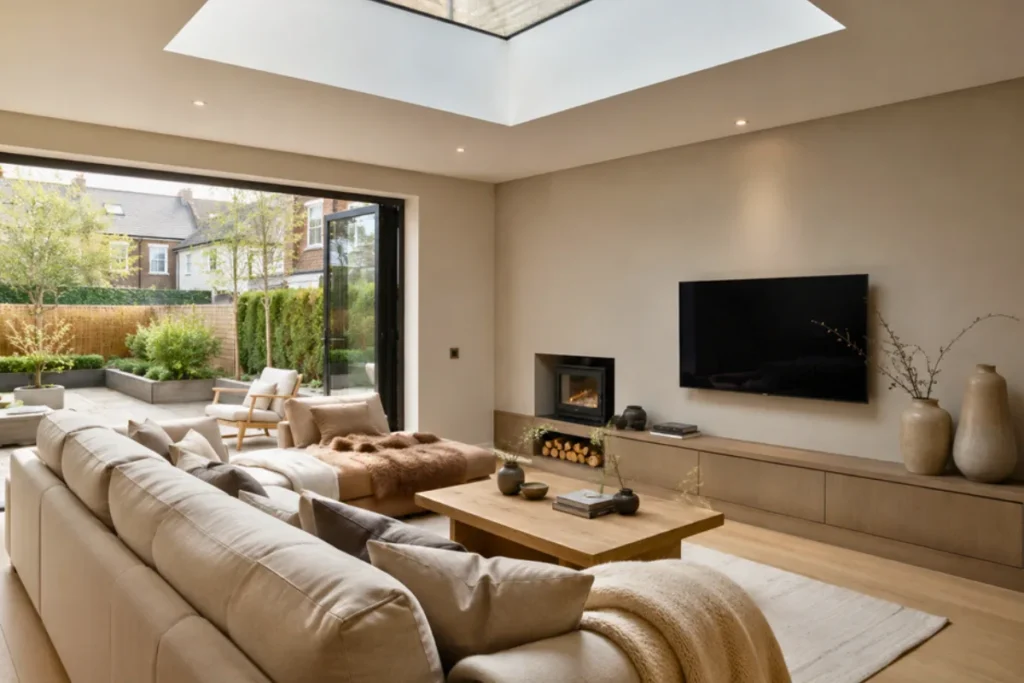
A rear extension can have wide glass doors and still feel dim once someone steps away from the garden. That is where roof glazing earns its keep.
So, what will it be: roof lanterns vs flat rooflights? The choice is less straightforward. A roof lantern turns the ceiling into a feature. Now, if you witness a genuine case of a flat rooflight, it tends to keep the roofline quieter. In fact, these two bring daylight from above, but they suit different rooms and budgets.
What Are Roof Lanterns And How Do They Work?
A roof lantern is a raised glazed structure built over an opening in a flat roof. Several panes slope upwards and meet along a ridge or at a central point. From inside, the room gains a sense of height.
The angled glass catches daylight from more than one direction. In a wide kitchen or dining room, that can help light reach areas beyond the rear doors.
The lantern sits on an upstand, which must be strong, insulated and properly sealed. The roof may need extra support too. If structural alterations are involved, preparing properly before work begins can prevent costly delays. A lantern contains several panes plus a number of frame joints, so fitting matters just as much as the glass.
Proportion is easy to underestimate. A lantern can look elegant in a generous extension but heavy in a short one. The view from upstairs matters as well. A large raised structure may sit directly beneath a bedroom window.
Cleaning is another reality that brochures tend to skip. Sloping glass sheds rain fairly well, though dust still gathers around the ridge and frame bars.
What Are Flat Rooflights And What Makes Them Different?
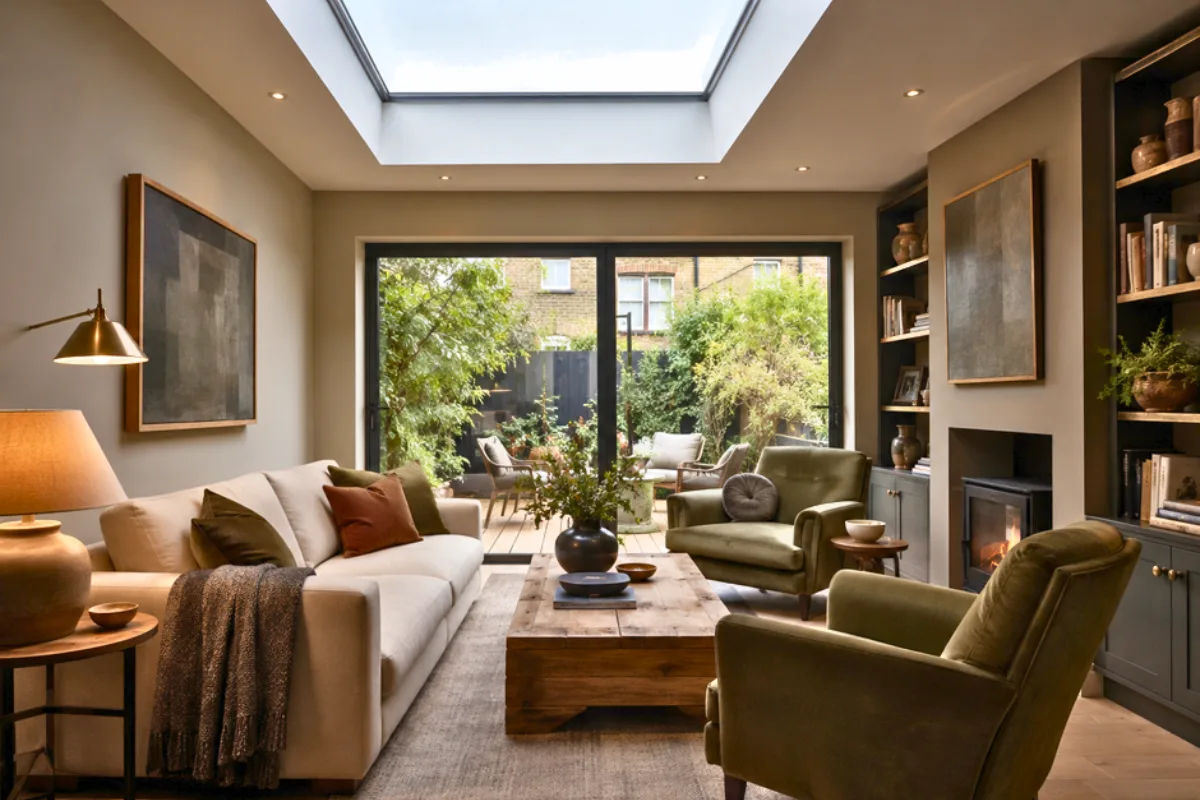
A flat rooflight is a glazed panel fitted close to the roof surface. It normally sits on a kerb or upstand with a slight fall so water can move away. From the garden, it looks low and tidy. From below, it appears as a simple opening in the ceiling.
That cleaner shape works well in modern extensions and smaller rooms. It also suits homes where the roof should remain unobtrusive from an upper floor.
Some flat rooflights are fixed. Others open. A fixed model provides daylight only, while an opening unit can release warm air and moisture.
The sky view is usually clearer because fewer bars cross the glass. One large panel can work over a dining table. In a long room, two smaller rooflights may spread the light more evenly.
Flat does not mean simple to fit. Water still needs a clear route away from the glass. The kerb needs insulation. A large pane may require extra structure around the opening.
ALSO READ: Hidden Cost of Scaffolding Explained: What You’ll Really Pay
Roof Lanterns Vs Flat Rooflights: A Side-By-Side Comparison
The apparent difference is not just tape but there’s much more to know.
The most obvious difference is shape, but the practical differences go further.
| Point | Roof Lantern | Flat Rooflight |
|---|---|---|
| Outside appearance | Raised and noticeable | Low and discreet |
| View from below | More frame lines | Cleaner sky view |
| Light pattern | Enters from several angles | Falls mainly from above |
| Room effect | Adds height and character | Keeps the ceiling simple |
| Installation | Usually more involved | Often more straightforward |
| Cleaning | More corners and frame sections | Fewer surfaces |
| Typical cost | Commonly higher | Often lower in standard sizes |
A lantern usually costs more because it needs extra framing, more glass and more assembly. Supporting roof work can add to the bill. Standard flat units are often cheaper, although made-to-measure panels can still be expensive.
Heat performance depends on the whole installation. Glass specification matters, but so do the frame, seals and insulated upstand.
Planning rules should be checked before work begins. Many rooflight projects fall within permitted development, though not every property does. Listed homes, conservation areas and glazing that projects too far above the roof may need approval. Building Regulations still apply because the work affects structure, insulation and safety glazing.
When you look at the whole picture, the overall installed cost has a reliable figure to showcase, while the typical unit price doesn’t display the whole situation.
ALSO READ: Kitchens with Pendant Lighting: Why It Works and How to Get It Right
Which One Is Better For Natural Light And Aesthetics?
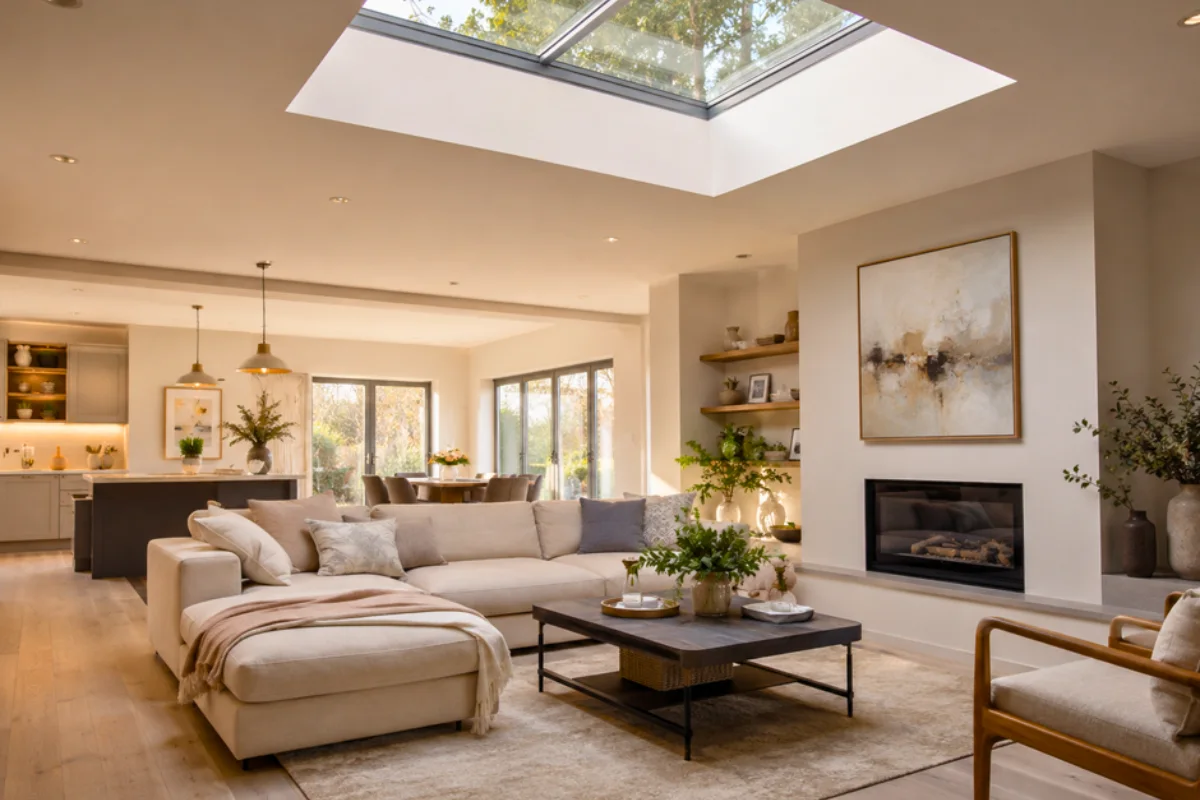
A roof lantern can catch changing light throughout the day. One side may pick up morning sun while another brings in softer afternoon light. That can make a broad room feel brighter for longer.
Its frame becomes part of the design. Some homeowners like the visible lines because they give the ceiling character. Others find them busy, especially where the room already contains beams or several ceiling features.
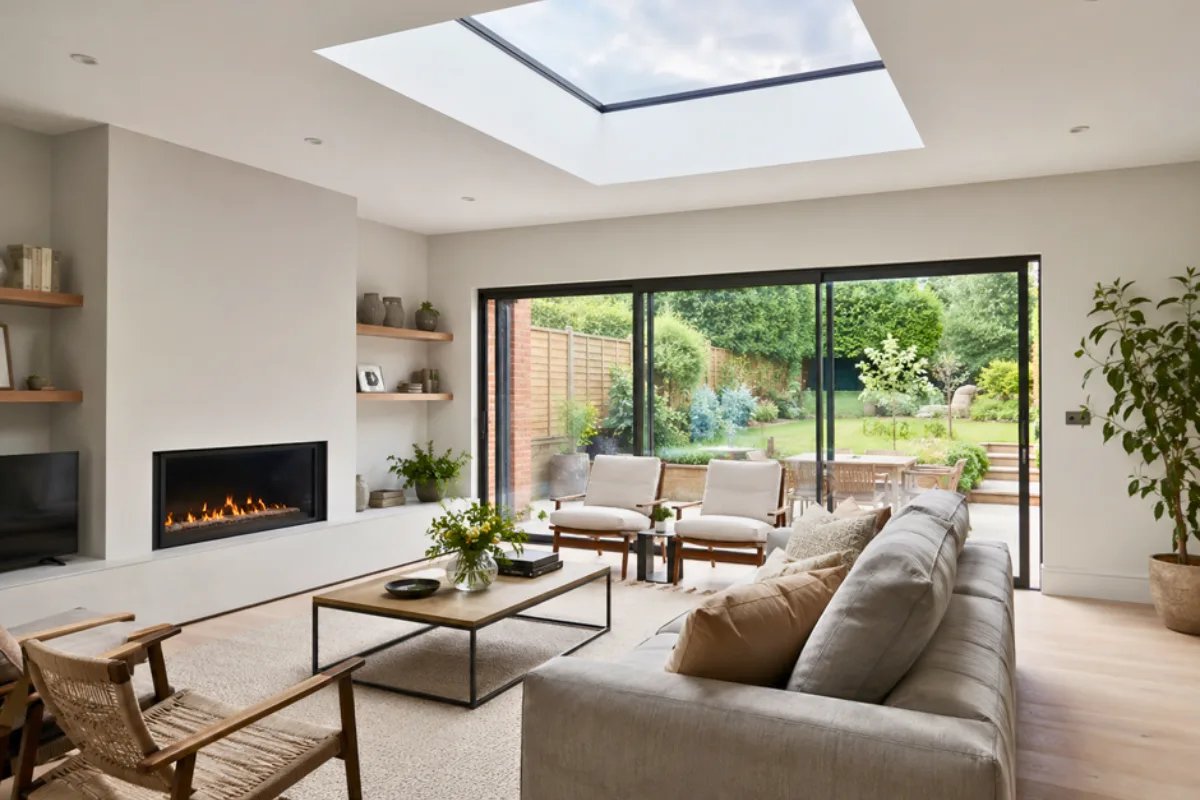
A flat rooflight gives a calmer result. Daylight falls more directly from above and the opening feels less broken up. Several small units can work well in a long extension because the light is spread along the room.
The style of the house should influence the choice. Lanterns often suit traditional detailing, shaker kitchens and orangery-style additions. Flat glazing usually works well with plain ceilings and modern finishes. For homeowners comparing flat roof skylights in UK options, the better choice is the one that suits the room, the roof structure and the full budget.
More glass can sound like the obvious choice, but it can make a south-facing room hot and glaring in summer. Blinds, solar-control glass or an opening panel can ease the problem, though the price will rise.
The opening only needs to be large enough to lift the room. It should not end up becoming the whole roof.
How To Choose The Right Option Based On Your Home And Budget
The room should lead the decision, not the product photograph. A brochure does not show the ceiling height, furniture layout or view from the floor above.
A larger extension may carry a lantern well, particularly when the middle of the room needs a focal point. A compact kitchen may feel better with a flat rooflight that adds daylight without much visual weight.
Before ordering, the homeowner should check:
- where the room feels darkest
- which direction the roof faces
- whether extra ventilation is needed
- what can be seen from upstairs
- how the glass will be cleaned
- whether the roof needs strengthening
- exactly what the quotation includes
That final point often changes the budget. One quote may cover the glazing unit only. Another may include the upstand, labour, plastering and internal finishing. Two prices can look far apart because they describe different jobs.
Access can add cost too. A finished extension with limited roof access may require extra equipment. Large panes may also need more people to lift them safely.
A low price is not always a saving. Poor seals may leave water marks. Weak insulation around the kerb can create a cold edge around the ceiling.
A lantern makes sense where height and presence matter. A flat rooflight often suits a room that needs quieter daylight, fewer frame lines and a lower profile.
ALSO READ: Modern vs Classic Kitchen Renovation: Which Style Fits Your Home?
Conclusion
Roof lanterns bring height and character. Flat rooflights keep the roof simpler and often cost less to install. All in all, the product matters. The fitting matters more.
Sources & References
- Homebuilding & Renovating Magazine. (2026, March). Roof lanterns vs flat rooflights: Which is best for your extension?
- Real Homes. (2026, February). Flat roof skylights and lanterns: Costs, styles, and installation tips.
- Planning Portal UK. (2025). Permitted development rights for rooflights and skylights. UK Government Planning Portal.
- Grand Designs Magazine. (2025). Choosing roof glazing: Lanterns, skylights, and flat rooflights explained.
- Centre for Sustainable Building. (2024). Energy performance and insulation in roof glazing systems. CSB Publications.
Disclaimer: This article is provided for informational and educational purposes only and should not be considered professional, technical, or legal advice. It is not intended to promote any product, brand, or service. Readers should consult qualified professionals before making decisions related to roofing, construction, or home improvement projects.