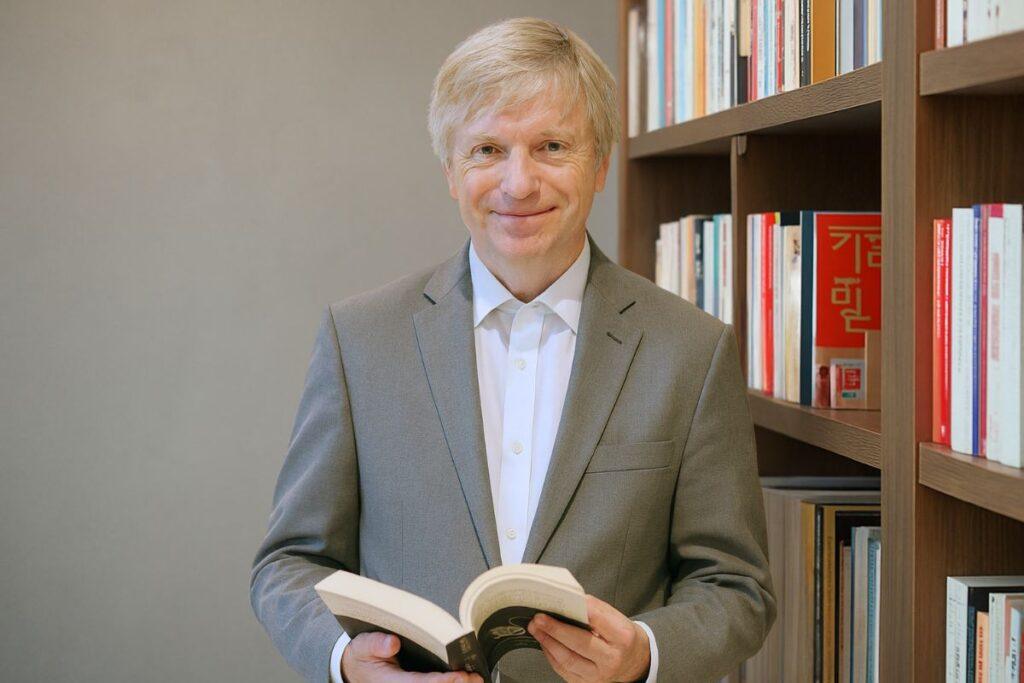
So I was watching the news last August when Japan was marking 80 years since the end of World War II. This bloke came on Times Radio and actually explained what happened in 1945 without making my brain hurt. Turns out his name’s John Nilsson Wright. So, who is John Nilsson Wright? He’s a professor at Cambridge who seems to be everywhere whenever something kicks off in East Asia.
My cousin did her master’s at Cambridge a few years back and mentioned him. He said he was this lecturer who’d lived in Japan for ages and could read old Japanese government documents like they were written yesterday. Sounded clever, but what got me was how often I’d see him after that on the BBC, on the radio, and in newspapers every time North Korea fired a missile or Japan had an election.
John Nilsson Wright Actually Lived There
Most academics who study other countries do it from Britain, reading books and papers, but never actually going. Not Nilsson-Wright. After finishing at Oxford (Christ Church, one of those fancy colleges), he moved to Japan and spent years there. Studied at Kyoto University, one of their best schools, and properly learned Japanese. Not tourist Japanese, but the kind where you can sit in archives reading 1940s government files.
John Nilsson Wright did his PhD on how America and Japan became allies after the war, which sounds dry but is actually quite interesting when you think about it. They’d just spent four years trying to kill each other, then suddenly they’re best mates. How does that work? He spent nearly a year in Tokyo digging through old documents to work it out.
His thesis won some big academic prize in 1997. Stanford published it as a book in 2005. It’s still one of the main books people read about post-war Japan and America.
Two Jobs At Once
What’s different about Nilsson-Wright is he doesn’t just teach. Yeah, John Nilsson Wright’s a professor at Cambridge; he’s got this title “Fuji Bank Professor of Japanese Politics”, which sounds proper fancy, but he also does loads of work outside university.
John Nilsson Wright runs the Japan and Koreas Programme at Cambridge’s Centre for Geopolitics. That’s where the real-world stuff happens. He talks to journalists, writes for think tanks, and advises people who make decisions about foreign policy. Basically tries to stop British politicians from completely misunderstanding what’s going on in East Asia.
He used to run the Asia Programme at Chatham House too, from 2014 to 2016. That’s one of those think tanks that actually matters—when they publish something, MPs pay attention. He’s still there as a senior research fellow, focusing on Northeast Asia.
My mate who works in telly production said producers love booking him because John Nilsson Wright actually answers questions instead of rambling on about his latest book. Apparently, that’s quite rare with academics.
Always On The News
This year, John Nilsson Wright’s been everywhere. In August, he was on Times Radio talking about VJ Day. In July, he was on Korean television discussing Japan-South Korea relations. He’s done BBC documentaries about North Korean defectors.
John Nilsson Wright writes for newspapers, academic journals, and policy magazines, wherever they will have him. I like that he doesn’t talk like he’s reading from a textbook. When he’s on the radio explaining something to normal people, he speaks normally too. When he’s writing for other professors, he gets all academic. But he flips between them without sounding inauthentic or talking down to people.
I heard him on the radio once explaining why Japan and South Korea hate each other despite both being democracies and allies of America. Made complete sense. World War II history, comfort women and territorial disputes that have lasted decades. Until then, I simply figured they were being petty.
What John Nilsson Wright Actually Does
John Nilsson Wright focuses on Japan and both Koreas. He looks at Cold War history, including how America built these alliances in Asia after World War II and current politics and security stuff. Why does America have bases in Japan and South Korea? What happens when North Korea fires missiles? How do these countries work together?
Right now, John Nilsson Wright’s writing a book about populism and identity politics, looking at how it works in Europe and Asia. Given what’s happening in Britain and America and pretty much everywhere else, that’s probably going to be quite timely.
He’s also done loads on North Korea’s nuclear programme, Japan-South Korea relations (which are always rocky), and how Britain should deal with the Indo-Pacific region. That last bit matters because our government keeps saying we need to be more involved in Asia, but most British politicians couldn’t find Seoul on a map.
The Name Thing Is Confusing
Right, so this is slightly annoying. He used to be called John Swenson-Wright. His big book from 2005 has that name on it. Then he changed to John Nilsson-Wright. We don’t know why; it could be anything, and it’s not really our business but it means if you’re looking for his work, you need to search both names or you’ll miss half his stuff.
Academic databases are a nightmare for this. Half his papers are under one name, half under the other. Makes him look like two different people.
Why Any Of This Matters
Britain’s rubbish at understanding Asia. We know it’s important; massive economies, huge populations, and loads of our trade go there, but most British people couldn’t tell you who the Prime Minister of Japan is or what’s happening in South Korea beyond K-pop and Samsung.
Having someone like John Nilsson Wright who can explain this stuff to normal people matters. When North Korea tests a missile, we see a scary headline. He can explain whether it’s actually a new threat or just Kim Jong-un making noise to get attention. When Japan and South Korea are arguing, he can explain why it’s not just them being difficult but actually affects our security.
He’s won awards for this stuff too. In 2014 he got the Nakasone Yasuhiro Prize, which is a big deal in Japan-UK relations. He’s been involved with the World Economic Forum’s thing on Korea. These aren’t just fancy titles—they mean he’s actually influencing what governments do.
What John Nilsson Wright’s Doing Now
This autumn, John Nilsson Wright’s been busy. Did a podcast in October with someone who used to work for the Japanese Prime Minister, talking about how Japan deals with America. He’s been commenting on Japan’s elections for Japanese newspapers. He’s been on Korean telly analysing Seoul and Tokyo’s relationship.
Plus, he’s still teaching at Cambridge, supervising PhD students, and working on that populism book. And all his think tank work with Chatham House and the Centre for Geopolitics.
From what I’ve seen recently, he’s focused on how Trump coming back affects East Asia. Makes sense—Trump’s unpredictable, and America’s alliances with Japan and South Korea keep that whole region stable. If Trump decides to pull troops out or demand loads more money, everything changes.
The Personal Bit
John Nilsson Wright’s LinkedIn says he’s married to his wife, Lucy Williamson, who’s a BBC correspondent. That probably explains why lucy williamson husband is so comfortable with journalists. When you’re married to someone in the media, you probably get quite good at explaining complicated things simply.
I saw him speak once at a public lecture in London about three years ago. I can’t remember what it was about, exactly; maybe something to do with North Korea, I think. What stuck with me was that he made it interesting. Most public lectures are deadly boring, but he had this way of connecting what was happening thousands of miles away to stuff we actually care about here.
An audience member later asked him whether he thought North Korea may someday be willing to abandon its nuclear weapons. He basically said no, not without a huge change, and made a reasoned case for it. Didn’t beat around the bush or give people false hope, just told what it really was.
Why He’s Different
Loads of academics do brilliant research that nobody outside universities ever hears about. Nilsson-Wright’s chosen to actually engage with the real world. Media, policymakers, think tanks, public talks. Is that because he genuinely thinks it’s important? Or does he just like being on telly? Probably both, if we’re honest.
But Britain’s better off having someone with his knowledge who’s willing to share it. Next time you see someone on the news explaining North Korea or Japan, there’s a decent chance it’ll be him. Not bad for someone who started out reading dusty old papers in Tokyo thirty years ago.
The thing is, we need more academics like this. People who can bridge the gap between what’s happening in universities and what normal people need to know. East Asia’s too important for us to just ignore it or not understand it properly.
So yeah, that’s John Nilsson Wright. Cambridge professor, media regular, the bloke who explains East Asia to Britain. You’ve probably heard him without knowing his name.
Disclaimer: This article is provided for informational purposes only. While reasonable efforts have been made to ensure the accuracy and reliability of the information presented, no guarantee is made regarding its completeness, accuracy, or timeliness. The content does not constitute any specialised advice and should not be relied upon as such. Readers are encouraged to conduct their own research and consult qualified professionals before making any decisions based on the information contained in this article.