
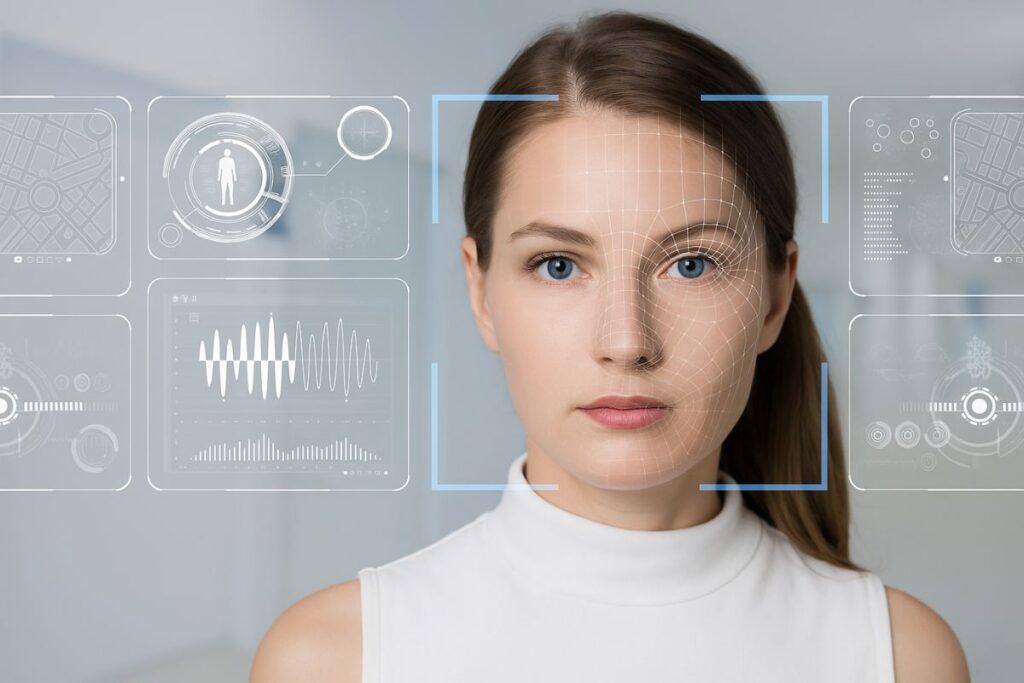
With biometric authentication now being part and parcel of our digital existence, unlocking smart phones, verifying identity on the internet, and gaining access to secure facilities, it has never been more important to have solid security in place. Of these, liveness detection has become a vital element in thwarting spoofing attacks and in making sure the person being authenticated is real and alive and not a fake alternative like a photo, video, or mask. Liveness detection is the process of ascertainment as to whether the biometric sample being handed to the system is that of a live individual at the time of capture and it therefore forms a fundamental part of making sure that identity verification is secure.
What Is Liveness Detection and Why Does It Matter?
Liveness detection is employed in biometric security systems (e.g. facial recognition, fingerprint scanning, and iris detection) with the goal of preventing fraud and identity theft. Even the most sophisticated recognition systems will be fooled by high-resolution images, 3D-printed masks, or even prerecorded video of the identity being spoofed without this technology. The system with liveness detection is able to distinguish between a live subject and a non-moving object, which is effective in resisting such presentation attacks.
With the proliferation of biometric authentication in the banking and healthcare sectors, and at the border and within online commerce, the risk of biometric spoofing is increasingly advanced. Liveness detection provides a defense against the fake user attaining sensitive systems or data, which cannot be offered by the use of the static biometrics. This is mostly required in cases where the user needs little to do and systems have to act independently.
Active Liveness Detection Role
Active liveness is one of the approaches of liveness detection. In this approach, the system would demand the user to do a specific action to ascertain his availability and presence. This can involve blinking, moving the head, smiling or following on screen prompts. The system can test that it is a live human being and not a recorded or written image, by asking the user to respond in real-time as it is clear that the system is communicating with a living person.
Active liveness detection is commonly employed in applications where a high quality of security is needed, like on the remote onboarding of a financial institution or government service. Though useful, the technique is subject to user collaboration, which in some cases may be a barrier to the user experience, particularly with people with low mobility or with those with no knowledge of digital interfaces. Nonetheless, the additional interactivity greatly increases the system capability to identify attempts of spoofing, and active liveness has become a common option among identity verification providers.
Passive Liveness Detection
Passive liveness detection, in contrast, does the opposite thing by establishing the presence of the user without having any explicit action performed. This technique studies the subtle indicators in the biometric data — e.g. the texture, light, colour, depth data and quality of the image — to study whether the presented face or fingerprint is of a live person. These features are evaluated in real time by advanced algorithms that run using artificial intelligence and machine learning and quietly run in the background during the authentication process.
The benefit of passive liveness detection is that it is user friendly. As there is no action required on behalf of the user, the authentication seems to be faster and more natural. This is what passive liveness is particularly valuable in consumer applications such as mobile banking, online stores, and social media, where usability is as critical as security. Nevertheless, since passive liveness may be more dependent on software-based measures, it should be trained on large and heterogeneous datasets to be able to capture a broad set of spoofing methods.
Securing Versus User Experience
The question of active versus passive liveness detection may largely depend on the risk level and application of the system. Active liveness can sometimes be preferable to high-stakes settings, e.g. national security checkpoints or high-value financial transactions, since it is more certain, albeit users must exert a little more effort. Conversely, wherever convenience is vital, then it is possible that the applications may tend to favor passive liveness due to its unobtrusiveness.
In numerous contemporary systems a hybrid model is employed: initially passive liveness checking is performed to be fast and convenient but in case of suspicious activity a transition to active liveness checking is made. It is a dynamic approach, offering an excellent balance of security and user experience and adjusting in real-time depending on the situation of the interaction.
The Future of Biometric Security Liveness Detection
Liveness detection is going to be an important component of the security ecosystem as biometric technologies keep changing. Computer vision, deep learning and 3D sensing innovations are already pushing the limits on what these systems can identify. The future of liveness detection is taking the even more advanced path with being able to detect minute movements on the face which can be termed as micro-expressions as well as detecting pulse and blood flow patterns beneath the skin.
The increased regulatory attention to privacy and digital identity also highlights the need to have trustworthy liveness detection. Biometrics verification processes are now required to have liveness detection as a compliance requirement by governments and institutions. This will guarantee not only a higher protection against identity theft but also an increased confidence in online services.
ALSO READ: What Is a Penetration Test and Does It Make Your Systems Safer?
Conclusion
Liveness detection is a necessary factor in the protection of biometric authentication systems against more sophisticated threats. Active liveness, where the user is directly involved, or passive liveness, where something works in the background, either way these technologies guarantee that biometric systems are not only checking on the right person — but a real, live person. With the ever-growing digital interactions crowding out face-to-face processes, a heavy emphasis on robust, adaptive liveness detection will soon make any organization that is interested in keeping its users and its information safe.
Disclaimer: This content is provided for informational purposes only and does not constitute any advice. Readers should independently verify details and consult with qualified professionals before making any decisions. The information presented is not intended to promote any specific individual, provider or service. We are not responsible for any actions taken based on this content.



Thanks for sharing. I read many of your blog posts, cool, your blog is very good.