
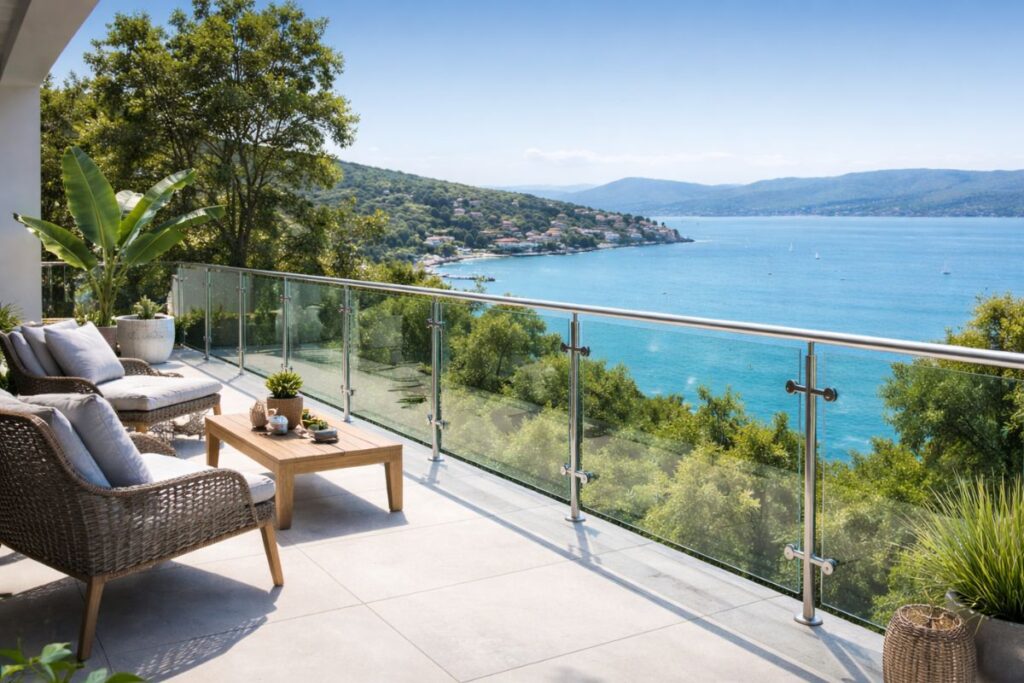
If you’ve popped into a new office block in the City or walked through one of those massive new Premier League stadium concourses lately, you’ve probably felt it. The vibe has changed. We’re moving away from those heavy, almost claustrophobic concrete barriers that used to define big buildings. In their place? A total transparent takeover. It’s not just a “look” anymore. By 2026, glass balustrades have shifted from being a fancy architectural extra to the actual backbone of modern commercial design.
Experts who have been watching the industry have concluded the transformation is staggering. It is about how we feel in a space. Nobody wants to work in a dungeon. Architects are finally realising that if you can see through a floor or staircase, the entire building begins to breathe. Whether it’s a tech hub in Leeds or a swanky hotel in London, the aim is largely light, sight, and safety that doesn’t look like a prison.
That “Invisible” Strength Is No Joke
Look, there’s always that one person who asks, “But what if someone falls through it?” We can understand. Glass looks fragile. But in the world of commercial kit, that’s a total myth. The stuff being used now—toughened and laminated—is basically as hard as nails.
Think about a crowd at a big match. If a goal goes in and everyone rushes the front, that railing is taking a massive hit. To pass the grade in the UK, these systems have to hit specific line load requirements under BS 6180:2011.
In a stadium, we’re talking about resisting a force of up to 3.0 kN/m. That’s essentially like a small car leaning on the glass. It’s not going anywhere.
The best part for the people actually running the buildings? The upkeep is dead easy. Wood rots, and metal needs a lick of paint every few years or it looks rubbish. Glass just needs a quick wipe. In a school or a gym where things get battered daily, those long-term savings on maintenance are a proper lifesaver for the budget.
Offices And Schools: The End Of The “Closed-Off” Era
Right now there’s a widespread movement called “Warm Minimalism”. It sounds a bit waffly, but it effectively is about creating a space that feels clean but not cold. Designers can create various zones—a mezzanine in a university library or a main foyer staircase—by using Glass Balustrades without visually cutting the room in half.
It’s the natural light that counts here above all. When you sit under flickering fluorescent lights all day, we all know that makes you want to quit. Glass allows the light coming in from the big windows to actually reach the middle of the floor. It’s a game-changer for morale.
In schools, it’s even more practical. It’s about sightlines.
Teachers can see what the kids are up to three floors down. No hiding spots. I’m also seeing a lot more “social staircases” lately—you know, those massive wide steps where people can sit and have a coffee. Using glass makes those structures feel like part of the furniture, not some dark escape route.
The Rise Of The Glass Juliet Balcony
It’s not all indoors, though. Hotels and leisure spots are going mad for the “premium” feel. This is where the glass juliet balcony comes into its own.
Why? Simple: you get floor-to-ceiling views and fresh air without the massive cost of a projecting concrete balcony. In a high-rise hotel, space is gold. A juliet balcony lets you open up the room to the outside world, making a tiny city room feel twice as big. It’s a clever bit of engineering that pays off the second a guest walks in.
ALSO READ: What is the Average Cost to Decorate a Room: My Budget Reality Check
No More Guesswork: Engineering Peace Of Mind
Picking a system for a public space isn’t just about what looks “mint” on Instagram. It’s a massive legal responsibility. I’ve seen projects where the fixings were an afterthought, and six months later, the glass is rattling or the metal is staining. It’s a right mess.
That’s why most architects I work with stick to specialists like SMART Balustrades. You need the “receipts” for the building inspectors—the load test certs and the BS EN compliance docs. You can’t just wing it when it’s a public building.
The tech is mental now, too. We’ve got “frameless” systems where the glass sits in a hidden channel in the floor. It literally looks like a sheet of crystal just rising out of the tiles. It’s a cracking effect for a high-end shop or a hotel lobby.
Why The Commercial World Is Switching
| Feature | The “Real World” Benefit |
|---|---|
| Transparency | More light = less depressed workers. Plus, it looks massive. |
| Toughness | Won’t warp or rust. Toughened glass is a beast. |
| Maintenance | Squeegee and go. No sanding or painting required. |
| Safety | Complies with BS 6180 for heavy crowd pressure. |
| Vibe | Makes an old building look modern in about five minutes. |
FAQs
Q1. Does It Always Need A Handrail?
Not necessarily. If you use a specific type of laminated glass that’s designed to stay standing even if one layer cracks, you can go totally without a handrail. It’s the ultimate clean look.
Q2. How Do You Keep Them Clean In A Busy Gym?
Standard glass cleaner and a squeegee. Some of the newer glass actually has “self-cleaning” coatings that help repel fingerprints and water spots. Still needs a wipe, but it’s much easier.
Q3. Are They Safe For Primary Schools?
Yeah, absolutely. They’re actually safer than old-school railings because there are no horizontal bars for kids to climb on, and no gaps for them to get their heads stuck in.
Q4. How Long Does It Take To Get Them Fitted?
Depends on the size of the job, obviously. For a bespoke commercial fit-out, you’re usually looking at a few weeks for the design and manufacture, then installation on-site.
ALSO READ: How to Invest in Commercial Real Estate: A Proper Guide for Beginners
The Final Word
At the end of the day, buildings are for people. By replacing solid walls with glass, we’re making spaces that feel more human and a lot less like a box.
The next time you’re in a hotel or shopping centre and you find yourself looking through the railing at the view instead of staring at a rusty piece of iron, you’ll know why. It’s safe, it’s easy to live with, and frankly, it just looks better.
Have you noticed more of this “invisible” design in your local town centre lately, or are you still a fan of the traditional metal look?
Sources & References
- SMART Balustrades. (2026). Commercial project case studies: From stadiums to retail.
- Local Authority Building Control (LABC). (2025). Guidance for structural glass and balustrade design. LABC Standards Hub.
- British Standards Institution (BSI). (2011). BS 6180:2011 – Barriers in and about buildings: Code of practice. BSI Standards Publication.
Disclaimer: This content is provided for informational purposes only and is not intended as professional, legal, or commercial advice. The information presented does not promote any specific product or service. Readers should conduct their own research or consult qualified professionals before making decisions based on this content. The author and publisher are not responsible for any actions taken based on this information.