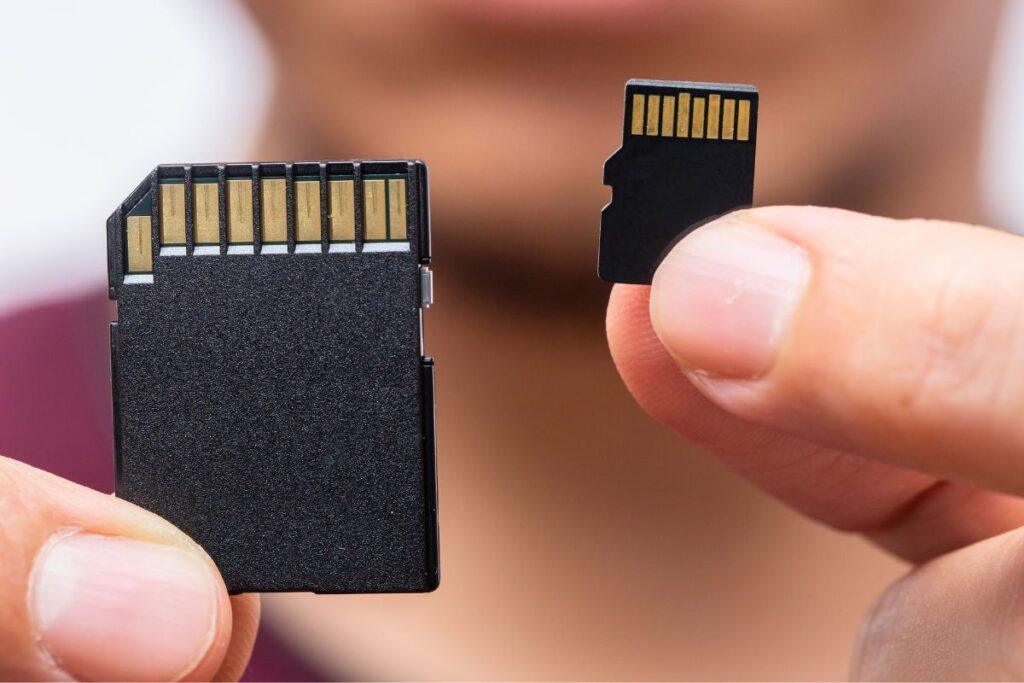
Mini SD vs Micro SD card is largely a comparison between an older, now-obsolete format and the smaller, widely used storage standard. A Mini SD card measures 21.5 x 20 x 1.4 mm and is capped at 32 GB. A Micro SD card is smaller, at 15 x 11 x 1 mm, and supports up to 2 TB today (128 TB in theory).
Mini SD is now obsolete, while Micro SD powers most modern phones, cameras and consoles. We all may have these in our drawers, which are full of dead chargers, mystery cables, and, if you’re lucky, a memory card that nobody can identify.
- Mini SD was launched in 2003, and Micro SD was launched in 2004.
- A Micro SD covers less than 40% of the surface area of a Mini SD card.
- Mini SD top storage memory is 32 GB. Micro SD can go to 128TB.
- Insert either into a passive adapter and it’ll work in a full-size SD slot.
- By 2008, Mini SD had pretty much vanished.
An Overview Of History
In August 1999, SanDisk, Panasonic, and Toshiba came together to replace the older MultiMediaCard (MMC). A few months later, in January 2000, the trio set up the SD Association. It’s still the body that writes the rulebook today.
ALSO READ: Ultimate Guide on HDMI Splitter for Dual Monitors: Save Time and Money Easily
What Is A Mini SD Card?
In March 2003, SanDisk showed up to the German tech show, CeBIT, with a shrunken SD card for mobile phones. It got the official nod later that year, and it shipped with an adapter so it’d fit a normal SD slot.
EaseUS credits Panasonic and SanDisk for building it and reckons its low-power design made it a better match for phones than full-size SD. The Motorola MPX100 and Panasonic X700 were among the handsets that used one. Then the Micro SD arrived and, well, that was that. Mini SD was largely phased out by 2008.
What Is A Micro SD Card?
Micro SD first appeared at CeBIT in 2004 as T-Flash and was later renamed as TransFlash. It became microSD officially in 2005. That’s why sellers still refer to them as ‘TF cards’. RS describes it as a removable card just 15 x 11 mm, ideal for a kit where space is tight.
It may be small in size, but it gets everywhere: Android phones, GoPros, drones, dash cams, sat navs, and even the Raspberry Pi. The Nintendo Switch 2 even requires the faster microSD Express type for game storage.
Mini SD Vs Micro SD Card: Side-By-Side Comparison
| Feature | Mini SD | Micro SD |
| Launched | 2003 | 2004 (standardised 2005) |
| Also known as | None | TF card |
| Dimensions | 21.5 x 20 x 1.4 mm | 15 x 11 x 1 mm |
| Capacity types | miniSD, miniSDHC | microSD, microSDHC, microSDXC, microSDUC |
| Maximum capacity | 32GB | 2TB (SDXC); 128TB (SDUC) |
| File systems | FAT12, FAT16, FAT32 | FAT12/16, FAT32, exFAT |
| Pins | 11 (two unconnected) | 8 (16 on UHS-II) |
| SDIO version | Yes (miniSDIO) | No |
| Express speeds | Not available | Up to 985 MB/s |
| Write-protect switch | Via adapter only | Via adapter only |
Table Source: Data compiled from official SD Association (SDA) Physical Layer Specifications.
Key Differences Explained
Physical Size
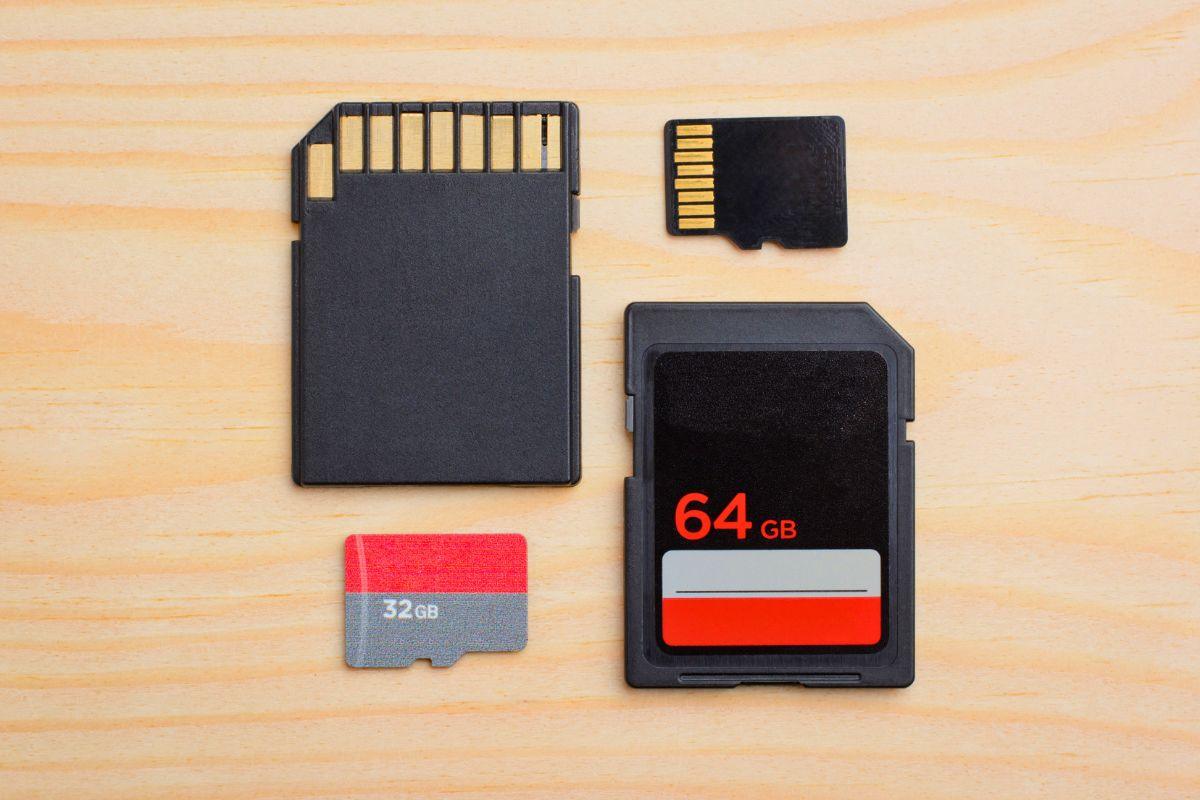
Size is the big giveaway. Lexar measures Mini SD at 21.5 x 20 x 1.4 mm and Micro SD at 15 x 11 x 1 mm. Line them up, and the little one covers under 40% of the Mini’s area. No wonder phone makers ditched Mini SD so quickly.
Storage Capacity
Capacity depends on the card’s standard, not its shape. SDSC means up to 2GB. SDHC means up to 32GB. SDXC and SDUC never came in the mini size, so Mini SD hits a brick wall at 32GB. Micro SD? It sails on to 2TB with SDXC and a frankly silly 128TB with SDUC. SanDisk released a 2TB microSD card in 2024.
File Systems
Each standard brings its own file system. Mini SD sticks with FAT12, FAT16 or FAT32. Micro SD uses those too, but SDXC and SDUC cards switch to exFAT, which handles whopping video files far better.
Pins And Contacts
Turn them over and count the contacts. Mini SD has 11, two of which sit in the middle doing absolutely nothing. Micro SD gets by with eight because it drops a ground pin. The speedier UHS-II versions add a second row, bumping that to 16.
Speed And Performance
Mini SD belongs to a slower age. Micro SD has come on leaps and bounds: UHS-I reaches 104 MB/s, UHS-II 312 MB/s, and microSD Express borrows SSD tech to hit 985 MB/s. Shopping? Check the label. U3 or V30 handles 4K, V90 copes with 8K, and A1 or A2 matters if you run apps off the card.
Compatibility And Adapters
Both cards will happily sit in a full-size SD slot with a passive adapter. A Micro SD can squeeze into a Mini SD slot with the right adapter too. The other way round? Not a chance. Also, a microSDXC card needs a device that supports SDXC. And neither card has its lock switch; that lives on the adapter.
Availability And Cost
CDW points out that devices still taking Mini SD without an adapter are rare. Micro SD cards are cheap and everywhere, from 32GB to 2TB. Just don’t bother looking for a slot on your iPhone. Apple has never fitted one.
Which One Should You Choose?
My verdict is Micro SD, nine times out of ten. Only go hunting for a Mini SD if you’re reviving an old mid-2000s phone or camera. For everyday phone storage, a 256GB UHS-I U3 card is the best choice.
One last thing. Fakes are rife, so buy from shops you trust. Free tools like H2testw (Windows) or F3 (Mac and Linux) will tell you if a card’s lying about its size. Expect two to ten years of normal use, and back up anything important.
ALSO READ: What Is App Thinning (iOS) And Why It Matters For App Store Do
FAQs
Q1. Is A Mini SD Card The Same As A Micro SD Card?
No. Mini SD is bigger (21.5 x 20 mm) and longer. Micro SD is smaller (15 x 11 mm) and holds far more.
Q2. Can I Use A Micro SD Card In A Mini SD Slot?
Yes, with a microSD-to-miniSD adapter. A Mini SD won’t fit a Micro SD slot, though. It’s just too big.
Q3. Are Mini SD Cards Still Made?
Not really. The format was largely phased out by 2008, and hardly any devices support it now.
Q4. What Is The Maximum Capacity Of A Mini SD Card?
32GB, the miniSDHC limit. No miniSDXC or miniSDUC cards ever existed.
Q5. Is Micro SD Faster Than Mini SD?
Usually, yes. Modern Micro SD cards support UHS-I, UHS-II and microSD Express, which reaches 985 MB/s.
Q6. What Is A TF Card?
TF stands for TransFlash, Micro SD is its original name. So a TF card is just a Micro SD card.
Sources & References
- RS Components. (2026). Micro SD cards guide: Sizes, uses, and specifications.
- Lexar. (2026). Guide to microSD card sizes and storage formats.
- EaseUS. (2026). What is a Mini SD card? Features, history, and comparison with Micro SD cards.
- CDW. (2026). Types of SD cards: SD, Mini SD, and Micro SD explained.
Disclaimer: This article is provided for general informational purposes only and does not constitute technical or professional advice. Mention of specific products, specifications, or brands is strictly for objective comparison and does not constitute endorsement or promotion. Readers are encouraged to independently verify all technical details and consult with qualified professionals prior to making purchasing or hardware decisions.