
Imagine you’re standing on a balcony in Tel Aviv on a Tuesday night. Usually, you see the Iron Dome doing its thing — clean, singular streaks of light colliding in the sky like a well-choreographed dance. But mid-March 2026 changed that. Suddenly, the sky didn’t show one explosion at all. It showed hundreds. It appeared to be a swarm of angry, luminescent wasps raining down on the city. That wasn’t a glitch in the radar system. It was the moment ‘What are cluster missiles?’ became a question of life or death for millions.
For most people, cluster bombs are something you read about in history books or see in grainy footage from the 70s. But in the current cluster missiles used in Israel-Iran War, these things have been dragged out of the archives and turned into a terrifying reality. Iran’s latest salvos haven’t just been about big rockets; nearly half of their ballistic launches now carry these “area-denial” warheads. It’s a total shift in tactics.
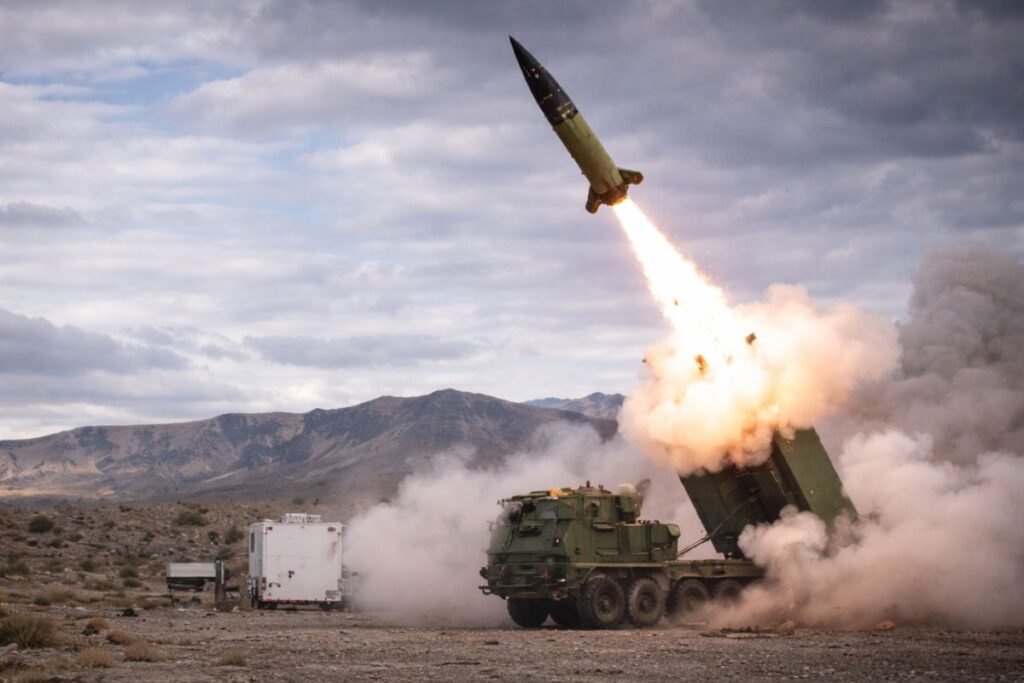
The logic is brutal. Instead of aiming one big warhead at one building, you pack a missile with dozens of smaller “bomblets.” High in the air, the casing splits open and scatters these submunitions across a radius the size of several football pitches. It’s not a sniper rifle; it’s a sawed-off shotgun fired from the edge of space.
The Maths Of Overwhelming The Shield
Here’s the thing. Israel’s defensive net is world-class, but it’s designed for precision. When a Khorramshahr-4 missile opens up at high altitude, it turns one target into sixty or eighty separate threats. As noted in recent reports from the Institute for the Study of War, this is purely about “saturation.”
If you’re a radar operator, how do you pick which of the 600 falling objects is the most dangerous? You can’t. The system gets overwhelmed, the maths break down, and stuff starts getting through. It’s a tactical mask. By filling the sky with “clutter,” the attackers ensure that at least a few of those bomblets find a roof or a street.
And don’t be fooled by the word “bomblet.” It sounds cute, almost like a toy. But these things carry enough punch to shred light vehicles and turn a residential street into a scrap yard. When one of these hits a town like Shoham or Rishon LeZion, it doesn’t just destroy a room. It peppers the entire neighbourhood with shrapnel.
ALSO READ: How to Design a Contemporary Home in the UK | A Practical Home Design Guide
The “Silent Killers” Left In The Playground
That explosion isn’t the real horror, however. It’s the stuff that doesn’t go off. Cluster munitions are notoriously unreliable. We’re dealing with a “dud rate” that can be as high as 10 per cent to 40 per cent. In a city, that is an impending disaster.
Think about it. A missile hits, the sirens fade, and people go back outside. But the ground is now strewn with small, unexploded canisters that resemble soda cans or tennis balls. A curious kid picks one up. A recovery worker removes a piece of debris. Boom.
The HALO Trust has been shouting about this for months. We are essentially seeding the most densely populated parts of the Middle East with thousands of “miniature landmines.” As the Jerusalem Post highlighted in their recent legal breakdown, this isn’t just collateral damage. It’s a long-term humanitarian nightmare that stays active for decades.
A Legal Minefield With No Exit

You’ll hear people say these weapons are “illegal”. Well, yes and no. There is a 2008 treaty — the Convention on Cluster Munitions — that prohibits them. Over 100 countries signed it. But consider the names in the list of who didn’t sign: Iran, Israel and the United States.
In the view of these states, these are valid military tools. But here’s the catch. The way they wield it still matters, even if the weapon itself isn’t banned for them. You can’t deploy indiscriminate weapons in civilian areas — international law is quite explicit about this. When you drop a cluster swarm into, say, the city of Tel Aviv or Gush Dan, there is no such thing as a “military target.” Everything in that 5-mile radius is a target.
The Iranian regime is being hammered by war crimes accusations because they are choosing to use these “area” weapons in places where families live and work. It’s a return to the kind of “carpet bombing” mentality we all thought we’d left behind in the 20th century.
Why This Changes Everything For 2026
Anyway, the most chilling part is how this affects the future of the region. In previous wars, there was at least a shred of coordination after the dust settled to clear out the unexploded duds. But in 2026, with the conflict reaching deep into both territories, that cooperation is a pipe dream.
We are looking at a regional map—a “tapestry” of danger—that will take generations to clean up. Every school run, every new construction project, and every walk in the park in central Israel is now shadowed by the risk of an unexploded Iranian submunition.
So, what are we left with? A weapon that’s designed to be messy, a legal system that’s being ignored, and a civilian population caught in the middle of a high-tech swarm. It’s a grim reminder that as our technology gets smarter, our ways of killing each other are getting scarily “dumb” and broad-spectrum again.
Quick Stats: The 2026 Cluster Crisis
| Metric | The Reality On The Ground |
|---|---|
| Iranian Missile Types | Khorramshahr-4 and Shahab-3 variants. |
| Typical Submunition Count | 40 to 100 per missile. |
| Reported “Dud” Rate | Estimated 15% in recent strikes. |
| Treaty Signatories | 112 (excluding Israel and Iran). |
Common Questions People Are Asking
Q1. Are Cluster Missiles The Same As Cluster Bombs?
Basically, yes. A cluster bomb is usually dropped from a plane, while a cluster missile is launched from the ground. The result—hundreds of tiny explosions—is exactly the same.
Q2. Why Can’t The Iron Dome Stop Them?
It is capable of stopping the primary missile before its payload can open, but once those submunitions are released, there are simply too many small targets for the system to track and strike individually.
Q3. Is There Any Way To Clean Them Up?
It takes years. Specialist teams have to go through every square inch of a strike zone with metal detectors. It’s slow, dangerous, and incredibly expensive work.
Q4. Could This Conflict Spread Further?
The use of such indiscriminate weapons usually leads to heavy retaliation. As we’ve seen this month, every cluster strike usually results in a return volley, keeping the cycle of escalation moving.
Look, the tech in this war is fascinating in a dark way, but the human cost is becoming unbearable. These aren’t just statistics on a screen; they are live explosives sitting in people’s back gardens.
Sources & References
Institute for the Study of War (ISW). (2026, March 13). Iran update: Evening special report on tactical saturation and submunitions impact. ISW Research.
- UNICEF. (2026, March 11). Child casualties rise amidst deepening Middle East conflict. UNICEF Press Release.
- The Jerusalem Post. (2026, March 10). Fifty percent of Iranian ballistic missiles have been cluster munitions, IDF reveals. The Jerusalem Post – Middle East.
- The Alma Research and Education Centre. (2026, March 10). Daily report: The second Iran war – 186 attack waves and 8km dispersion radius. Alma Research.
- Convention on Cluster Munitions (CCM). (2026, March 1). Treaty status and membership updates: Vanuatu accession. CCM Official Website.
Human Rights Watch. (2026, February 9). US cluster munitions plan: A deadly regression. Human Rights Watch News.
Disclaimer: This article is intended solely for informational and educational purposes. It does not promote, endorse, or support any weapon, political, military, or ideological stance. The information presented is based on publicly available sources and should not be interpreted as professional or legal advice. Readers are encouraged to verify facts independently and use discretion when interpreting the content.