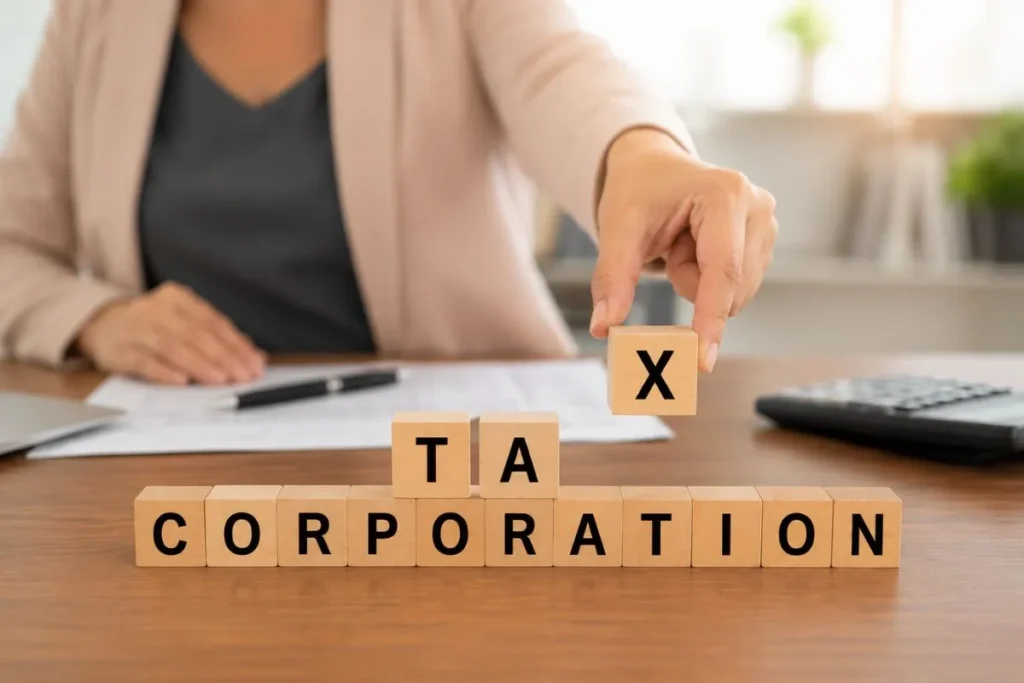
If there is one question that business owners of the UK are so impatient to know the answer to, it is, ‘How much is corporation tax for a limited company?’ It depends on your profit.
Over 95% of UK limited companies today pay corporation tax between 19% and 25%. However, the businesses that fall in the range of these profit levels can claim marginal relief to reduce their bill.
It is a very big deal to start a limited company. You have to register the company, open a business bank account, start to attract customers, and then someone will tell you about corporation tax.
The good news is that corporation tax is something you can grasp easily. Once you know what counts as profit, which rates apply, and when payment is due, it becomes a breeze to manage everything.
Key Points
- Corporation tax is collected on business profits.
- If the profit is up to £50,000, then the tax will be 19%.
- If the profit is above £250,000, then the tax will be 25%.
- Marginal relief can slash your tax amount on profits between £50,000 and £250,000.
- Limited companies should be registered for corporation tax within 3 months of their transactions.
- Corporation tax is valid for 9 months and 1 day after the closure of the accounting period.
What Is Corporation Tax And Who Pays It?
Corporation tax is the tax limited companies pay on the profits they make during an accounting period.
It’s worth pointing out that HMRC isn’t interested in your turnover alone. What matters is the profit left after you’ve deducted allowable business expenses. For most companies, taxable profits can come from three main areas:
- Trading income
- Investments
- Chargeable gains from selling business assets
As Accounting People explains, corporation tax is charged on the company rather than the director. That’s an important distinction because many first-time company owners assume they’ll only pay tax when they take money out of the business. That’s not how it works.
Even if profits stay in the company bank account for future growth, HMRC still expects corporation tax to be paid on those profits. The same applies if you’re tempted to draw that cash out informally rather than through salary or dividends — a directors loan still needs to be logged and repaid on time to avoid a separate tax charge.
ALSO READ: What Are The UK Tax Brackets For 2025/26: How Much Income Tax Will You Pay?
How Much Is Corporation Tax For A Limited Company?
The current corporation tax rates are based on how much taxable profit your company makes during the year.
| Taxable Profits | Corporation Tax Rate |
|---|---|
| Up to £50,000 | 19% |
| £50,001 to £250,000 | 25% with Marginal Relief |
| Over £250,000 | 25% |
On the surface, those figures may look simple. However, for businesses whose revenue is between £50,000 and £250,000, the tax rate will not spike straight from 19% to 25%.
According to Quality Company Formations, marginal relief was introduced to make that increase more gradual. Instead of a sudden jump in tax, the effective rate increases steadily as profits rise through that middle band.
A Couple Of Real-World Examples
Numbers often make more sense than tax jargon. Suppose your company makes £40,000 in taxable profit in a single year. Because the profit is below £50,000, you’ll have to pay corporation tax at 19%. It will be £7,600, and you will be left with a £32,400 profit.
The second example is if your company makes £150,000 in taxable profit in a year. With this amount, your company will be eligible for marginal relief. If the tax rate is 25%, the relief cuts some tax amount from the total.
The final bill will be lower than a straight 25% calculation. For larger businesses making more than £250,000 in profit, the full 25% rate applies.
ALSO READ: What Does In Credit And In Debit Mean, And Why Most People Get It Wrong?
What Counts As Taxable Profit?
As the CEO of the company, you need to understand the difference between income and profit. If your business earns £120,000 during the year, it doesn’t mean you’ll have to pay tax on £120,000.
Before corporation tax is worked out, you can usually deduct allowable business costs, such as:
- Staff wages
- Office rent
- Insurance
- Software subscriptions
- Professional fees
- Business travel
- Equipment purchased for business use
After those deductions, the remaining figure becomes your taxable profit. That’s the number HMRC uses when calculating corporation tax.
What About Selling Business Assets?
Corporation tax not only involves the money you raise from selling products or services. It also includes the assets. Moreover, if you sell the assets for more than their original value, the profit may be considered a chargeable gain. Some examples of those assets are:
- Commercial property
- Land
- Company shares
- Machinery
- Equipment
The gain is usually based on the difference between the purchase price and the selling price after taking certain allowable costs into account.
Register For Corporation Tax
One thing that is mandatory for limited companies is that they should be registered for corporation tax to enjoy its perks. They must register for corporation tax within 3 months of initial business activities.
It could be anything, like a trade, purchase of stock, advertisement, recruitment of staff, or income. If you forget to register, it can cause serious problems for your business later.
Corporation Tax Deadlines
Most of the time, businesses have to pay a fine because they didn’t pay the tax on time. As highlighted by Rapid Formations, most companies need to pay corporation tax no later than 9 months and 1 day after the end of their accounting period.
The company tax return is normally due 12 months after the accounting period ends. Those deadlines are different, which catches plenty of new business owners every year.
A good accountant or bookkeeping system can be very helpful here.
Can You Reduce Your Corporation Tax Bill?
There is no loophole in the tax system to legally reduce the tax bill. It can only happen if you are aware of and claim the reliefs and expenses you’re entitled to. According to Crunch, you can reduce taxable profits through:
- Capital allowances
- Pension contributions
- Research and Development (R&D) relief
- Trading loss relief
- Patent Box relief
- Allowable business expenses
ALSO READ: What Is Working Tax Credit And How Do I Claim It? – A Complete Guide
In Short
For most business owners, the answer to how much corporation tax is for a limited company comes down to one thing: profit.
If your profits are below £50,000, you’ll usually pay 19%. If they’re above £250,000, you’ll pay 25%. Somewhere in the middle, marginal relief helps close the gap.
The rates themselves aren’t particularly difficult to understand. The bigger challenge is staying organised, meeting deadlines, and making sure you’re not missing out on legitimate tax reliefs along the way.
Get those basics right, and corporation tax becomes far less daunting than many new company owners expect.
Sources & References
- Quality Company Formations Blog. (2026). What tax does a limited company pay?
- Rapid Formations Blog. (2026). How much tax do limited companies pay?
- Accounting People. (2026). Corporation tax for a limited company in the UK.
- Crunch Knowledge Article. (2026). How much is corporation tax for a limited company?
Disclaimer: This article is provided solely for informational and educational purposes. It does not constitute financial, tax, legal, or professional advice, nor is it intended to promote any company, service, or product. Readers should consult qualified professionals before making business or tax-related decisions. The information presented may change over time and should be independently verified.