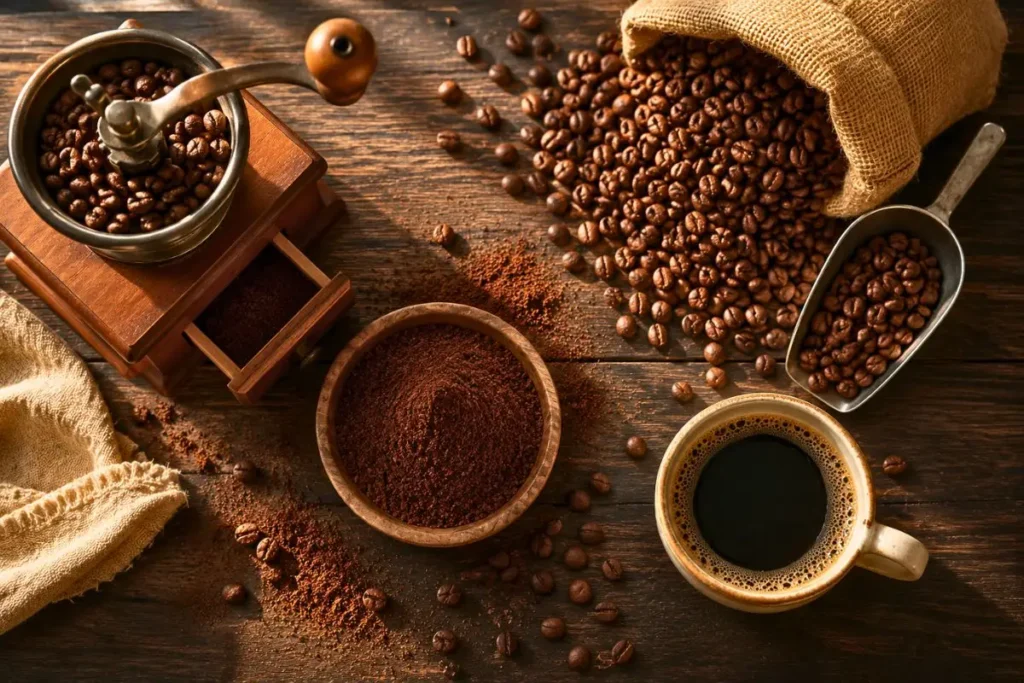
For a lot of people, coffee is just part of the morning ritual. You scoop it in, add water, hit brew. Done. But behind every genuinely good cup, there’s one thing that tends to get ignored: the grind.
Ground coffee is everywhere. It’s easy to grab a bag off the shelf and call it a day. But not all ground coffee is equal—not even close. The grind size, how fresh it is, how you store it, the brewing method you use—all of it shapes the flavour, the aroma, the whole experience.
Whether you’re using a French press, a drip machine, a pour-over, or an espresso machine, knowing how ground coffee actually works can seriously level up your home brew. This guide covers the basics: what ground coffee is, why freshness isn’t just a buzzword, how grind size affects extraction, and whether grinding your own beans is actually worth it.
What Is Ground Coffee?
Ground coffee is roasted coffee beans that have been broken down into smaller particles for brewing. Simple as that.
Coffee starts as a seed inside a fruit—a coffee cherry, if you want to get specific. After harvesting, the beans are processed, dried, roasted, and sold either whole or pre-ground.
Grinding increases the bean’s surface area. More surface area means water can pull out flavour compounds, oils, acids, and aromas more efficiently. Skip the grind and water barely gets through the bean. You end up with something weak and disappointing.
Most commercial coffee comes from two main species:
Arabica Coffee
- Smoother and sweeter flavor
- Often contains notes of fruit, chocolate, or caramel
- Lower caffeine content
- Represents the majority of global coffee production
Robusta Coffee
- Stronger and more bitter flavor
- Higher caffeine content
- Frequently used in espresso blends
- Produces a richer crema in espresso drinks
Bean variety, roast level, and grind size together decide how your coffee tastes. Change one, you change the cup.
ALSO READ: Easy Fluffy Flapjacks Recipe: How Do You Actually Make Pancakes Fluffy?
Why Grind Size Matters
Here’s a misconception that trips up a lot of coffee beginners: all coffee grounds are the same.
They’re not. Not even a little bit.
Grind size is one of the biggest levers you have over extraction. Extraction is just water dissolving flavours, oils, acids, sugars, and aromatic compounds from the grounds. Get the grind wrong and the whole thing falls apart.
If The Grind Is Too Coarse:
- Water passes through too quickly
- Coffee may taste weak or sour
- Under-extraction occurs
If The Grind Is Too Fine:
- Water extracts too much
- Coffee can taste bitter or harsh
- Over-extraction occurs
The sweet spot is balanced extraction—where sweetness, acidity, body, and aroma all come together. You know it when you taste it.
Expert Insight
Beginners tend to obsess over buying better beans. That’s fair. But professionals often say grind size is where the real difference gets made.
Research from the Specialty Coffee Association links brew time, grind size, and extraction closely together. Adjusting the grind changes how fast water pulls soluble compounds out of the coffee. That directly affects taste. Under-extracted coffee tends to be sour or weak. Over-extracted turns bitter and harsh.
“Grind size is the lever you use” to reach balanced extraction, according to coffee brewing guidance that references SCA extraction standards.
That’s exactly why a French press, an espresso machine, and a pour-over all want different grind sizes to do their best work.
Coffee Grind Size Chart
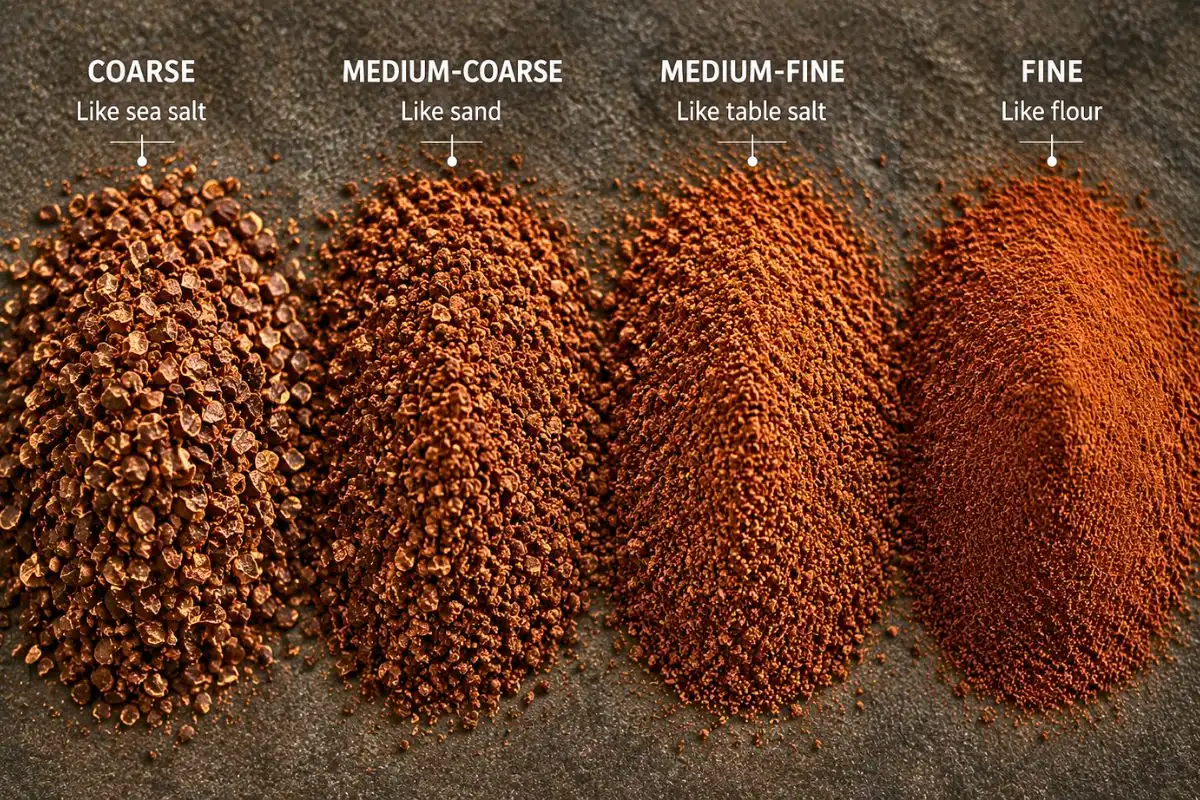
Different brewing methods need different grind sizes. Here’s a quick breakdown:
| Grind Size | Texture | Best Brewing Method |
|---|---|---|
| Extra Coarse | Peppercorns | Cold Brew |
| Coarse | Sea Salt | French Press |
| Medium-Coarse | Rough Sand | Chemex |
| Medium | Table Sugar | Drip Coffee Makers |
| Medium-Fine | Fine Sand | Pour Over (V60) |
| Fine | Table Salt | Espresso Machines |
| Extra Fine | Flour | Turkish Coffee |
Using the wrong grind can wreck your cup—even with premium beans. It’s one of those things that sounds minor but really isn’t.
ALSO READ: How Cooking Radically Changes Fried Egg Calories In Daily Meals: The Surprising Truth
Why Fresh Ground Coffee Tastes Better
Ever opened a fresh bag of coffee and had the smell just hit you immediately? That’s freshness. And once it’s gone, it doesn’t really come back.
Coffee holds hundreds of aromatic compounds that shape its flavour and smell. The moment it’s ground, those compounds are exposed to oxygen. That triggers oxidation—a natural process that chips away at flavour and aroma over time.
What Causes Coffee To Lose Freshness?
A few things speed up the decline:
- Air exposure
- Moisture
- Heat
- Light
- Frequently opening and closing containers
Finer grinds go stale faster, too. More surface area means more exposure. The math isn’t complicated.
Expert Insight
Freshness isn’t just a vague quality thing—it’s chemistry.
Roasters keep coming back to oxidation as the main reason coffee loses flavour. Once it’s ground, thousands of new surfaces meet oxygen and the breakdown begins fast.
As coffee roasters at Gigawatt Coffee put it:
“Oxidation is the main reason coffee goes stale.”
It starts almost right after grinding. That’s why a lot of specialty cafés grind to order. They’re not being precious about it—there’s a real reason.
Whole beans stay fresher longer because less surface area is exposed. Makes sense when you think about it.
How Long Does Ground Coffee Stay Fresh?
Ground coffee doesn’t just suddenly expire. But the quality does drop, and it drops faster than most people realise.
Here’s a rough guide:
| Storage Condition | Best Flavour Window |
|---|---|
| Open bag | 1–2 weeks |
| Airtight container | 2–4 weeks |
| Unopened vacuum-sealed package | Several months |
| Frozen (properly sealed) | Several months |
It won’t hurt you after these windows. But the flavour and aroma? They’ll be a shadow of what they were.
ALSO READ: Rhubarb Crumble Recipe: The Secret to a Perfect Crunchy Topping
Ground Coffee Vs Whole Bean Coffee
This comes up a lot. And honestly, the answer depends on what you value more.
Should I buy whole beans or ground coffee?
Convenience or freshness. Pick your priority.
Ground Coffee
Pros
- Convenient
- No grinder required
- Faster morning routine
- Consistent grind size
Cons
- Loses freshness faster
- Less flexibility for brewing methods
Whole Bean Coffee
Pros
- Better flavor retention
- Longer shelf life
- Greater control over brewing
Cons
- Requires a grinder
- Takes slightly more time to prepare
Coffee Professional’s Perspective
Most specialty coffee folks will tell you to go with whole beans when you can. The reasoning is pretty straightforward—coffee starts losing aromatic compounds right after grinding. Whole beans hold onto those flavours until you’re ready to brew.
That said, good pre-ground coffee is a solid option. Not everyone wants to deal with a grinder at 6am. That’s fair.
Are Coffee Beans Cheaper Than Ground Coffee?
People wonder about this a lot. The short answer: usually not by much.
At most supermarkets, whole beans and ground coffee from the same brand sit at about the same price. The real difference is in value—not what’s on the tag.
Whole beans stay fresh longer. That means more enjoyable cups per bag, even if you paid the same.
Pricing shifts based on:
- Brand
- Origin
- Roast quality
- Packaging
- Specialty versus commercial production
Rather than fixating on price alone, think about freshness and flavour. That’s where the value actually lives.
ALSO READ: How Long To Cook A Turkey Crown For A Perfect Christmas Meal: A Simple Guide
How To Store Ground Coffee Properly
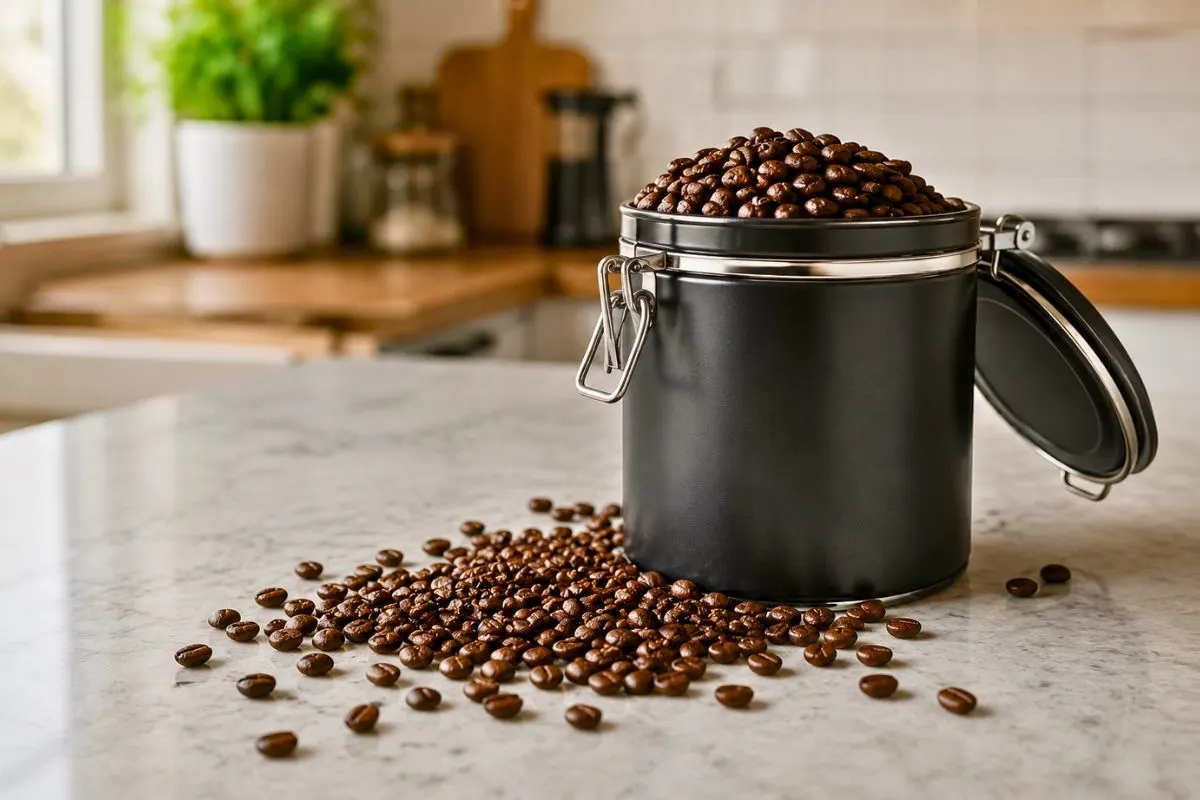
Coffee is surprisingly sensitive. Leave it in the wrong spot and it degrades fast.
Oxygen, moisture, heat, and light—all four are your enemies here.
Best Storage Practices
Store coffee:
- In an airtight container
- In a cool, dry cupboard
- Away from sunlight
- Away from heat sources
Common Storage Mistakes
- Leaving coffee in an open bag
- Storing coffee near the stove
- Using transparent containers in direct sunlight
- Frequently opening the container unnecessarily
Should You Store Coffee In The Fridge?
A lot of people think the fridge is a good call. It’s not, really.
Coffee absorbs moisture and picks up surrounding smells. Your leftover takeaway might end up in your morning cup—not ideal.
For daily use, a cool dark cupboard does the job better than the refrigerator.
Best Brewing Methods For Ground Coffee
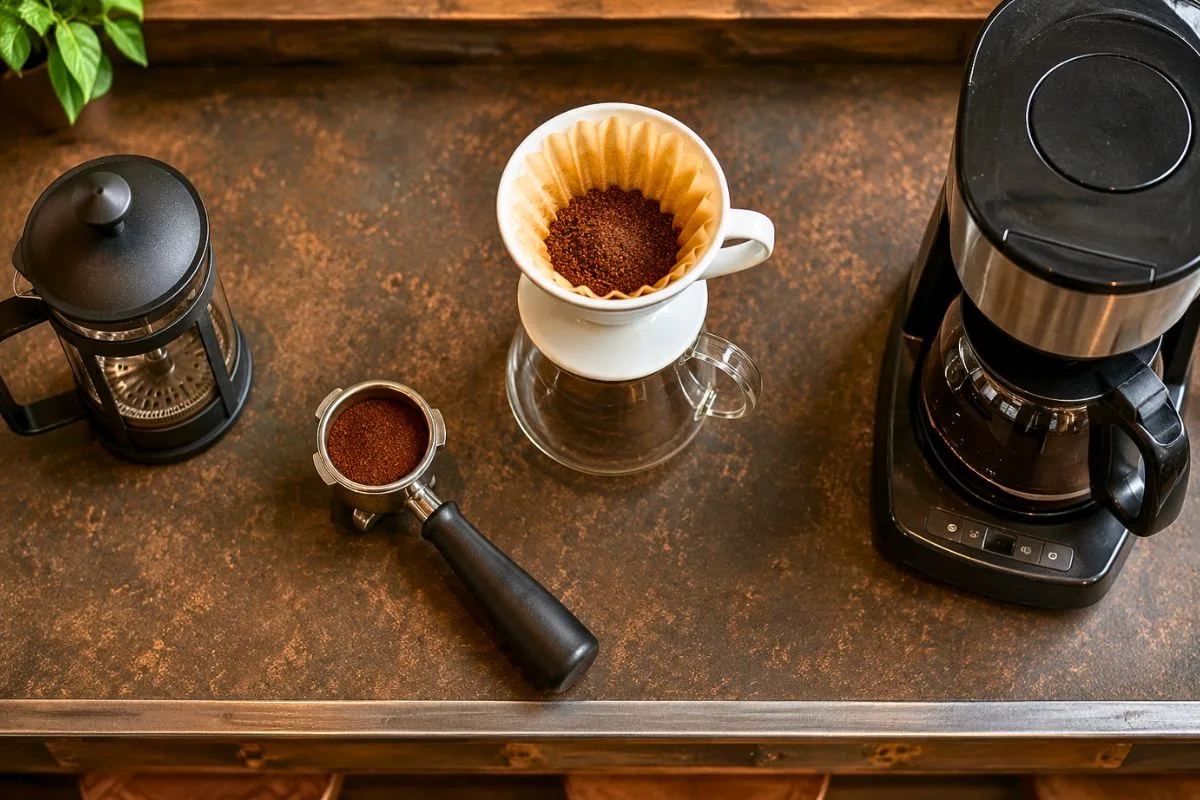
Ground coffee works across a whole range of brewing styles. Here’s what pairs well with what.
French Press
Produces a rich, full-bodied coffee with noticeable texture.
Best grind: Coarse
Drip Coffee Maker
Simple, consistent, and convenient.
Best grind: Medium
Pour Over
Provides excellent clarity and flavour control.
Best grind: Medium-Fine
Espresso Machine
Creates concentrated coffee with a rich crema.
Best grind: Fine
Cold Brew
Steep coffee in cold water for many hours.
Best grind: Extra Coarse
Matching grind to method is one of the quickest wins. It costs nothing and makes an immediate difference.
Simple Tips To Make Coffee Taste Better
You don’t need fancy gear for a better cup. Small tweaks go a long way.
Use Fresh Water
Coffee is over 98% water. Water quality matters more than people give it credit for.
Avoid Boiling Water
Aim for somewhere between 90°C and 96°C (195°F–205°F). Boiling water scorches the grounds.
Measure Coffee Consistently
A solid starting point is 1 gram of coffee to 15 grams of water. Adjust from there based on taste.
Buy Smaller Quantities
Smaller bags get used faster. Faster use means fresher coffee. Simple.
Match Grind Size To Brewing Method
Premium beans can still taste off with the wrong grind. Don’t skip this step.
Common Ground Coffee Mistakes
A lot of people unknowingly undercut their own coffee. Here’s what to watch out for.
Using The Wrong Grind Size
The most common brewing mistake. By far.
Storing Coffee Improperly
Air exposure degrades flavour fast.
Brewing With Water That Is Too Hot
Can cause bitterness and over-extraction.
Using Stale Coffee
Even the best beans lose flavour over time.
Guessing Measurements
Consistent brewing needs consistent ratios. Eyeballing it rarely works well.
Frequently Asked Questions
Q1. What Is Ground Coffee?
Ground coffee is roasted coffee beans that have been crushed into small particles suitable for brewing.
Q2. Does Ground Coffee Expire?
It won’t usually become unsafe to drink if stored properly. But flavour and aroma fade over time—sometimes pretty noticeably.
Q3. How Long Does Ground Coffee Stay Fresh?
For the best flavour, use opened ground coffee within 1–4 weeks. Storage conditions make a real difference here.
Q4. Is Ground Coffee Better Than Whole Beans?
Ground coffee wins on convenience. Whole beans generally give you better freshness and flavour.
Q5. Which Grind Size Is Best For A French Press?
Coarse is the go-to. It helps avoid over-extraction and keeps sediment out of your cup.
Q6. Can I Use Regular Ground Coffee In An Espresso Machine?
Only if it’s ground fine enough. Standard drip coffee grounds are usually too coarse for proper espresso extraction.
Q7. Are Coffee Beans Cheaper Than Ground Coffee?
Prices vary a lot by brand and retailer. Whole beans and ground coffee often cost about the same. Whole beans tend to offer better long-term value because they stay fresh longer.
ALSO READ: Alaskan Seiti Fish: Nutrition Facts, Bycatch Debate, and Easy Seafood Recipe
Final Thoughts
Ground coffee seems simple. But it has a real impact on what ends up in your cup. Grind size, freshness, how you store it, how you brew it—it all adds up.
Whether you go pre-ground for the ease of it or whole beans for maximum freshness, getting the basics right makes a genuine difference day to day.
Next time you brew, pay attention to the grind and how fresh your coffee is. It’s a small thing. But small things compound—and a good cup in the morning is, let’s be real, kind of everything.
Sources & References
- Specialty Coffee Association (SCA) – Coffee brewing research and extraction principles
- National Coffee Association – Coffee storage and brewing best practices
- Encyclopaedia Britannica – Arabica and Robusta coffee species overview
- World Coffee Research – Coffee varieties and production information
- Coffee Quality Institute – Coffee education and quality standards
Disclaimer: This article is provided solely for informational and educational purposes. It is not intended as advertising, promotional material, professional advice, or an endorsement of any product, brand, or service. Readers should conduct their own research and consult relevant professionals where appropriate before making purchasing or consumption decisions. The publisher and author assume no liability for actions taken based on the information presented.