
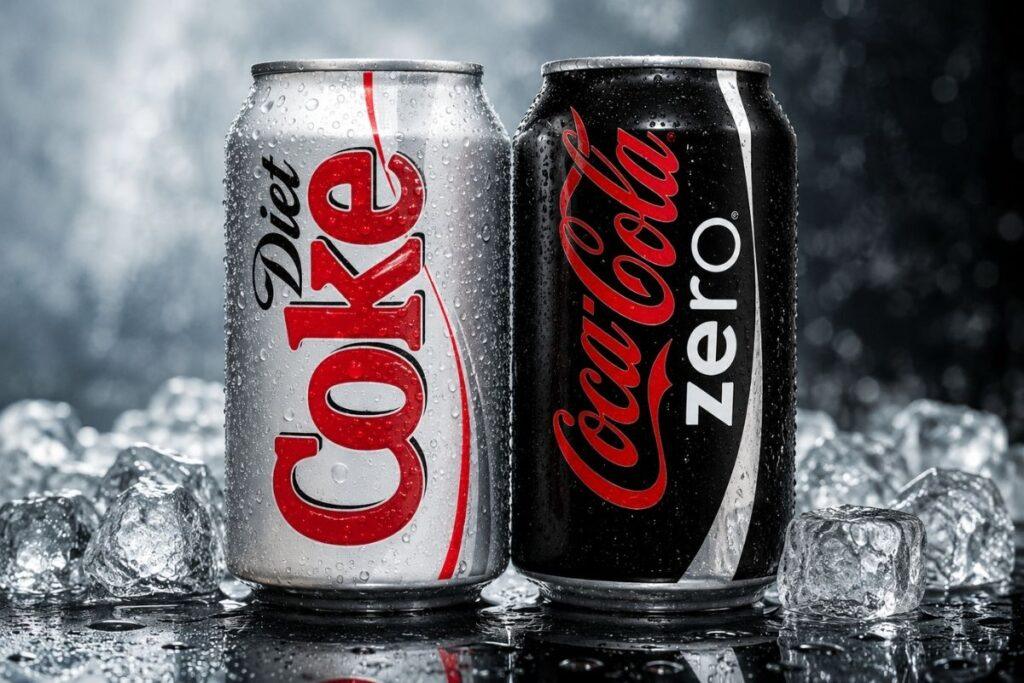
The key difference between Diet Coke and Coke Zero is flavour. Coke Zero Sugar is trying hard to be Coca-Cola. Diet Coke has its own taste. Both are sugar-free and calorie-free.
Put a Diet Coke and a Coke Zero in front of two mates and you’ve started an argument.
- Zero sugar, zero calories, and zero fat in both of them.
- In the UK, both are sweetened with aspartame and acesulfame K.
- Diet Coke has about 35% more caffeine.
- Citric acid is in Diet Coke, not Coke Zero.
- Neither is healthy. Both beat full-sugar Coke.
Two Colas, Two Very Different Starts
Blame 1886 and Atlanta pharmacist John Stith Pemberton. Diet Coke came a century later, in 1982 in America and 1983 in the UK, says Coca-Cola GB. The pitch was not a diet drink that tastes decent but a great drink that happens to have one calorie. Within a year, it was America’s top diet soda.
As per FreeRx, Coke Zero came out in 2005 and 2006 in the UK, with a different taste. It became Coca-Cola Zero Sugar in 2016 (2017 in the States), then got another fiddle in 2021. Coca-Cola still tops the world’s soft drink charts, per Statista.
ALSO READ: Are Cornflakes Healthy For You Or Not? Nutritionists Reveal The Truth
The Difference Between Diet Coke And Coke Zero At A Glance
| Feature | Diet Coke (UK) | Coke Zero Sugar (UK) |
|---|---|---|
Sweeteners | Aspartame, acesulfame K | Aspartame, acesulfame K |
Acids | Phosphoric, citric | Phosphoric only |
Caffeine (330ml) | About 41mg | About 32mg |
Table Source: Data compiled from official product and nutritional specifications published by Coca-Cola Great Britain.
What Is Actually In The Tin
Read both labels of British tins side by side and you’d struggle. Carbonated water, caramel colour (E150d), and then the rest. Labels run in order of weight, so that’s mostly what’s sloshing about.
Diet Coke has citric acid, the sour stuff from lemons, and phosphoric acid. That’s your zing. Coke Zero bins the citric acid, pours in more phosphoric acid and adds sodium citrates, which take the edge off and let the cola flavour walk forward.
American blog posts will tell you Diet Coke uses aspartame alone while Coke Zero adds acesulfame K, potassium citrate and potassium benzoate. British tins list both aspartame and acesulfame K. Americans also get a Diet Coke made with Splenda (sucralose). We don’t.
Caffeine
The Coca-Cola Company puts a 12 oz American can of Diet Coke at 46 mg against Coke Zero’s 34 mg, roughly 35% more. A 330 ml can is nearer 41 mg and 32 mg.
Drip coffee has 80-100 mg per cup, while black tea has 30-50 mg.
Adults are told to stop at 400mg a day, about nine cans of Diet Coke or twelve of Coke Zero. Pregnant? The NHS says to keep your total caffeine intake from all sources under 200 mg. Both are caffeine-free.
Which One Tastes Better?
Coca-Cola Great Britain states that “Coca‑Cola Zero Sugar looks and tastes more like Coca‑Cola’s original taste, while Diet Coke has a different blend of flavours that gives it a lighter taste.”
Eat This, Not That! Poured over all three and agreed on the results. Original Coke: bright, caramelly, almost metallic. Coke Zero: fizzier, richer, and nearly impossible to tell from the real thing. Diet Coke got slated. Watery, the flavour stops dead, with a mineral finish and an aftertaste that won’t shift.
Diet Coke drinkers will disagree that it was never meant to taste like Coke. Fountains, cans and bottles differ slightly too. Flavours? Diet Coke does ginger lime, feisty cherry and sublime lime. Coke Zero does cherry, vanilla and lemon.
Nutrition And Safety
Nutrition? None. No calories, sugar, fat, carbs or protein, plus 40mg of sodium in an American can. Coke Zero has 60mg of potassium. Diet Coke: none.
Then there’s phosphorus. Dietitian Michelle Rauch says phosphoric acid preserves the drink and drops the pH, which helps with shelf life, flavour and fizz. Diet Coke carries 27 mg per serving. Coke Zero doubles it at 54mg.
Phosphorus and calcium pull against each other, Rauch warns, so too much strips calcium, causes bone loss and blocks iron, zinc and magnesium. Kidney disease, dialysis or osteoporosis risk, so drink normally.
Sweeteners next. According to BottomLineInc., aspartame is around 200 times sweeter than sugar and made from the amino acids aspartic acid and phenylalanine. Acesulfame K is 120 to 200 times sweeter than sugar.
Dietitian Lisa Andrews says it’s usually paired with another sweetener to land closer to sugar, and Kristen N. Smith points out two sweeteners mean less of each. Both are approved in the UK, with the Food Standards Agency watching. Aspartame’s daily limit is 40-50 mg per kilo of body weight, about 18-19 cans for a 70 kg adult. Acesulfame K is 15 mg per kilo, roughly 5-6 cans.
In 2023, the WHO’s cancer agency, IARC, called aspartame “possibly carcinogenic to humans”—which means thin evidence, not proof. JECFA kept the limit, reckoning a 70kg adult would need 9-14 cans a day to go over.
The rest comes with caveats: a 2022 Nutrients review tied heavy sweetener use to gut bacteria changes in diabetics; a 2023 study found more bowel and stomach cancer in diabetics, none in the general population; a 2022 French study linked both sweeteners to cancer risk; a 2024 one flagged early puberty in girls with acesulfame K. Diabetics come off worst, Andrews reckons, pointing at liver cancer research. Got PKU? Avoid phenylalanine.
Both are acidic too, so all-day sipping chips away at tooth enamel. Drink with food.
So Which Should You Pick?
Healthline reckons there’s barely a cigarette paper between them. The proper win is ditching full-fat Coke, which hides 35g of sugar in a 330ml can (39g and 140 calories in the American 12oz) and blows the American Heart Association’s daily limit by itself.
Diet Coke is the choice if you want a lighter, sharper drink with more of a kick. Coke Zero if you want it to taste like Coke. On one or more a day, Rauch suggests water with fruit slices, sparkling water or unsweetened iced tea.
FAQs
Q1. Is Coke Zero The Same As Diet Coke?
No, they both have different recipes. Coke Zero Sugar copies classic Coca-Cola; Diet Coke has its own lighter blend.
Q2. Which Has More Caffeine, Diet Coke Or Coke Zero?
Diet Coke, by roughly 35%. A 330ml can holds about 41mg against 32mg in Coke Zero.
Q3. Is Coke Zero Healthier Than Diet Coke?
Not really. The labels are almost identical, so choose based on taste and caffeine.
Q4. Can I Drink Diet Coke Or Coke Zero Every Day?
One a day is fine for most healthy adults. If you are pregnant, have kidney disease, or have PKU, ask your GP first.
Q5. Why Does Coke Zero Taste More Like Real Coke?
No citric acid, plus sodium citrates. That softens the sharpness and lets the cola flavour through.
Q6. Do Diet Coke And Coke Zero Break A Fast?
They’re calorie-free, so no. Sweet drinks can still set off cravings.
Sources & References
- Eat This, Not That!. (2026). Diet Coke vs. Coke Zero: Taste and texture differences.
- Healthline. (2026). Coke Zero vs. Diet Coke: Key similarities and differences.
- FreeRx. (2026). Coke Zero vs. Diet Coke: Key differences and product history.
- BottomLineInc. (2026). Coke Zero vs. Diet Coke: Health impact and sweetener facts.
Disclaimer: The information provided in this article regarding soft drinks, dietary ingredients, and health effects is for educational and informational purposes only and is not intended for commercial promotion. Content should not replace professional medical advice, diagnosis, or personalised guidance. Readers should independently verify all facts and seek professional advice from a qualified healthcare provider before making medical or dietary decisions.