Baking powder substitutes are alternative leavening ingredients—such as bicarbonate of soda paired with an acid—used to help baked goods rise when commercial baking powder is unavailable. Common household baking powder substitutes allow you to easily mimic this chemical reaction using everyday kitchen staples.
To replace one teaspoon of baking powder, combine 1/4 teaspoon of bicarb with 1/2 teaspoon of cream of tartar. Ingredients like buttermilk, yoghurt, lemon, vinegar, soda water, and self-raising flour work as well. The right option for your recipe depends on your desired flavour profile and the moisture level of your batter.
- Baking powder is bicarb, a dried acid, and a scoop of cornflour.
- Almost every swap is bicarb plus something sour.
- Add anything wet to take the same liquid out.
- Egg whites and fizzy water lift a bake with zero acid.
- Self-raising flour already has baking powder in it.
- Baking powder fades fast, so test it first.
How Baking Powder Works
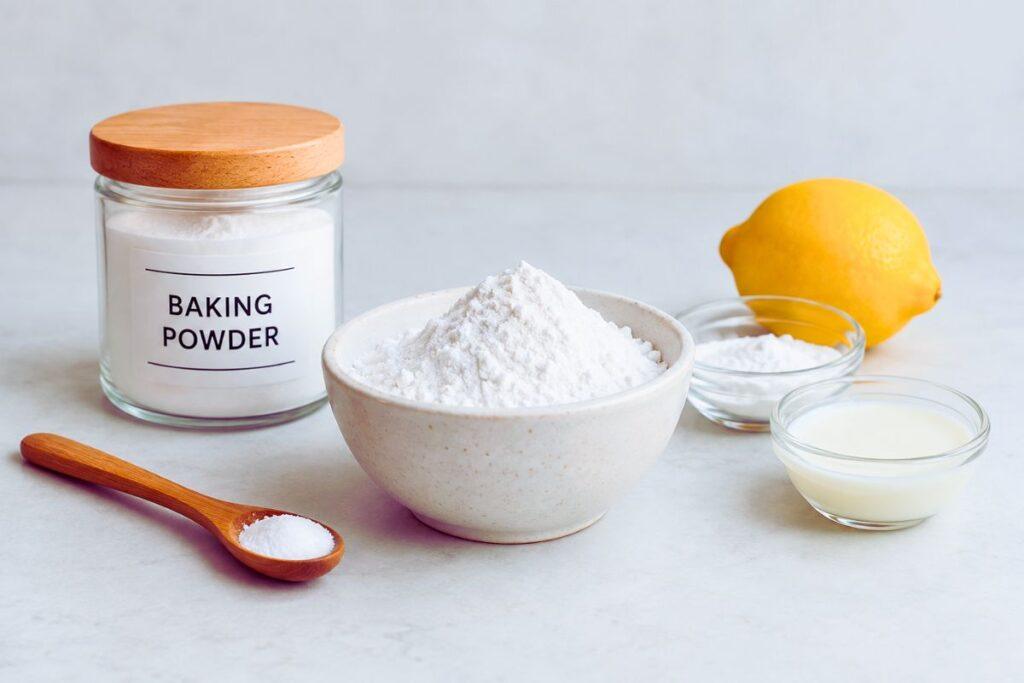
Baking powder is a raising agent containing an alkali (bicarbonate of soda), a dried acid (usually cream of tartar), and cornflour to stop clumping. According to U.S. FDA standards (U.S. Food and Drug Administration), commercial baking powder must yield at least 12% available carbon dioxide ($CO_2$) gas by weight when activated. When liquid is added, the acid dissolves and reacts with the alkali, rapidly releasing $CO_2$ bubbles that shove your sponge up.
ALSO READ: Rhubarb Crumble Recipe: The Secret to a Perfect Crunchy Topping
Many people grab bicarb thinking it’s the same. It isn’t. Fine Dining Lovers says that bicarb is only the base half, so it needs an acid besides it. And the reaction starts the second things get wet. Get the mixture into the oven fast.
1. Cream Of Tartar And Bicarbonate Of Soda
It is the closest substitute. Cream of tartar is potassium acid tartrate. It is an acidic white powder left over from winemaking. Normally, it stabilises egg whites and stops sugar from going grainy. However, it can also be used in cake.
Quarter teaspoon of bicarb, half teaspoon of cream of tartar, a 2:1 ratio. Doesn’t that come to a teaspoon? Correct. Shop baking powder is padded with 1/4 teaspoon of filler. Tastes of nothing. Country Living reckons you should batch it: two parts cream of tartar, one part bicarb, and one part cornflour.
2. Buttermilk And Bicarbonate Of Soda
Buttermilk is what’s left after cream gets churned into butter. Carton stuff is milk with bacterial cultures chucked in, munching sugars into acids, and sometimes with probiotics and flavourings.
Either way it’s sour, and sour is what bicarb wants. Quarter a teaspoon of bicarb into the dry and half a cup (122 g) of buttermilk into the wet, then pull half a cup of liquid out.
3. Plain Yoghurt And Bicarbonate Of Soda
Fermentation stuff yoghurt with lactic acid, dragging the pH down. Healthline states that plain yoghurt beats flavoured pots, bringing acidity without altering taste. Half a cup (122 g), a quarter teaspoon of bicarb, then knock half a cup off your other liquids.
4. Plain Kefir And Bicarbonate Of Soda
It is thin enough to drink. “Kefir is acidic, so it activates baking soda,” says chef Scott Groth, founder of I’d Rather Be a Chef. Real Simple goes with 1/4 teaspoon of bicarb and 1/2 cup of plain kefir. Groth uses it in cakes and muffins.
ALSO READ: Easy Fluffy Flapjacks Recipe: How Do You Actually Make Pancakes Fluffy?
5. Sour Milk And Bicarbonate Of Soda
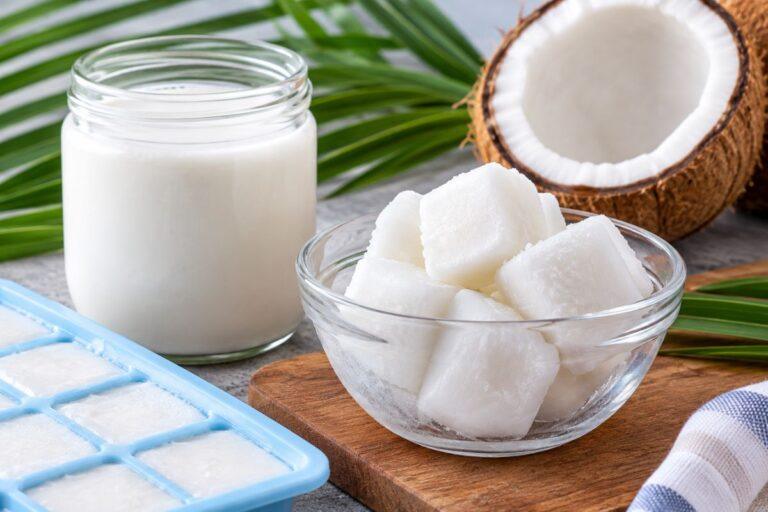
Bakers used to just let milk go off. Make it yourself: add a tablespoon of white vinegar or lemon juice to a cup of milk, left 10 to 15 minutes while the pH drops. Half a cup with a quarter teaspoon of bicarb, minus the same in liquid. Groth swears by it for pancakes. Milk already curdled? Bin it. Dairy-free bakers can use the same trick with a plant-based tin — and freezing coconut milk in ice-cube portions beforehand means you’ve always got a small amount ready to sour for this swap.
6. Lemon Juice And Bicarbonate Of Soda
It is rich in citric acid. Half a teaspoon with a quarter teaspoon of bicarb, though some guides push it to a full teaspoon. No liquid maths, so it’s handy for dry mixes. The taste is bold. Save it for lemon bars and drizzle cakes.
7. Vinegar And Bicarbonate Of Soda
Bacteria turn alcohol into acetic acid, and you get vinegar. Turns up in baking more than you’d guess. Half a teaspoon plus a quarter teaspoon of bicarb covers it. White is one of the most neutral options and won’t tint anything. Rice or cider will do in a pinch. Hide it in cookies, and nobody clocks it.
8. Molasses And Bicarbonate Of Soda
As a byproduct of sugar refining, sugarcane molasses consists of 50% to 70% total sugars by weight and maintains an acidic pH between 5.0 and 5.5 according to the USDA FoodData Central (U.S. Department of Agriculture), making it acidic enough to activate bicarb.
Take a quarter cup (84 g) with a quarter teaspoon of bicarb, remove a quarter cup of liquid elsewhere, and ease off the sugar so it isn’t sickly. Ideal for gingerbread and sticky puddings, though nowhere near a savoury loaf.
9. Whipped Egg Whites
No bicarb either? Then you beat the air in yourself. According to research from the American Egg Board, whipping egg whites denatures proteins to trap air, expanding liquid foam volume by 600% to 800% (6 to 8 times its original size).
Whisk the whites slowly until frothy, crank the speed to soft peaks, then fold gently so that expanded structure doesn’t collapse. Roughly two whites replace a teaspoon of baking powder, though it swings: angel food cake eats 12, and pancakes want three.
10. Club Soda
Club soda, soda water over here, carries a little sodium bicarbonate and a whisper of acid. Not much, though. Swap it for the milk or water, and you get a gentle lift, not a rocket. The old trick behind daft-fluffy pancakes. Sponges need proper help.
11. Self-Raising Flour
It’s plain flour with baking powder and salt stirred through, which is why packet cake mixes, scones and quick breads lean on it. If measuring and testing substitutes feels like too much hassle, it’s worth weighing up whether a personal chef makes more sense for your baking needs. Self-raising flour and a light hand with the leavening are exactly what make the biscuit base of a strawberry shortcake come out crumbly rather than dense.
Swap it for plain flour, then drop the baking powder, bicarb and salt. Own version: 1 cup plain flour, 1 1/2 teaspoons baking powder, 1/2 teaspoon salt. One catch: if the baking powder’s dead, that bag is too.
Picking The Right Baking Powder Substitute
Taste first. Vinegar and lemon go sharp, molasses goes sweet, and cream of tartar goes nowhere. Then the wet stuff: every liquid swap means pulling the same out elsewhere, or you’ve made soup. Taste the batter, fiddle with the sugar if it’s odd.
Baking Powder Substitute Conversion Cheat Sheet (Per 1 Teaspoon Required)
| Substitute Combination | Alkali (Bicarb) Amount | Acid / Base Component | Liquid Adjustment Needed | Best Used For |
|---|---|---|---|---|
| Cream of Tartar | 1/4 tsp Bicarbonate of Soda | 1/2 tsp Cream of Tartar | None (Dry substitute) | Sponge cakes, cookies, light pastries |
| Buttermilk or Kefir | 1/4 tsp Bicarbonate of Soda | 1/2 cup (120 ml) Buttermilk / Kefir | Reduce wet liquids by 1/2 cup (120 ml) | Pancakes, waffles, muffins |
| Plain Yoghurt | 1/4 tsp Bicarbonate of Soda | 1/2 cup (120 g) Plain Yoghurt | Reduce wet liquids by 1/2 cup (120 g) | Scones, loaf cakes, heavy batters |
| White Vinegar or Lemon Juice | 1/4 tsp Bicarbonate of Soda | 1/2 tsp Vinegar or Lemon Juice | None (Volume is negligible) | Cookies, chocolate bakes, lemon cakes |
| Molasses | 1/4 tsp Bicarbonate of Soda | 1/4 cup (84 g) Molasses | Reduce wet liquids by 1/4 cup & reduce added sugar | Gingerbread, spice cookies, fruitcakes |
| Self-Raising Flour | Omit Bicarb | Swap Plain Flour for Self-Raising (1:1 ratio) | None (Omit added salt & baking powder) | Sponge cakes, cupcakes, traybakes |
Table Source: Culinary & Food Science Conversion Benchmarks (USDA FoodData Central & King Arthur Baking Culinary Labs).
Check Your Baking Powder Before You Start
Add half a teaspoon to half a cup of hot water. Instant fizz, you’re grand. Nothing, bin it. A sad little bubble means you might scrape by on double, but the flavour goes a bit funny. Best case, it lasts six months unopened and three months once opened. The USDA says six months max at room temperature, three once opened. Steamy kitchen? Less.
ALSO READ: Why Provenance Matters When Choosing Festive Food Gifts
FAQs
Q1. What Is The Best Substitute For Baking Powder?
Cream of tartar with bicarb. Use half a teaspoon of cream of tartar and a quarter teaspoon of bicarb.
Q2. Can I Use Bicarbonate Of Soda Instead Of Baking Powder?
Not alone, no. It needs an acid next to it — lemon juice, vinegar or yoghurt — or nothing rises.
Q3. Can I Bake Without Baking Powder Or A Substitute?
You can. It’ll come out flat and dense, because nothing is making air pockets.
Q4. How Much Bicarbonate Of Soda Equals 1 Teaspoon Of Baking Powder?
A quarter teaspoon, plus an acid: cream of tartar, vinegar or lemon juice.
Q5. Does Baking Powder Go Off?
It does. Baking powder lasts roughly 6 months when unopened, but it goes off more quickly in a warm or damp cupboard.
Q6. Can I Use Self-Raising Flour Instead Of Baking Powder?
Yes. Use it instead of plain flour and drop the baking powder, bicarb and salt.
Sources & References
- Healthline. (2026). 10 baking powder substitutes: Yogurt, kefir, and more.
- Real Simple. (2026). Substitutes for baking powder: Using kefir and bicarbonate.
- Fine Dining Lovers. (2026). So you’ve run out of baking powder: What now?
- Country Living. (2026). Best baking powder substitutes: Cream of tartar, bicarb, and cornflour.
Disclaimer: The content provided in this article is for general informational purposes only and is not intended for promotional purposes or as professional culinary advice. While the information on baking powder substitutes has been thoroughly compiled, individual results may vary depending on recipe conditions. Readers should verify facts independently and seek professional advice or culinary guidance before making dietary modifications.