
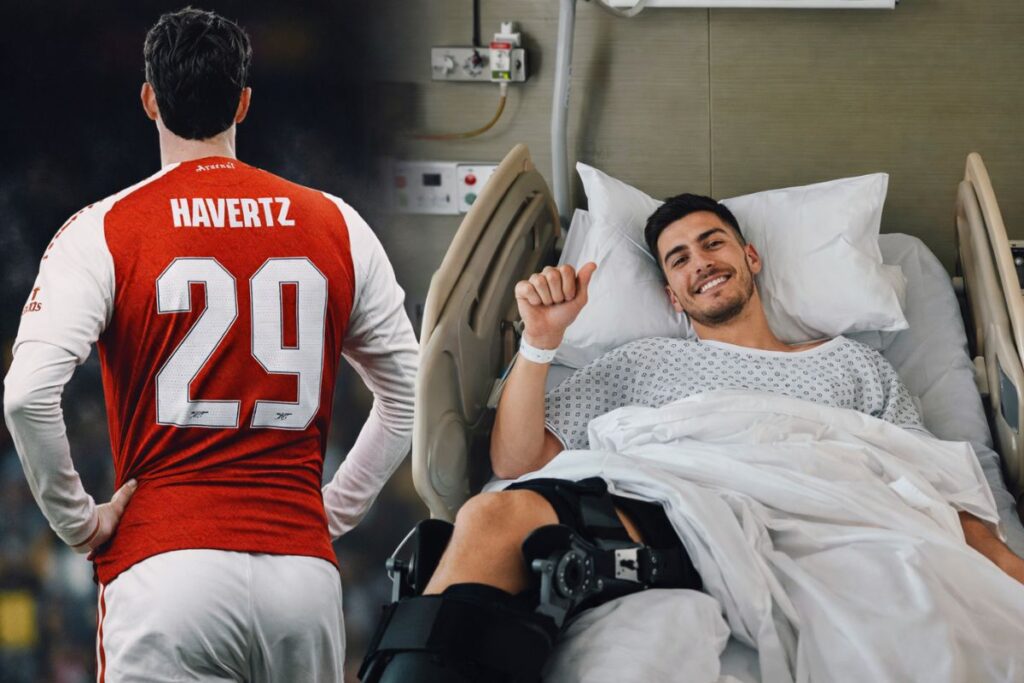
It’s that weird, sinking feeling you get when you’re refreshing the team news on a Sunday afternoon and his name just… isn’t there mainly due to Kai Havertz injury. For Arsenal and Germany, Kai Havertz has become so much more than a standard forward; he’s a tactical “Swiss Army Knife” that Mikel Arteta uses to pick locks other teams don’t even see.
Whether he’s playing that strange, roaming false-nine role, arriving late into the box from midfield, or acting as the primary trigger for the press, he’s basically the glue. He makes the whole system work. He is the guy who creates the “chaos” that top-tier defenders absolutely hate to deal with.
But this 2025/26 season hasn’t gone to script. Instead of leading the charge at the Emirates, this physical “specimen” has been stuck in the treatment room, and it’s left a massive hole in the squad. It’s not just about missing his goals; it’s about the fact that without him, the entire Arsenal attack has had to be rebuilt on the fly.
As we hit the business end of January 2026, the silence around his fitness is getting loud. It’s gone from a “knock” to a saga that could decide if Arsenal actually lift a trophy this year or just fall short again.
We’ve done the digging, and in this breakdown, we’re going to tell you exactly what’s happened—from the surgery setbacks to the medical reality of his knee and what the club is hiding behind those “very close” press conference updates.
The Timeline: A Mess Of Setbacks And “Almosts”
The last year of Kai Havertz’s career plays out like watching a car stall every time it gets up to speed. In fact, it went back as far as February 2025, when a sore hamstring, sustained during a training camp in Dubai, killed off his momentum. However, the knockout punch came at Old Trafford on Aug. 17, 2025.
He went down clutching his knee in the season opener against United. By August 28, the club confirmed he’d gone under the knife for what they called a “minor” procedure.
Fans were told to expect him back in November. He was on the grass, looking sharp, and then—total silence. It eventually emerged that he’d sustained new ligament damage in that same knee while participating in a high-intensity session.
We finally caught a glimmer of hope on Jan. 11, 2026, when he did a 20-minute shift against Portsmouth in the FA Cup. But on Jan. 25 he was a “no-show” for the rematch with United. Arteta insists it’s nothing more than “load management”, but the truth is he’s missed 34 games in a calendar year. That’s a crisis, and it is not a “niggle”.
ALSO READ: Leah Williamson: The Captain Who Makes England Football Team Feel Invincible
Medical Reality: Why The “Flare-Up” Is The Real Villain
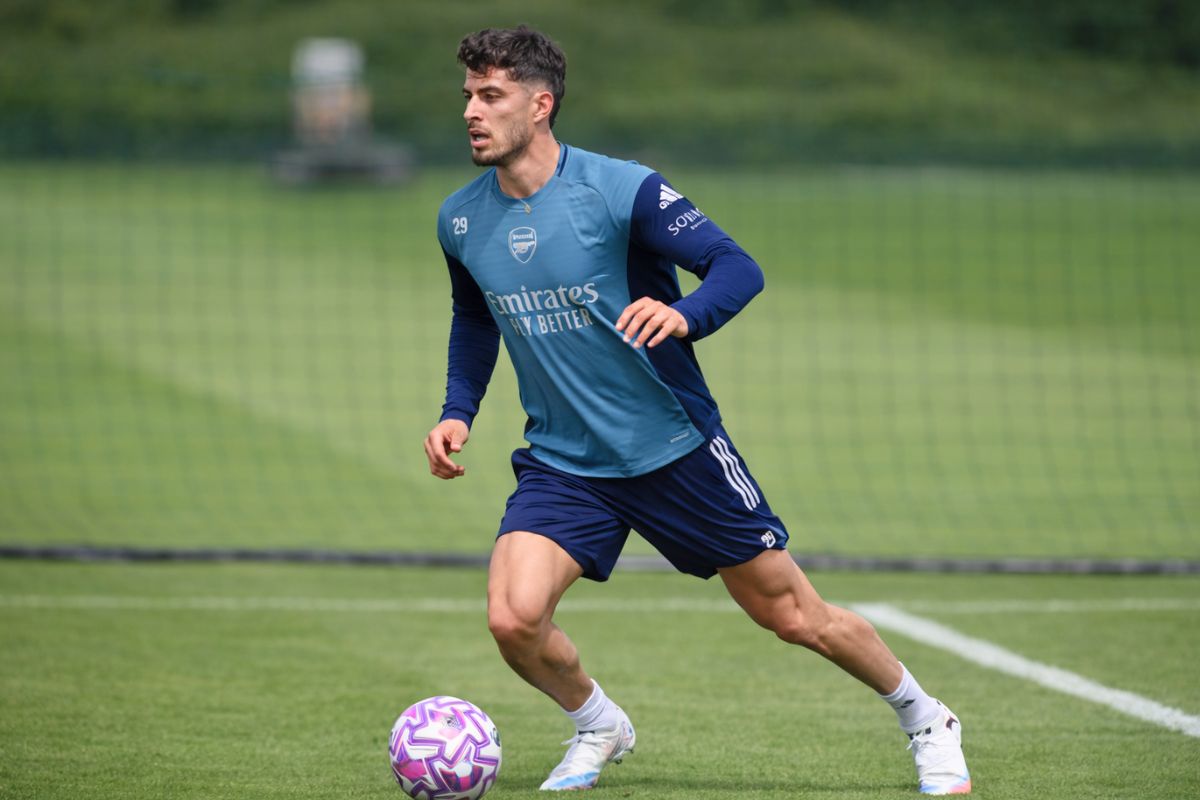
In the world of 2026 football, medical teams are obsessed with “peak loading”. The issue with Kai Havertz right now is joint effusion; basically, the knee keeps filling with fluid whenever he pushes past 70% intensity.
When you’ve had ligament work, the joint has to be “re-taught” how to handle a Premier League pivot. But if the muscles, especially your quads, aren’t firing perfectly to shield that repair, the joint gets swollen as part of its self-defence effort. Arsenal is stuck in a loop at the moment: they ramp up his training, the knee reacts, and they have to drain it again and rest him, and they start all over again.
It’s basically the Gabriel Jesus cycle all over again. You fix the ligament, but you cannot fix the fact that a Premier League knee just hates being pushed to 100% too soon.
Arsenal’s Tactical Adjustments Due To Kai Havertz Injury: Rebuilding The Machine
When you lose someone like Kai Havertz, then you don’t just replace him with another name; the movement of the whole team has to change. Since he has been out, Mikel Arteta has had to scramble around. Kai Havertz is the “connector”; he’s that one person who bridges the gap between the midfielder and attacker. Without him, the bridge has basically collapsed, and Arsenal has had to discover a new way of building play.
The Power Play: Viktor Gyökeres
In Kai Havertz’s absence, the £64m man Viktor Gyökeres has been leading it. But it’s a whole different vibe. Where Kai Havertz would float into pockets of space and link play, Gyökeres is a traditional powerhouse. He wants to bully defenders and run in behind. It works, as he does score the goals, but Arsenal no longer has that “secret weapon” it once had of having a striker who is able to transform into a midfielder. It has made the Gunners a little more predictable for opposing centre-backs.
The “Eze” Integration
To compensate for that lost creativity, Arteta has relied heavily on Eberechi Eze. Since joining, Eze has been charged with filling a void in those “half-spaces” that used to be Kai’s domain. The squad has grown much more straightforward. Rather than the patient, intricate passing seen last season, Arsenal now uses Eze and Bukayo Saka to drive at defenders with pace.
A Heavier Load For Ødegaard
The biggest hidden change is what it’s doing to Martin Ødegaard. Without Kai Havertz there to help with the pressing and winning second balls, the captain is having to run twice as hard. Recent 2026 match data shows the fatigue. He’s spending more time defending and less time creating, simply because the pressing trigger that Kai usually provides is missing.
In short, Arsenal is currently a team of individuals playing great football, rather than the perfectly synchronised unit they were when Havertz was keeping everyone in time.
Comparative Case Studies: Lessons From The Treatment Room

If you want to understand why Arsenal is being so cagey with Havertz, just look at Gabriel Jesus. After his 2024 surgery, Jesus was rushed back for big games, but his knee kept flaring up, turning into a year-long cycle of limited appearances.
Arsenal’s medical team has clearly seen enough of that. You can fix a ligament with surgery, but you cannot force a joint to handle the shock of a Premier League sprint until the swelling stops for good.
Then there is Christopher Nkunku at Chelsea. Like Kai Havertz, he relies on sharp pivots to find space. When he pushed through recovery, his body overcompensated, leading to muscle tears.
That is exactly what load management in 2026 is trying to prevent with Havertz.
ALSO READ: Who Is Sacha Glotzbach? Meet Sarina Wiegman Daughter, An Emerging Football Player
National Team Implications: Nagelsmann’s World Cup Headache
For Germany, the timing feels brutal. Julian Nagelsmann is attempting to nail down his squad for the 2026 World Cup, and Kai Havertz has long been his tactical anchor.
As January 2026 progresses, the strain is audible. Planning a tournament campaign around someone who has not completed 90 minutes for over a year is risky.
The German press has started the Plan B discussion. With the tournament in North America just months away, the pressure is on for Kai to prove he can handle a heavy match load.
If the flare-ups continue, Nagelsmann may be forced to pivot away from the player who was meant to be central to his plans.
The Psychological Angle: The Invisible Injury
Repeated setbacks take a mental toll. This aspect of Kai Havertz recovery is often overlooked.
For Havertz, the injury-prone label carries weight. Every bit of tightness brings doubt.
Kinesiophobia is the literal fear of movement, and at Premier League speed, hesitation is fatal.
Until Kai Havertz fully trusts his knee again, the real player will remain hidden.
Money And Markets: The £65m Question

Arsenal spent £65 million on Havertz, and the return on investment currently looks shaky. The injury has hijacked the club’s transfer strategy.
The signing of Viktor Gyökeres for £55m was meant to complement Kai Havertz. Instead, he has been forced to lead the line alone.
Rumours suggest Arsenal is already scouting another marquee striker for 2026, with names like Julián Álvarez mentioned.
This injury may end up costing the club another £100m.
The Court Of Public Opinion: Fan Burnout
The mood shifted after the 3–2 loss to Manchester United on January 25. Support has turned into frustration.
Fans are tired of load management explanations and want results. The situation is growing toxic, and only sustained availability will change the narrative.
ALSO READ: Leicester City’s Jeremy Monga Could Be Arsenal’s Most Exciting Summer Signing
The Final Word: A Season On The Brink
The Havertz injury has become the defining what-if of Arsenal’s season. Medical caution and title ambition are locked in conflict.
Looking toward the Champions League finale against Kairat tomorrow (Jan 28), the stakes could not be higher. Either Kai Havertz returns with confidence, or Arsenal may be forced to accept a future without him.
Sources And References
- The Portsmouth Comeback (Jan 11, 2026): Match Report: Martinelli Hat-Trick Sinks Portsmouth; Havertz Returns – Official Arsenal Match Centre.
- The United No-Show (Jan 25, 2026): Man Utd Stun Leaders Arsenal in 3–2 Thriller at the Emirates – Premier League Official.
- Load Management And Setbacks: Arsenal Concerned Over Havertz Fitness as Knee Recovery Stalls – The Mirror (Jan 23, 2026).
- Arteta’s Presser On Kai: Mikel Arteta Explains Comeback Plan for Kai Havertz – UK Yahoo Sport (Jan 23, 2026).
- The Gyökeres Signing: Arsenal Complete £64m Deal for Viktor Gyökeres from Sporting CP – The Guardian (July 2025).
- The Eze Integration: Eberechi Eze’s Role in Arteta’s New Midfield Dynamic – Arsenal website Tactical Analysis.
- Nagelsmann’s Ultimatum: Germany Boss Reveals Havertz Injury Relapse; March Deadline Set – Goal website (Updated Jan 2026).
Disclaimer: This article is provided solely for informational and educational purposes. The content is based on publicly available reports and sources and should not be considered professional, financial, legal, or sporting advice. Mention of any individual, club, organisation, or publication does not constitute endorsement, promotion, or sponsorship. Readers are encouraged to verify information independently through official sources.

This blog was insightful and easy to read. I truly appreciate the clarity of your writing.