
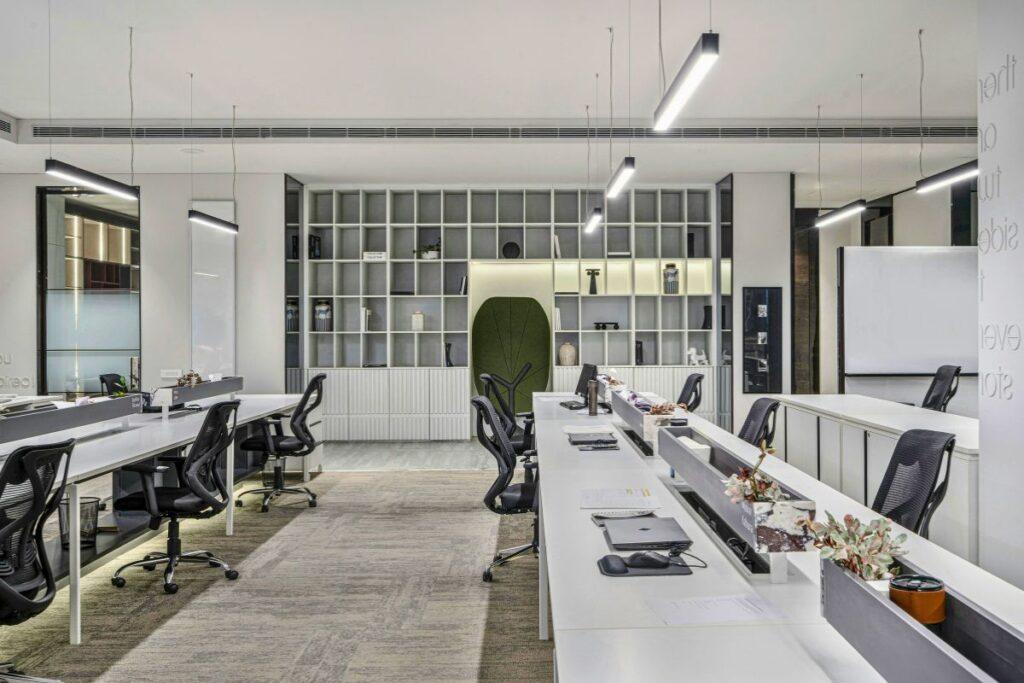
An expanding business will eventually outgrow the premises it first occupied. Just as a growing, thriving houseplant will need to eventually be repotted, you can expect your organisation to need periodic changes of workspace along the way. This should be regarded as a challenge but also an opportunity.
But exactly how can you tell that a change of premises is in order? Let’s take a look at a few telltale signs and how each of them might be addressed.
- Sustained shortages of space indicate a long-term need to move to larger premises.
- Workspaces must provide the right layout and functional quality to effectively support daily operations.
- Outdated or unappealing facilities can damage client perception and harm professional relationships.
- Securing adequate space beforehand prevents future expansion plans from being delayed.
- Moving or consolidating locations helps resolve chronic maintenance issues and operational inefficiencies.
Your Team Has Outgrown The Available Space
The most obvious sign that a move is required is a sustained inability to find the physical resources needed to make the business run. To take one example, warehouse operators might find themselves running at close to capacity and occasionally having to improvise emergency storage. To take another example, office workers might find that they lack suitable places to conduct meetings or even to work in peace and quiet.
What really matters is that these shortages of space are being caused by long-term demand, rather than short-term surges. When the need is sustained, the only lasting solution is a change of scenery.
ALSO READ: How London’s Forgotten Buildings Are Becoming the Capital’s Most Interesting Workspaces
The Workspace No Longer Supports How You Work
As well as thinking about the quantity of space available, we might also think about its quality. It might be that you need space that’s suited to a particular purpose. That warehouse we talked about might be large, but if it isn’t enclosed, then you might have trouble keeping the goods dry. Office space might benefit from breakout areas, shared spaces, or isolated cubicles for deep work.
Clients And Visitors Get The Wrong Impression
Sometimes, the premises you occupy can create problems that relate to your public image. If clients and would-be visitors are repelled by your ageing exterior or by the yellowing panels that line your office space, then your relationships may begin to suffer. New facilities can improve the way that you’re perceived, in other words, as well as providing a range of practical benefits.
Growth Is Restricting Future Plans
We shouldn’t just consider the ways in which your premises are limiting your ability to operate in the present but also your plans for the future. If you intend to expand your business, then having the space to accommodate new hires, new stock, and new equipment is crucial. By securing that space before you actually start expanding, you’ll give yourself much more flexibility and avoid having to delay things because you lack the facilities required.
Rising Operational Challenges
When you’re being constrained by chronic maintenance issues, poor layouts, or fragmented teams, a change of location might be what’s in order. This is something that often causes problems for businesses that have grown organically. You might end up opening new premises in several different towns over the course of many years, only to eventually consolidate into a single larger facility when the costs of coordinating become too great to bear. This can lead to improved communication and greater operational efficiency.
ALSO READ: Don’t Get Caught By These Common Real Estate Mistakes In The UK
FAQs
Q1. How Do You Know When Your Organisation Has Outgrown Its Premises?
Persistent space shortages, poor functional layout quality, and an inability to accommodate future growth indicate it is time to move.
Q2. How Do Outdated Business Premises Impact Client Relationships?
Unappealing or poorly maintained facilities create a negative first impression that can damage client trust and professional credibility.
Q3. Why Should You Move To Larger Premises Before Business Expansion Begins?
Securing extra space beforehand prevents operational delays and gives your organisation full flexibility when hiring staff or adding stock.
Q4. How Can Consolidating Business Locations Resolve Operational Challenges?
Bringing fragmented teams into one suitable facility improves internal communication, reduces coordination costs, and eliminates maintenance issues.
Q5. What Is The Difference Between Short-Term Surges And Sustained Space Demand?
Temporary surges can be managed with temporary fixes, whilst sustained space shortages demand a permanent relocation to larger premises.
Sources & References
- Oyedeji, B. A., Ko, Y. H., & Lee, S. (2025, May). Physical work environments: An integrative review and agenda for future research. Carnegie Mellon University, London Business School, Singapore Management University. Journal of Management.
- Morgan, J. (2025, November). Perspectives on the business location and site selection process. UNC School of Government.
- Wilkinson, S. J., & Pinder, J. (2023). A behavioural approach to the obsolescence of office property. Sheffield Hallam University. Academia.edu.
- Sailer, K., Koutsolampros, P., & Pachilova, R. (2021, April). Differential perceptions of teamwork, focused work and perceived productivity as an effect of desk characteristics within a workplace layout. PLoS One, 16(4), e0250058. University College London.
- U.S. Small Business Administration. (2019, September). Have an address change for your business? Here’s who you need to inform. SBA.gov.
Disclaimer: This article is published strictly for informational purposes only and is not intended for promotional purposes. The information provided does not constitute legal, commercial, or professional business advice. Readers should verify all facts independently and consult with qualified business, legal, or real estate professionals before making any strategic or operational decisions.