Right, let’s be honest. Most of us would like to be a little more environmentally conscious, but the world is an expensive place right now. It’s 2026, and the price of a flat white is roughly comparable to a small mortgage. When people discuss “sustainable living”, it always sounds as though you have to spend three hundred quid on a fancy compost system or all the designer glass jars that cost more than whatever food’s inside them.
But here’s the thing. After years of watching people try to “buy” their way into being green, I’ve realised the real wins are the boring ones. The tiny, under-the-radar changes that cost less than a tenner but actually stop you from throwing money away. We’re talking about things that pay for themselves in months.
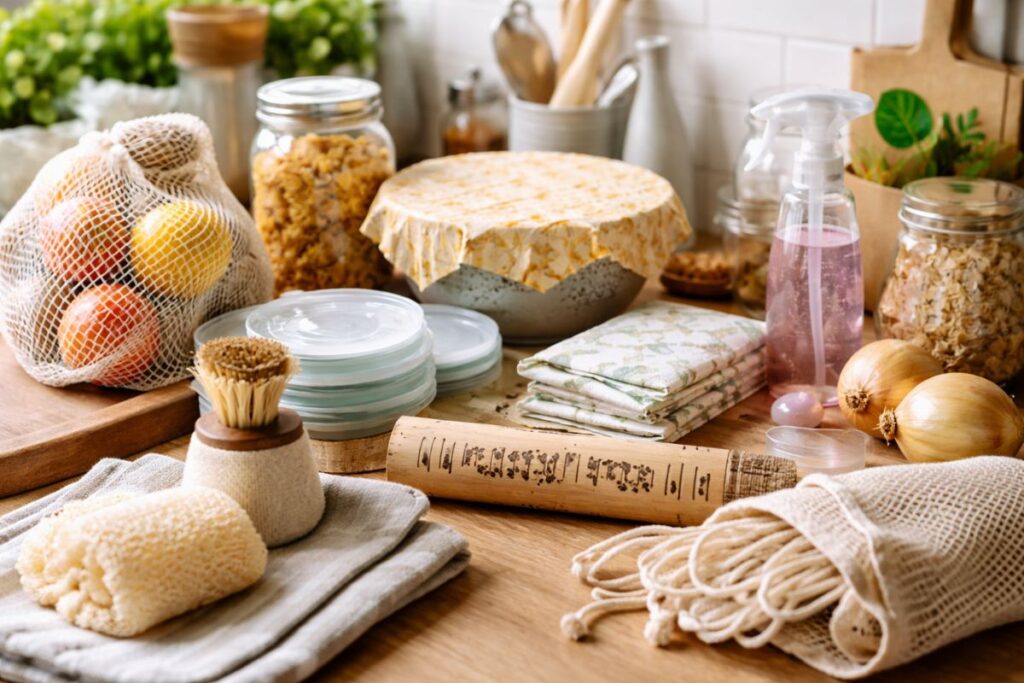
If you’re sick of your kitchen being a graveyard for single-use plastic and wasted cash, here are 10 sustainable kitchen swaps for under £10 that actually make sense.
Sustainable Swaps Comparison Table (UK 2026)
| Product Swap | Approx. Price | Best Place to Keep It | Why It Wins |
|---|---|---|---|
| Compostable Loofah Sponges | £2.99 – £4.50 | On the sink draining board | No microplastics; fully home-compostable. |
| Refillable Cleaning Tablets | £1.50 – £2.10 | In the cupboard under the sink | Stop paying for water and plastic bottles. |
| Bamboo Dish Brush | £5.00 – £8.50 | In a ceramic pot by the tap | Replaceable heads mean the handle lasts years. |
| Beeswax Food Wraps | £7.00 – £10.00 | In the top kitchen drawer | Ditch cling film; keeps cheese much fresher. |
| Silicone Stretch Lids | £6.00 – £9.00 | With your Tupperware/containers | Airtight seal for bowls and half-cut fruit. |
| Swedish Dishcloths | £2.50 – £4.00 | Over the sink or on the oven handle | Replaces 15 rolls of paper towels easily. |
| Starch-Based Bin Liners | £4.50 – £8.00 | Inside your food waste caddy | Breaks down naturally with your scraps. |
| Glass Upcycled Jars | FREE (£0.00) | On open shelving or in the pantry | Perfect airtight storage for dry goods. |
| Compostable Baking Paper | £4.00 – £5.50 | With your baking trays/tinfoil | No silicone coating; safe for the food bin. |
| Mesh Produce Bags | £5.00 – £7.50 | In your “big shop” tote bags | Stops the “thin plastic bag” mountain. |
1. The Loofah Revolution (£3.00)
The yellow-and-green sponges are a waste of money. They smell after two days, are made of plastic, and shed microplastics—tiny plastic particles—into our water every time you do the washing up. Why are we still using them?
Making the switch to a natural loofah or cellulose sponge is a total gamechanger. They are around £3.00 for a pack of three. They’re plant-based, so when you’re finally finished with them, you toss them in the compost. They also don’t retain bacteria as the synthetic ones do. It’s a little thing, but once you stop purchasing those plastic neon eyesores, you’re never going back.
2. Refillable Cleaning Tabs (£2.00)
Stop paying for water. Most of the cleaning sprays you’ll find in a grocery store are 90 per cent water and 10 per cent soap, crammed into a plastic bottle that’ll sit in a landfill for 500 years. It’s a massive scam.
For as little as £2.00 you can set yourself up with a refillable cleaning tablet from brands like Ocean Saver. You toss the tab in an old spray bottle you already have, add warm tap water and shake. You’ve gotten a full bottle of kitchen degreaser for half the cost of the big brands, and you have saved a plastic bottle from the landfill.
ALSO READ: Kitchen Storage Ideas: Stop Wasting Precious Cooking Space
3. The “Forever” Bamboo Dish Brush (£5.50)
If you still have those old plastic dish brushes that you throw away completely when the bristles go flat, then you’re literally throwing money in the trash. A bamboo dish brush with a refillable head is about £5.50.
The beauty lies in its simplicity: you hang onto the handle, and when the head has worn out (costing approximately £2 each), you simply buy a new head. It’s also more durable, much nicer to look at sitting around your sink, and it’s one less piece of plastic that gets thrown into the trash every few months. I have had my handle for three years. It’s basically part of the family.
4. Beeswax Wraps For The Cling Film Haters (£8.00)
Cling film is the devil’s offering to the kitchen. It only clings to itself, and it’s a hellraiser for the planet. A basic pack of beeswax wraps (or vegan wax wraps) will cost around £8.00.
You use the warmth of your hands to seal them over a bowl or around a loaf of bread. Give them a quick wash in cold water; they’ll last a year. If you consider all the rolls of plastic wrap you purchase over a year, these pay for themselves by month three. Also, they really do keep your cheese fresh, which is the real win.
ALSO READ: Modern vs Classic Kitchen Renovation: Which Style Fits Your Home?
5. Silicone Stretch Lids (£7.00)
If the idea of wax wraps isn’t for you, get some silicone stretch lids. A set of six can generally be purchased for around £7.00. They’re kind of like little stretchy hats for your food.
They fit over anything—half-sliced melons, cans of beans, or that bowl of leftovers you are absolutely going to forget about in the back of your fridge. They’re airtight, dishwasher-safe and essentially indestructible. No more faffing about with foil or plastic wrap. Just stretch it, snap it, and you’re done.
6. Swedish Dishcloths (£2.50)
Kitchen roll is another one of those things we buy, use for three seconds, and bin. It’s a total waste. A Swedish dishcloth costs about £2.50 and can replace roughly 15 rolls of paper towels.
They’re made of wood pulp and cotton, and they’re incredibly absorbent. When they get a bit grubby, you just chuck them in the washing machine. They dry super fast, so they don’t get that weird damp-cloth smell. When it finally falls apart after months of use, you can literally bury it in the garden.
ALSO READ: Kitchens with Pendant Lighting: Why It Works and How to Get It Right
7. Starch-Based Bin Liners (£6.00)
If you’re doing the food waste thing (and in 2026, most of us are), don’t use standard plastic bags. They mess up the composting process and turn into microplastics. For about £6.00, you can get a big roll of biodegradable bin liners made from potato starch or corn.
Companies like REGN sell these, and they’re designed to break down alongside your potato peelings. It’s a tiny cost to ensure your “green” efforts aren’t being cancelled out by a plastic bag that’ll last forever.
8. The Glass Jar “Free” Swap (£0.00)
Okay, I’m cheating a bit here because this one is free. But honestly, stop buying “storage containers”. Those elegant glass jars you see in stores are merely jars.
Hold on to those old coffee jars, jam jars or pasta sauce containers. Soak them in warm soapy water to remove the labels, and you have ideal airtight storage for lentils, seeds or takeout. It makes your cupboard resemble a fancy deli, and it’s free. If you want to spend a few extra quid, get a £3.00 chalk pen and label them.
9. Compostable Baking Paper (£4.00)
The most common kind of baking paper is coated with silicone (a form of plastic), so it’s not truly recyclable or compostable. It just sits in the bin for all eternity.
Brands such as If You Care sell compostable baking paper for about £4.00. It works the same way as before—no sticking, no mess—but you can toss it into your food waste bin when finished. It’s a simple swap that makes your Sunday roast just a little bit cleaner.
10. Mesh Produce Bags (£5.00)
Next time you’re at the supermarket, look at how many tiny plastic bags people use for three onions or a couple of apples. It’s mental. A set of three mesh produce bags costs about £5.00.
They weigh almost nothing, so they won’t mess with the price at the till, and they keep your veg together in the trolley. The best part? The mesh is breathable, so your onions won’t go mushy as fast as they do in plastic. It’s one of those sustainable kitchen swaps for under £10 that actually saves you money by making your food last longer.
ALSO READ: What To Expect When Working With Professional Bathroom Renovators?
FAQs: The Honest Truth
Q1. Do These Things Actually Work?
Yeah, look, I wouldn’t have you recommend them if they were rubbish. The bamboo brushes are actually better than the plastic, and silicone lids work far better at sealing things up than cling film ever did.
Q2. Is It Really Cheaper To Buy Eco-Friendly?
In the long run, 100%. If you spend £8 on wraps yearly, rather than spending £2 monthly on cling film, that makes a £16 saving every year. It’s not millions, but across all 10 swaps it amounts to a nice dinner out.
Q3. Where Can I Find These In The UK?
You no longer require a so-called eco shop. Even most of the bigger supermarkets, either Waitrose or even Lidl, have started selling this stuff. Or visit the food stores if you prefer the good stuff.
Q4. What If I Can’t Do All 10?
Then don’t! Just pick one. Genuinely, if you stopped using plastic sponges, it would be a huge win.
At the end of the day, your kitchen doesn’t need to be perfect. It just needs to be a bit less wasteful. These swaps aren’t about being a “sustainability influencer”; they’re about being a normal person who’s tired of buying things that are designed to be thrown away.
References and Sources:
- Waitrose & Partners. (2026, January). Affordable eco‑friendly kitchen essentials: Sustainable swaps for everyday living. Waitrose Sustainability Report.
- REGN. (2025, November). Biodegradable starch‑based bin liners: Product guide and composting compatibility. REGN Eco Products.
- Ocean Saver. (2025, July). Refillable cleaning tablets: Reducing plastic waste in UK households. Ocean Saver Sustainability Insights.
- If You Care. (2024). Compostable baking paper: Product specifications and environmental benefits.
- WRAP UK. (2023). Household food waste and sustainable packaging solutions. Waste & Resources Action Programme.
Disclaimer: The information provided in this article is for general informational and educational purposes only. It is not intended to promote, advertise, or endorse any specific products, brands, or companies mentioned. Readers should conduct their own research before making purchasing or sustainability decisions. The author and publisher are not responsible for any actions taken based on the information presented.