
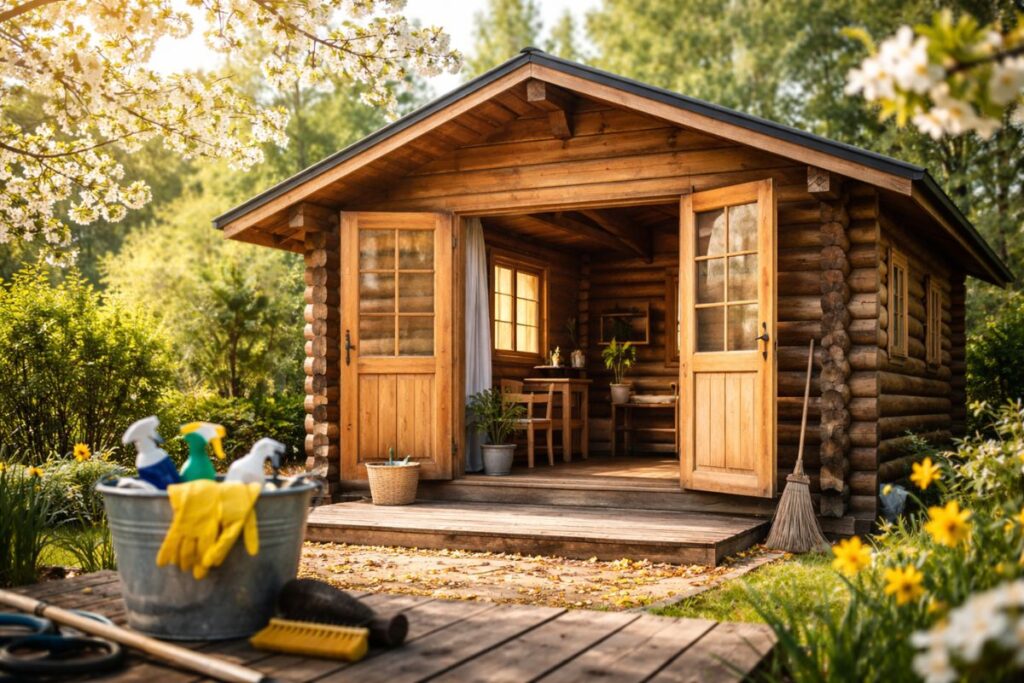
Most cabin owners recognise the moment. You open the door after winter, step inside, and pause for a second. Nothing looks wrong, yet something feels slightly different. The air is heavier. Surfaces feel cooler than expected. The space inside log cabin takes longer to warm up.
In most cases, that is just moisture lingering after months of cold weather.
If you are not sure what to look at first, a good starting point is simply browsing through the Garden Buildings Direct webshop, where you can find practical maintenance guides alongside cabins designed for everyday use.
What Winter Quietly Does To Timber
Winter rarely causes sudden damage to a log cabin. The changes happen slowly.
Doors stay closed. Air barely moves. Timber absorbs moisture bit by bit from the surrounding environment. By early spring, that moisture is still there, even if nothing looks obviously damp.
Once temperatures begin to rise, the wood releases unevenly. That is why the first signs usually appear near floors, in corners, or along wall edges.
Nothing dramatic. Just noticeable.
ALSO READ: What Are the Different Types of Wooden Flooring? Your Complete Guide to Wood Floor Options
Where Most People Begin – And What Works Better
Many owners instinctively reach for treatments first. It feels like progress. In reality, it often skips the step that matters most.
Airflow.
Opening the cabin regularly over a few dry days usually makes more difference than any treatment, as steady airflow through open windows and doors gradually helps the space return to normal.
It is simple, but it works.
What To Do First Each Spring?
Before thinking about cleaning or sealing, a short routine usually helps stabilise the cabin:
- Let the cabin air out properly over several dry days
- Check for small signs of trapped moisture near floors and corners
- Clear leaves or debris around the base outside
- Keep stored items slightly away from timber walls
- Wait until surfaces feel dry before cleaning or treating them
For many owners, this simple routine is often enough to bring the cabin home back to its usual feel without needing much else.
Cleaning Without Slowing The Drying Process
Once the timber has stabilised, cleaning becomes straightforward.
Cleaning usually works best once the cabin has had time to dry out properly. At that stage, dust and light residue tend to come away easily, while heavier washing rarely adds much and can slow the drying process again.
In fact, too much water at this point often delays the progress you have just made. For the interior, using a vacuum cleaner instead of fluids where possible can help a lot to maintain the dry environment.
Sometimes, restraint is the better approach.
ALSO READ: How to Design a Contemporary Home in the UK | A Practical Home Design Guide
Treatments – Timing Matters More Than Choice
Most owners leave wood treatments until the cabin simply feels dry again. It is usually easy to tell – the timber no longer feels cool under your hand, and the air inside feels lighter.
Trying to seal it earlier rarely helps. The wood just needs time to settle first. Once it has, a breathable treatment can be applied without getting in the way of that natural drying process.
ALSO READ: Sustainable Building – How Quality Timber Can Transform Your Projects?
Why Does Cabin Design Influence Maintenance?
Some cabins simply cope with seasonal changes more easily than others.
Raised floors improve airflow. Tight log joints reduce moisture entry. Roof overhangs also make a quiet difference over time, as they keep rain from constantly reaching exposed timber surfaces. On their own, details like this may seem minor, yet together they gradually reduce how much attention the cabin needs year after year.
If you are comparing options or thinking about an upgrade, you can check for the latest cabin designs made to cope with typical UK weather.
ALSO READ: How Restored Flooring Changes the Feel of a Room
Final Thoughts
Spring maintenance rarely involves complicated tools or specialist knowledge. It is mostly a matter of timing and small observations.
Handled this way, a log cabin remains what it is meant to be – a practical, usable space throughout the year, rather than something that demands attention after every winter.
Sources & References
- Moore, S. (2026, January 21). “Winter safety recommendations for trees and forested areas.” Extension Forestry, NC Forest Service.
- Rice, J. (2025, July 17). “Log cabin maintenance checklist: Painting, repairs and checks.” Garden Buildings Direct.
- UK Centre for Moisture in Buildings. (2025). “Moisture-safe building guidance and reports.” UKCMB.
- Royal Institution of Chartered Surveyors (RICS). (2024). “Investigation of moisture and its effect on traditional buildings: Principles and competencies.” RICS, Historic England, & PCA.
- Wang, J. (2016). “Guide for on-site moisture management of wood construction.” FPInnovations & BC Housing.
Disclaimer: This article is intended for informational purposes only and should not be interpreted as promotional content or an endorsement of any specific product, service, or company. While efforts have been made to ensure the information is accurate and helpful, readers should conduct their own research or seek professional advice before making maintenance or purchasing decisions related to log cabins or garden buildings.





The focus on a spring reset is inspiring. It not only helps with maintenance but also sets the tone for enjoying the cabin throughout the warmer months.