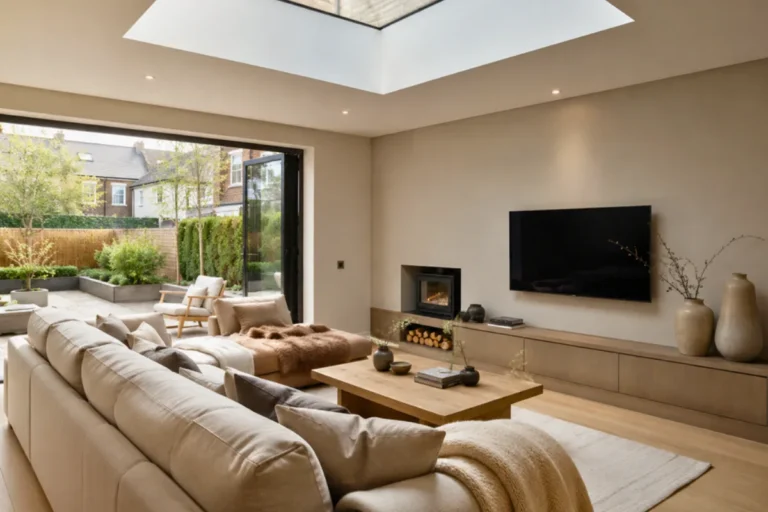
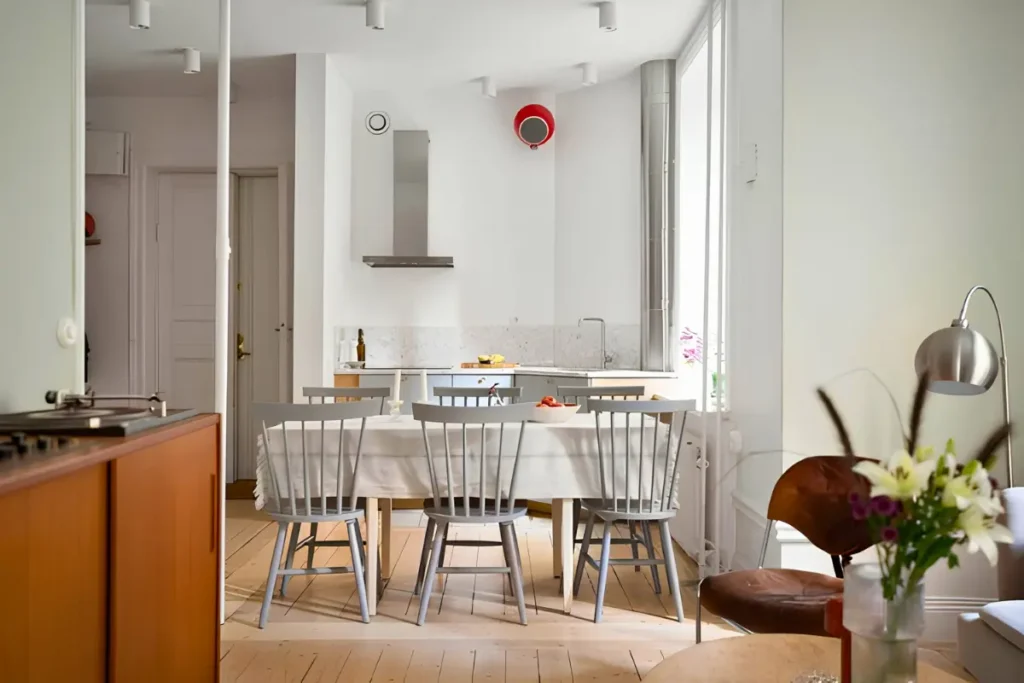
The old table-and-six-chairs formula is fading from London homes. In its place is a more personal dining room, built around one serious table and pieces gathered with intent.
The Old Table-And-Six Formula Is Losing Its Pull
For much of the past century, the London dining room had a familiar script: a dining table, six matching chairs, a sideboard in the same finish and sometimes a dresser.
It was furniture bought as a package. Chosen once, arranged once and rarely questioned again.
In 2026, that formula is losing its automatic place. Across London flats, terraces and kitchen extensions, the matching dining set is being replaced by something more individual: one strong central table, with chairs, lighting and objects collected around it over time.
The Shift Is Bigger Than One Decorating Trend
This has been building for some time. Pinterest Predicts has pointed towards more eclectic and layered interiors, while Houzz UK has tracked interest in dining spaces that feel personal rather than perfectly matched. Interiors coverage from House & Garden, ELLE Decoration and Vogue Living has made the look familiar: a substantial table, mixed chairs, varied materials and a room that looks lived in.
London homes suit that approach. Period flats, narrow terraces, converted buildings and open-plan kitchen extensions rarely behave like showroom spaces. These property types often require a different contemporary approach to layout, scale and furniture selection.
For those creating this kind of dining room, natural stone has become one of the clearest central materials, with handmade marble dining tables often used as the visual weight around which the rest of the room can be built.
Why The Matched Suite Now Feels Too Fixed
The matching dining set has not suddenly become wrong. It still suits homes where simplicity is the priority.
But it now carries the feel of a particular era. A table, chairs, sideboard and dresser bought from one range can read as more showroom-led than lived-in. It suggests order, but not always personality.
Rather than refreshing a whole room at once, many London households are choosing one better central table and adding chairs gradually.
Social media has reset the visual standard, too. Instagram, TikTok and Pinterest interiors content tends to favour rooms with contrast, patina and a sense of being collected. Post-pandemic hosting has also become more relaxed. The dining room is less ceremonial now, and the furniture has followed.
ALSO READ: Why Londoners Are Using Furniture Delivery Services in 2026
The Table Is Becoming The Room’s Anchor
In these newer dining rooms, the table sets the weight, mood and proportion of the whole space.
Natural stone works well because it brings depth without needing much decoration. Honed marble, travertine, limestone and granite all have movement and texture. Carrara, Calacatta, Nero Marquina, Verde Alpi and Calacatta Viola are often chosen for character rather than uniformity.
Solid wood remains important too, particularly oak, walnut and elm in chunkier forms. Slab-style tops, refectory shapes, fluted columns and paired pedestal bases all fit the mood.
Round and oval tables are useful in London homes because they soften a room and make tight spaces easier to live with. Bespoke proportions also make sense in period flats and conversion homes where standard sizes rarely sit comfortably.
The Chairs Are Where Personality Comes In
Around the table, the rules are more relaxed. A 1960s Danish teak chair might sit beside a chrome-framed seat, an upholstered side chair or a farmhouse piece with a different history.
The best rooms do not look random. They usually have one quiet connection, such as seat height, timber tone, fabric colour or the balance between heavy and light shapes.
London’s vintage hubs help make the look feel natural rather than forced. Alfies, Sunbury, Battersea Decorative Antiques, Portobello, Spitalfields and Camden Stables all encourage buying one good piece at a time.
Some homes keep a pair of chairs at the head of the table as the only matching element. Others use six different chairs and rely on proportion to hold everything together.
The Finishing Details Matter Just As Much
The new dining room is not only about tables and chairs. A stone table, timber chairs, woven rug, ceramic vase, brass candlesticks and vintage glassware can make a room feel gathered rather than decorated.
Reupholstered family chairs, charity shop finds, and auction pieces add another layer, especially when covered in a fabric that feels current rather than cautious.
Kitchen Lighting is often the final cue. Pendant clusters, sculptural single fittings, oversized rattan shades or warm brass lights can pull the composition together without making it feel too formal.
Why The Look Has Stayed In Favour
This way of decorating has lasted because it can change. A matching dining set tends to date as one complete unit. When the finish, chair shape or scale falls out of favour, the whole room can feel tired.
A collected dining room is more forgiving. One chair can be reupholstered. A pendant light can be changed. A rug can move. The space still holds because it was never dependent on every piece matching.
It also works across London’s housing stock, from Georgian rooms and Victorian terraces to Edwardian conversions, warehouse flats and newer apartments.
Keeping older chairs in use, restoring inherited pieces and choosing durable materials all fit with how many households now think about the home. The look is also highly photographable, which has helped keep it visible across social platforms and interior coverage.
ALSO READ: What is the Average Cost to Decorate a Room: My Budget Reality Check
The Next Stage Is More Confident
Expect stronger central tables, richer timber, more sculptural bases and more visible reupholstery. Smaller specialist UK furniture makers are also likely to benefit as households look beyond volume-bought furniture for pieces that fit awkward rooms and personal taste.
The matching dining set is not dead. It has simply lost its automatic place in homes where people want their interiors to say a little more.
The most considered London dining rooms in 2026 are not the ones ordered in one afternoon. They are the rooms built around a single substantial table, with everything else curated, mismatched and unmistakably personal.
Sources & References
- FCI London Blog. (2026, March 1). Contemporary dining table trends you need to know in 2026.
- Furniture in Fashion Blog. (2026, May 22). Modern dining room ideas for UK homes 2026.
- FW Homestores. (2026). Marble dining tables buying guide 2026 (UK): Styles, trends & care tips.
- Pinterest Trends Report. (2025). Pinterest Predicts: Eclectic and layered interiors.
- Houzz UK Interiors. (2025). Dining room design trends: Personalised spaces over matched sets.
Disclaimer: This article is provided solely for informational and educational purposes. The content does not constitute professional advice, endorsement, recommendation, or promotion of any products, brands, services, or businesses mentioned. Readers should conduct their own research and seek appropriate professional guidance before making any purchasing or design decisions. Any external links are included for reference purposes only.